Follow Us on Google

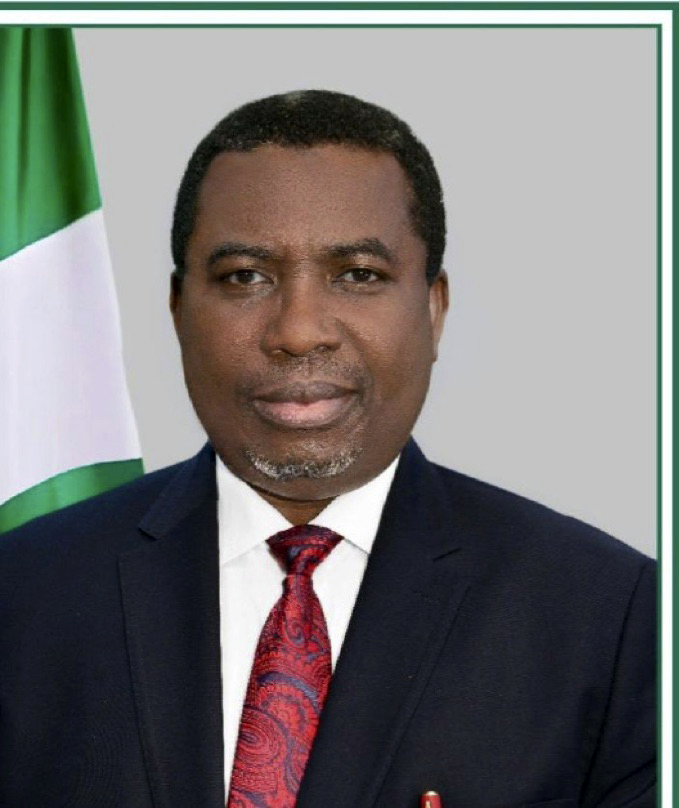
The recent alarm raised by the acting Accountant-General of the Federation (AGF), Mr. Chukwunyere Anamekwe, over binge borrowing to support budget shortfall and pay salaries and wages of public servants, is an indication that the nation’s economy is still in a sorry state. Anamaekwe expressed the concern at a recent retreat organised by his office for members of the Technical Sub-Committee of Cash Management in Abuja, under the theme: “Enthroning Fiscal discipline in Nigeria’s Public Financial Management: A clarion call for stakeholders.”
The AGF’s concern should serve as a wake-up call for the federal and state governments to halt further borrowings and urgently address the nation’s mounting debt. It is unfortunate that all warnings by experts against binge borrowing were ignored by the government. And to worsen the situation, the government has been borrowing for consumption rather than for investment. In a bid to reverse the trend, the government must enthrone fiscal discipline, diversify the economy through the promotion of non-oil exports as well as preventing revenue leakages, among other measures.
While we acknowledge the essence of borrowing, we also caution that it must be done cautiously, and whatever is borrowed, should be spent prudently. However, borrowing to pay salaries and wages will likely threaten the nation’s economy.
Some years ago, the Minister of Finance, Budget and National Planning, Mrs. Zainab Ahmed, claimed that the country was only threatened by revenue challenge and not debt. But the AGF’s disclosure has proved that fiscal challenge is the nation’s problem at the moment, and therefore, a strong reason to discontinue binge borrowing. We must avoid a situation where a large percentage of the nation’s budget is spent on debt servicing. Currently, statistics from both the Central Bank of Nigeria (CBN) and the Debt Management Office (DMO) show that about 95 per cent of the annual budget is spent on debt servicing, leaving only five per cent for other expenditures.
Due to dwindling revenue, the government has reportedly been forced to resort to other sources of borrowing to augment the payment of federal civil servants. This is besides security challenges and other social needs of the citizens that have increased government’s expenditures in recent years. The call for the deployment of fiscal discipline and strategies that will help mitigate these challenges has become expedient.
It is sad that profligacy has become a common feature at both federal and state levels. Even local governments are not spared of such fiscal recklessness. Moreover, government has failed to adhere to the borrowing limits recommended by the Fiscal Responsibility Commission (FRC). This is probably why many state governments are walking the financial tightrope. Domestic indebtedness of the 36 states and the Federal Capital Territory (FCT) has exceeded N4trillion in the last three years, according to data from DMO.
The alarm over the looming fiscal crisis should be taken seriously by all tiers of government. We believe that the shortfall in government’s revenue is as a result of many factors forewarned by the World Bank and the International Monetary Fund (IMF). Both have urged the government to diversify the economy and stop relying so much on oil revenue. They want the government to equally broaden the nation’s revenue base and reduce its debt stock, among others. The war against graft must be extended to all the revenue generating agencies. Even ministries and departments should not be spared. The recent allegation of financial malfeasance against the immediate past AGF is something to worry about. Let the matter be thoroughly investigated.
In the face of rising debt stock, driven by unbridled borrowing to pay salaries and wages, we advise the government to design short and long-term measures to address revenue shortfall and other means of enhancing financial inflow. To begin with, let the cost of governance be drastically reduced at all levels of government.
Similarly, the cost of elections should be reduced as well. While the diversification of the economy should be pursued aggressively with focus on export promotion that will yield foreign exchange (FX), we enjoin state governments to adhere to the revised borrowing guidelines on local and external borrowings. In order to attract more direct foreign investments, the government must evolve new measures to enhance the nation’s ease of doing business, which is adjudged to be very poor at the moment.