Follow Us on Google
By Steve Agbota
Clearing agents and importers have decried the negative effects of foreign exchange fluctuation on the importation of goods into the country.
They tell Daily Sun fluctuations of exchange rate has really dealt to the nation’s maritime industry, as the majority of them are out of jobs due to low cargo imports.
Importers said that since the floating of exchange rate by President Bola Tinubu in 2023, exchange rate has increased by over 300 percent as the naira nas dipped from N455/$1 to N1,766/$1 over the last one year.
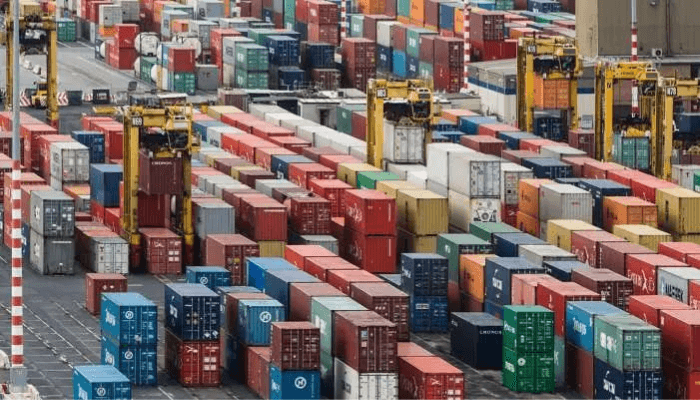
Today, the level of importation on bulk cargo has dropped by 15 per cent, vehicles’ import dropped by 55 per cent while containerised cargo dropped by 35 per cent. However, importers said that it is very tough to import cargo into the country because of the high cost of shipping.
For instance, freighting cost for a 40ft box from China to Nigeria is $8,500 while tthe same size to Ghana and Lome is $3,500 and $3,000 respectively. As a result of the floating of foreign exchange rate, importation generally has dropped drastically as importers are finding it difficult to bring in goods.
Clearing agents who spoke with Daily Sun, said that a large chunk of Nigerian cargo are being diverted to neighbouring countries such as Ghana, Togo, Benin Republic and Cameroon due to high exchange rate.
Speaking with Daily Sun in an interview, the former acting National President of Association National Licensed Customs Agents (ANLCA), Dr Farinto Kayode, said the exchange rate fluctuation has actually reduced the rate of importation.
“We have three categories of imports. We have bulk cargo, containerised goods and vehicles. The level of import on vehicles has dropped by about 55 per cent, while the level of import on containers has dropped by about 35 per cent, the level of import on bulk cargo, also dropped by about 15 per cent, so we are not really winning the war,” he stated.
According to him, the maritime industry is stagnant and almost dead. It is not moving while the volume of import is drastically dropping on a daily basis. The is because of the fact that government is not really looking inward or addressing the issues of the maritime industry.
“That is why I am one of those who have been shouting on the issue of fluctuations of exchange rates,” he added.
According to him, Nigeria is losing its cargo to neighbouring countries such as Benin Republic, Togo, and Ghana. An importer, Emeka Chukwumalu, said that the government should not dwell on the exchange rate in capturing consignments of importers, saying the government is supposed to have a static exchange rate for all the goods imported into the country.
“If we have a static exchange rate, all these problems will be solved. But in a situation whereby you adjust your exchange rate every time, before the importer will even prepare to import through China or through any other source, he must have started losing money. So nobody will be encouraged to import.”
“But if you know by the time you go to your shippers’ and get your product that you are sure this amount is what you are going to make from import, you will now do your calculation and know if it is possible for you to go ahead. If it is not possible, you stop the importation,” he said.
He said due to uncertainty, people are being discouraged because before the importer’s goods get to Nigeria, he must have lost three times of the gain. He said the problem is coming from Customs because the government gives them revenue target and they don’t care about what happens while the final consumers suffer.
“The country is degenerating everyday because of bad management. When you have an economic team that is managing the country very well, things will work well,” he said.
He said the government must crash the import duties, high tariff and fix a static exchange rate that the importers and clearing agents can work with for a period of time and they can now review it later on.
Another importer in Alaba, Emmanuel Amaife said that it is not only importers are facing the challenges, even the end users are equally experiencing it because when an importer does not import, the end users will not be able to buy.
“Anytime the government increases port charges using exchange rate to measure what importers need to pay or the cost of whatever they are paying, the fact remains that as much as it is important for the government to generate revenue, they should know and understand you cannot be generating revenue at the detriment of the masses.
“Because the revenue you are generating by increasing tariffs here and there. Whatever increment you make on any imported goods will end up skyrocketing the prices at the open market. This is the problem. The government through its agencies have consistently refused to look at this complaint,” he explained.
He said way out is for the government and its agencies to sit down with the stakeholders to see what could be done so as to reduce the challenges facing the importers, the manufacturers and the end users.
He said importers before now used to clear a 40ft container with about N6 million, saying now, the same container is being cleared with about N13 million to N25 million and thereabout.
He said the extra charges of N7 million from will go to the buyers of the goods, which are the end users.