Follow Us on Google
By Uche Usim
Nigeria’s foreign exchange reserves have risen by more than $1 billion in the first half of June 2026. This accentuates the country’s external position and providing additional support for exchange rate stability amid ongoing economic reforms.
Latest data released by the Central Bank of Nigeria (CBN) showed that the nation’s gross external reserves increased from $49.80 billion on June 1 to $50.81 billion as of June 15, representing a growth of approximately $1.01 billion within two weeks.
The latest increase extends the positive momentum recorded in May, when reserves grew by about $1.22 billion over the month, reflecting stronger foreign exchange inflows and improved external liquidity.
A breakdown of the CBN data indicates that reserves maintained a steady upward trajectory throughout the first half of June. The reserves opened the month at $49.80 billion on June 1 and rose gradually to $49.88 billion on June 2 and $49.96 billion on June 3.
The upward trend continued as reserves climbed to $50.04 billion on June 4 and $50.12 billion on June 5, crossing the $50 billion threshold for the first time in months. The gains persisted into the second week of June, reaching $50.27 billion on June 8, $50.35 billion on June 9 and $50.43 billion on June 10.
Further increases pushed the reserves to $50.51 billion on June 11 before rising to $50.81 billion by June 15, the highest level recorded during the period under review.
The increase represents about a two per cent growth in the country’s reserve position within the first 15 days of June, making it one of the strongest short-term improvements recorded this year.
The latest figures also highlight a broader trend of reserve accumulation over recent months. Data shows that external reserves stood at $48.58 billion on May 15, 2026, indicating a gain of about $2.24 billion over a one-month period. Compared with April 15, when reserves were recorded at $48.68 billion, the country has added roughly $2.06 billion in two months.
The development highlights a significant recovery in Nigeria’s external buffers after periods of volatility earlier in the year.
Other News
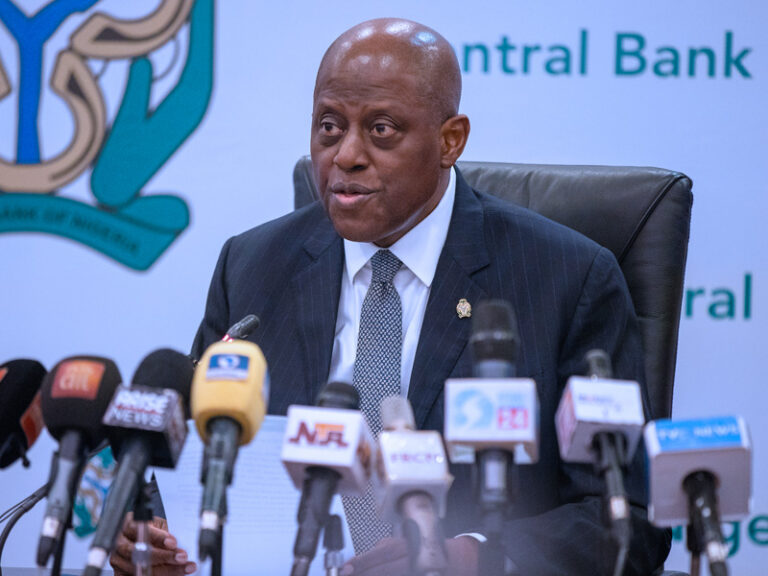
CBN Governor, Olayemi Cardoso, had attributed the strengthening reserve position to improved market confidence and sustained inflows.
Speaking in May, Cardoso said: “This strong buffer continues to reinforce investor confidence in the Nigerian economy and support exchange rate stability.”
Analysts say the growth in reserves is important because it enhances the country’s ability to meet external obligations, defend the naira against excessive volatility and improve investor sentiment.
The steady reserve build-up comes against the backdrop of improving conditions in Nigeria’s foreign exchange market. After experiencing significant volatility in previous years, the naira has shown relative stability in recent months.
At the official foreign exchange market, the naira closed May 2026 at N1,372 per dollar, compared with N1,585.50 per dollar in May 2025, reflecting a notable improvement over the period. The recent gains also mark a turnaround from developments earlier in the year.
Reserves had declined from above $50.08 billion on March 12 to about $49.61 billion by March 23, raising concerns about the sustainability of external buffers. However, subsequent inflows and policy measures helped reverse the trend.
In January 2026, reserves increased by about $509 million within the first 22 days of the year, signalling the beginning of the current recovery cycle.
Overall, Nigeria’s external reserves have gained more than $11 billion over the past year, aided by foreign exchange reforms introduced by the federal government and implemented by the CBN.
The continued rise in reserves is expected to strengthen confidence in the economy, support exchange rate management efforts and provide a cushion against external shocks as authorities pursue broader economic reforms.