Follow Us on Google
• Sanitary pad campaign to boost menstrual hygiene launched in Aba
From Ogbonnaya Ndukwe, Aba
A recent health research sponsored by the World Bank, revealed that more than 300 million women worldwide are recorded menstruating on any given day. It said 500million women lack access to menstrual products and adequate facilities for menstrual hygiene management (MHM).
The reason Oasis Humanitarian Foundation, took a campaign to educate girl child on Menstrual Health Hygiene (MHH), to some public schools in Aba, Abia State. Its Chief Executive Officer, Gift Chiamaka Ogbonna, said: “The essence is to teach the Abia girl about her menstrual hygiene and how to be safe from either unwanted pregnancy, as well as staying safe from bacteria that cause infections, as a result of poor menstrual hygiene.
“We’ve been involved in paying school fees, hospital bills and all that. But we decided to equally get involved in building our girls because of how important they are in society.
“I’m a woman. When these teenage girls are properly informed about their bodies, it’ll help them to avoid certain things that could be a problem in the future. We’re equally giving room for them to report any molestation or abuse. It’s part of what they should know as girls.
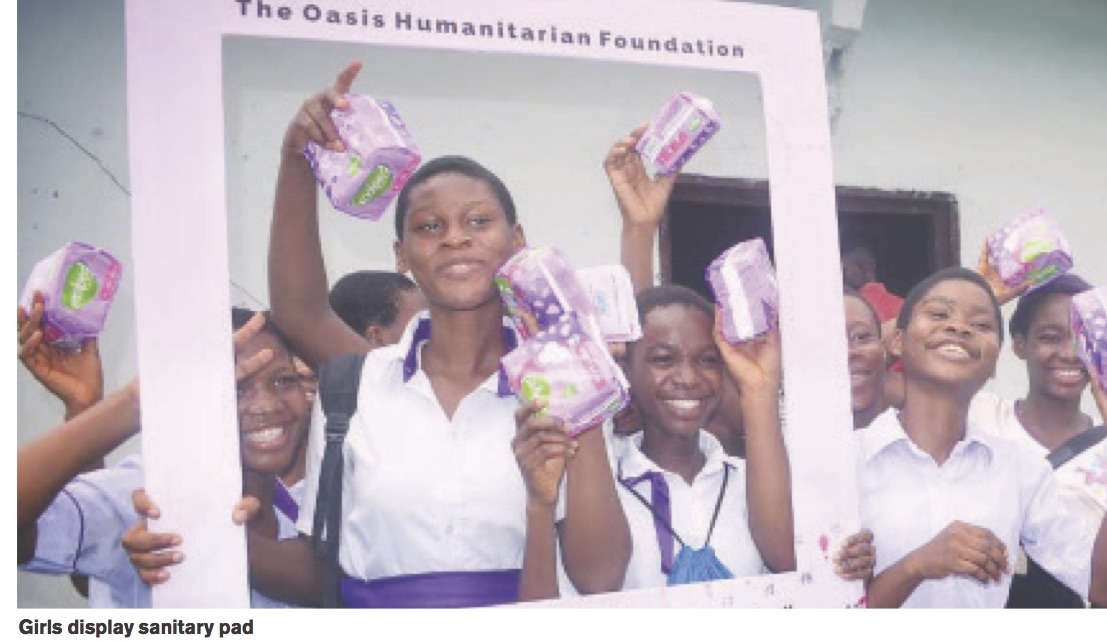
“We are using this campaign to educate them about their menstruation and equally distribute pads to them. They seriously need the assistance to remain healthy and clean.
“Society is running away from topics like this and is allowing our innocent young girls to get into trouble. They need to know the truth. They need to know that pads are important to keep them clean and healthy. This programme has come to stay. We’ll extend it beyond Aba and Abia.”
Ogbonna promised to be monitoring growth and development of girls in public secondary schools: It’s with a view of helping them lead good lives into adulthood and mothers that will be emulated by upcoming ones in future.
We will send medical experts intermittently to interact with and examine the adolescent girls where necessary to ensure that they grow up in conducive school environment. We’ve decided that the programme will be done quarterly. I’ll equally appreciate support but as an individual, I’ll not relent in helping these girls because to me giving reduces stress.”
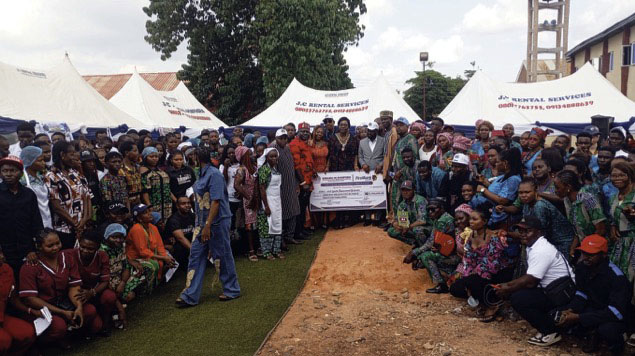
In one of its outings at the Abayi-Umuocham Girls’ Secondary School in Osisioma Local Government, teenage girls were educated about menstrual health hygiene and other things necessary for them to know about their bodies.
They were told that menstrual hygiene was extremely important to their sound health and well-being as teenagers that will grow up to become women and mothers soon.
Dr Sam Odachi, speaker at the event, admonished the girls to take teachings about menstrual health hygiene, very seriously: “Many cases of infertility today, have been traced to poor menstrual hygiene that took place while the woman was growing up as a teenager.”
He advised against the use of toilet tissues while menstruating: “Toilet rolls were not hygienic enough and cannot be trusted to be healthy enough to handle the menstrual flow. It is capable of causing diseases as a result of the particles that break during friction which remain inside the body of the girl child user.
“The reason for the campaign is to arouse the consciousness of the girl child on issues related to menstrual hygiene for the good of their current families and future families.”
Another health expert, Mrs Angela Gabriel, took the girls on menstrual health hygiene topics suchas, how many days between periods is normal (average menstrual cycle), symptoms of menstrual periods, how long menstruation lasts, at what age the period begins and how period changes over time:
“Always change your pads within three and five hours. Wash your undergarments properly. Take your baths at least twice daily. Make sure you usually sundry your washed undergarments and discard used sanitary pad properly.”
Principal of the senior secondary section, Mrs Benedine Onwunna, her junior secondary counterpart, Mrs Ngozi Anwuacha, and the Dean of Studies, Mrs Chika Ezisi, urged the students to put all they have learnt into practice: “Whatever will help society to build a stronger, healthier woman is worth supporting and appreciating.”
Senior Prefect of the school, Chidalu Obodo, said: “I’ll tell Oasis to keep up with the good work to equally reach out to other girls in other schools that are yet to experience what we learnt today, because it was truly educating. They should continue to make this impact on us.
“I advise my schoolmates to take the teachings very seriously. It’s a privilege to have the foundation coming here to educate us despite the multiple schools in the state. We’re lucky and grateful. They left their various jobs and occupations to come here to enlighten us.”