Follow Us on Google

By Wale Fatade
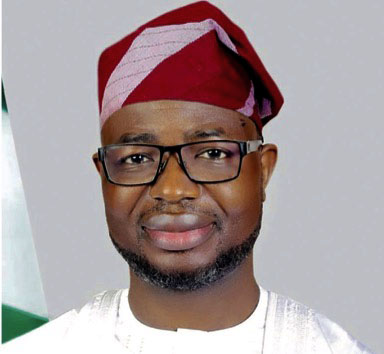
I’ve had to ruminate on how and when I first encountered Akintola Osuntokun in writing this. It was at The Guardian newspapers where I started my journalism career and he was then a member of the Editorial Board. Then the members were looked at as demi gods and those of us downstairs in the newsroom as lesser mortals. We rarely saw them and had little or no interaction with them unless you were on the Copy Desk or Sub Desk, as it is more known on these shores.
Until he wrote a piece and wrongly identified a character in Wole Soyinka’s prison memoir, The Man Died. A fellow reporter raised this in one of our gatherings before our weekly editorial meetings and wondered how a Guardian columnist could make such an error. I mean those guys were beyond errors; that was how much we revered them then. The colleague brought his copy the next day and we all saw that Osuntokun was wrong. Shortly after, he walked by in a T-short, a pair of trousers and sneakers. I still remember his dressing that day vividly.
One of us greeted him and called his attention to the mistake. He was genuinely touched and asked if any of us wanted to write a rejoinder and he would be glad to publish it. We demurred and he thereafter asked us to pop into his office anytime we were free. He subsequently published a correction in his next column and that endeared him to me the more. I took up his offer and tiptoed to his office one early evening, the beginning of a relationship I’ve never had reason to regret till date. Writing this without my diary I can only guess this should be in 1997 before he went under the radar as a result of the Abacha dictatorship.
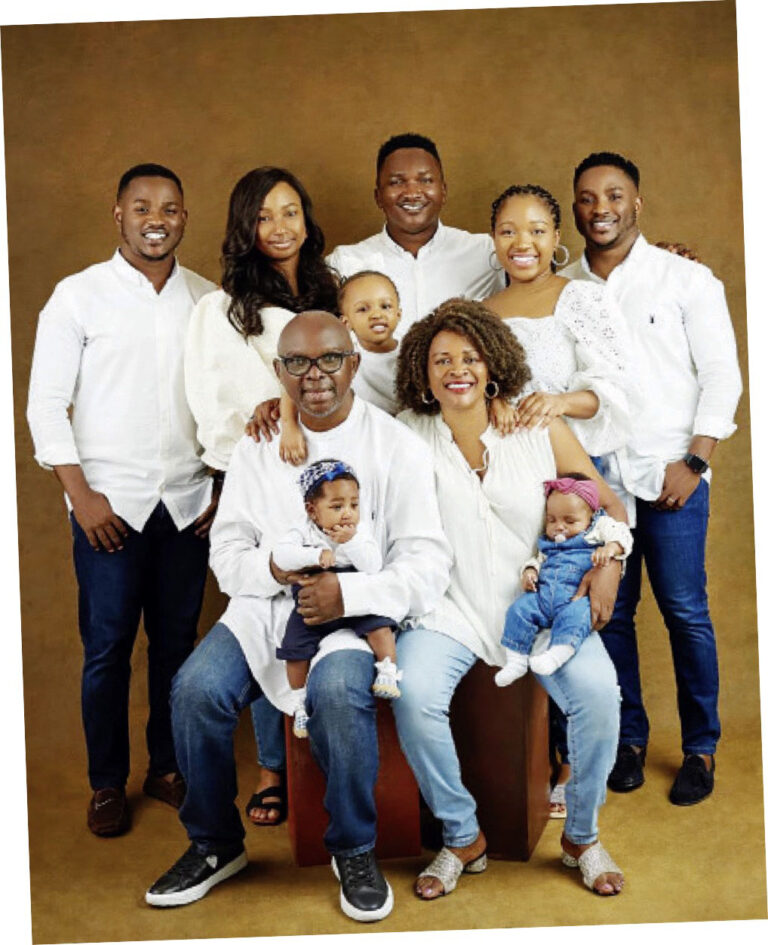
We both discovered I knew some of his kinsmen from Okemesi Ekiti, a town where they so much love each other that nearly everybody I know from there is married to another Okemesi person. Egbon Akin, as I always call him, didn’t look too far before choosing a wife. His delectable wife, Sister Ronke, is from Okemesi too.
It’s an honour to call him a friend as that’s what he has been to me truly. While I’ve disagreed with his politics sometime, I’ve never disagreed with his person. He defends his friends to the last, even when the world might be against them. The true Ekiti in him is never afraid of standing alone or going against the popular tide. Truly cosmopolitan as seen in his wide array of friends across Nigeria, yet he has not lost the rural and I dare say rustic Ekiti touch. The first time I ate pounded yam in his house with efo riro, it took me a while before I recovered from the spicy vegetable. Opening his home wide to me, I’ve visited him everywhere he has lived in Lagos, Abuja and Ekiti. He is one you can have a good debate with, though he marshals his points so seriously that you might think he’s at war with you. But afterwards, he’s battling on your side.
Sometimes one might mistake him for a forlorn person or a cold individual, but I guess his melancholy temperament tends to overshadow his deep love for family and friends. One would do well too not to cross his path as he can go to any length to defend his views or heritage. I think he’s still in court with an Ekiti elder over a column the person wrote castigating his character. Osuntokun carries himself consciously with the full knowledge of his father’s political legacy. Graduating, if I may use the word, from Basorun to Balogun of Okemesi is instructive too. The warrior in him is ever conscious of his political heritage and never failing to remind us of Joseph Oduola Ibijuwon Osuntokun, his father, who was a minister in the then Western Region from 1955 to 1966. You cannot but wonder whether the Yoruba saying of oruko omo ni ro omo is responsible for some of his political battles. Named after Samuel Ladoke Akintola, a protagonist of the political turmoil that rocked the Western Region. His father never left anyone in doubt where he belonged when he named his son, Akintola.
He writes sometimes like an angry person whose desire for change is uppermost in his mind. His pieces pack so much into them that if you appreciate the English language, you will read them over and over. Of course, he’s not just a political theorist but one who is interested in the praxis of politics too. You cannot encounter him without a debate on Nigeria’s politics or his major concern, the place of Yoruba in this country’s affairs. It was not surprising that a lecture was organised to mark his birthday on December 16 at the Nigerian Institute of International Affairs where he is an associate fellow. The attendance that day spoke of his networking ability, as politicians across party lines gathered to honour him.
As I joked with his wife that I was there when he turned 40, just like when he turned 50 and also when he turned 60, this is praying that he would be around to celebrate many more till he turns 100.
Wo ku odun oni o, emi re a se opolopo in Ekiti dialect.
•Fatade is a journalist in Lagos with The Conversation Africa.