Follow Us on Google
•Over 200 farmers raped, killed, kidnapped, crops destroyed in Borno, Plateau, Niger, Kaduna, Zamfara this year
From Okwe Obi, Abuja
Nigeria is an agrarian nation with a large population to match the country’s 36.9 million hectares of arable lands. But the country’s natural endowments and preachments by different administrations of their willingness to invest in agriculture have not translated to abundance of food production and an increased foreign exchange.

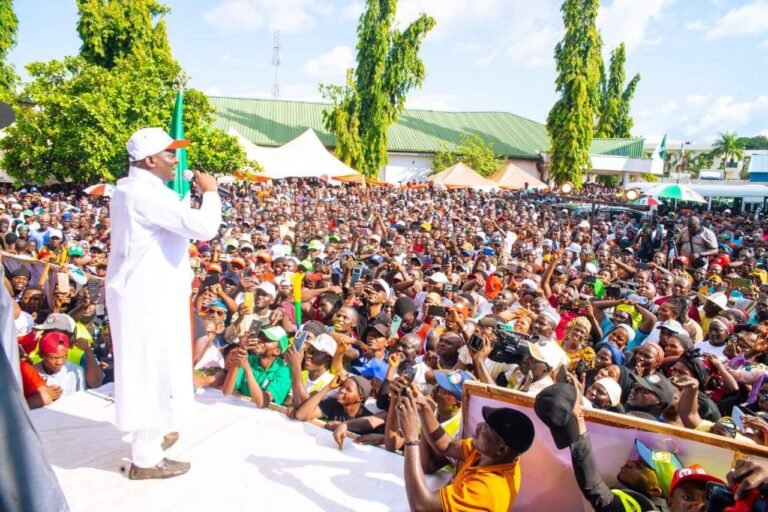
•Zulum
In fact, the more governors put up a posture of readiness, the more foodstuffs continue the soar uncontrollably. Even the claim by Kwara State governor, AbdulRahman Abdulrasaq, that Nigeria has the cheapest food in West Africa in terms of affordability, was rebuffed. Experts disagreed, stating that he was not in touch with reality.
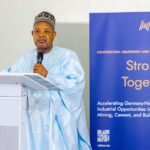
Abdulrasaq, who is the Chairman, Governors’ Forum, spoke when he paid a courtesy visit on the Minister of Agriculture and Food Security, Abubakar Kyari. He said: “What we have also noticed is that in West Africa, food in Nigeria is the cheapest.”
In addition, the declaration of a state of emergency on food security by President Bola Tinubu on July 13, 2023, is yet to make any meaningful impact, as protests have taken the centre stage as a result of hunger.

•Kyari
This problem, according to economists, is squarely attributed to paltry budgetary commitment, insecurity, nefarious activities of portfolio farmers and adulterated farm inputs.
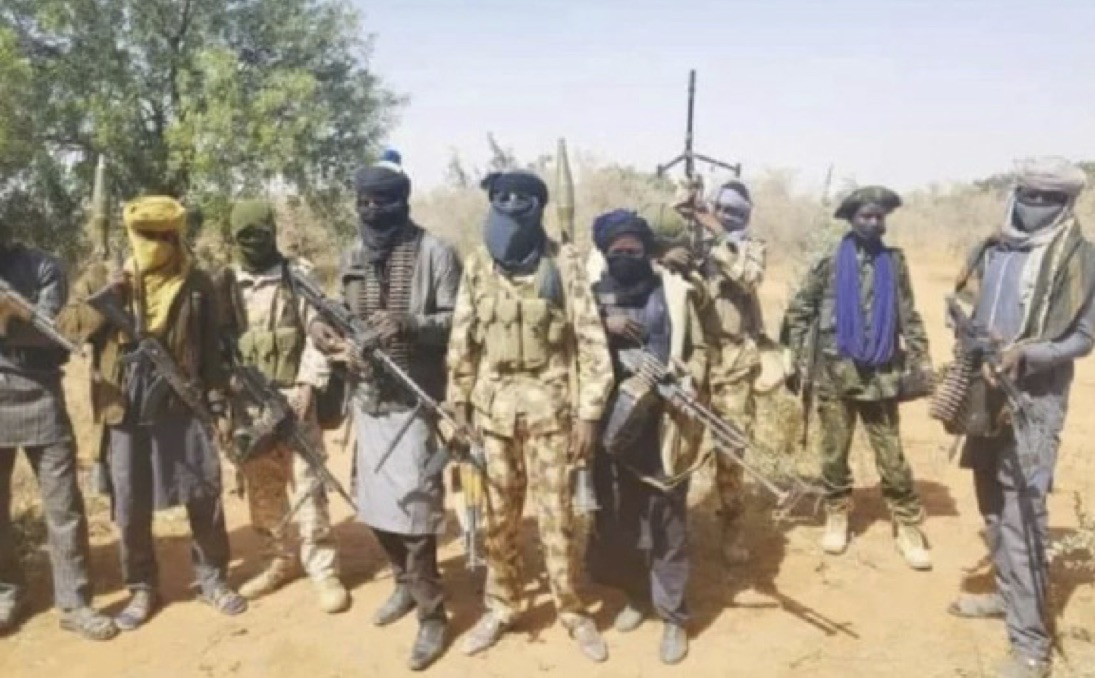
Borno, Plateau, Niger, Kaduna and Zamfara states have recorded well over 200 farmers raped, killed, kidnapped and their crops destroyed with reckless abandon, this year. Dissecting the scale of insecurity, Sokoto State Governor, Ahmad Aliyu, said the situation was unbecoming because farmers would have to seek permission before accessing their farms.

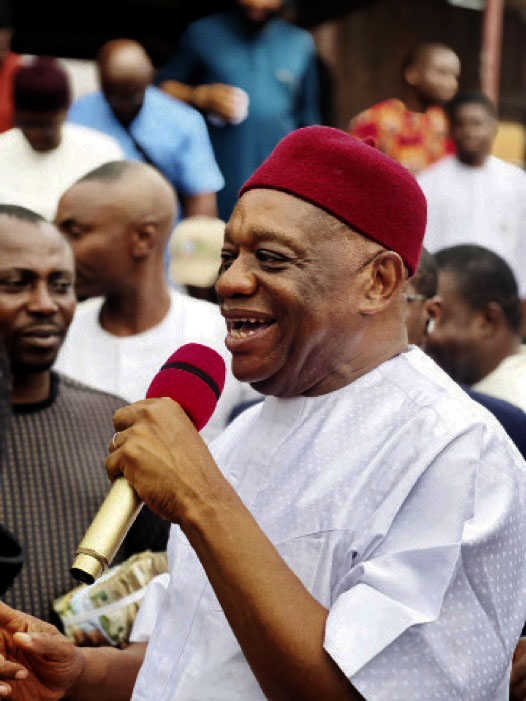
•Ikonne
Aliyu said: “There is no way farmers can go to the farm without security. Before the farmers will go to the farm now, they will have to align with security personnel to escort them to the farm. It is unbecoming.”
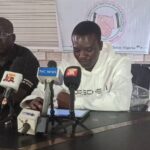
Corroborating the scourge, Governor Babagana Zulum of Borno State, said for 11 years, 3.5 million people were displaced. Zulum, who spoke during the launch of an empowerment centre in Borno State, said two million people have been resettled.
According to him, the atrocities of Boko Haram insurgents affected 100,000 hectares of fertile farmland in Baga Local Government Area as it was left fallow. He solicited more support from National Agricultural Land Development Authority (NALDA), to clear the large portion.
“Here in Borno State, the communities have faced serious challenges as a result of insurgency. About 3.5 million people were displaced in the last 11 years. But fortunately, government at all levels were able to resettle about two million of the displaced people.
“The Borno State government will partner with the Federal Government, Ministry of Humanitarian Affairs, Ministry of Agriculture and Food Security and NALDA with a view to ensuring the resettlement of the remaining 1.2 million displaced people.
“This project is very dear to us. Because as you can see the components of this project is not only the rural housing scheme. We have a poultry production unit.
“We have more than 100, 000 hectares of land in southern, northern Borno State that are rich in soil minerals. We do not even need fertilizer especially in Baga. But unfortunately because of the insurgency, the lands were not cultivate for more than 10 years.
“Now that security has been restored, we have started clearing the land. But we do not have the needed capacity to fast track the process of clearing the entire land.
“Therefore, I am inviting you, the executive secretary of NALDA and your team so that you can pay a visit to Baga to see how your agency will support the government of Borno State in clearing the land for effective utilisation,” Zulum explained.
On his part, the Executive Secretary of NALDA, Prince Paul Ikonne, said government was poised to changing the negative narrative in agriculture through different interventions to usher in new farmers.
He said: “It is not about reaching out to farmers; we are trying to introduce new farmers. This agric empowerment is to attract young farmers. It is going to be state by state.
“As soon as we finish that of Borno, the state government will come up with the list of those that will be engaged, especially those that are interested.
“We will take them in phases. NALDA will be provided for them, the knowledge they require and the startup kits.
“Agriculture has a lot of value chain. One could be doing fishery, the other person will be doing poultry and so on.
“Because they are not going to be in 300s, they are going to be in 10s, it will be easy to monitor. We have our administrative offices across the country.
“So, it becomes another job for them, especially the supervision of these individuals that have passed through the scheme. Within the period they will be in the farms, they will be earning money from there.”
Part of the initiatives to lure young people into agriculture was the inauguration of 120 housing units and an empowerment centre for farmers in Borno State.
The facility which is located in Zawiya Village in Borno State and also Same Dustman village Farm Centre, currently boast of a clinic, a school for children of farmers, a worship centre, Solar powered boreholes and access roads.
The segmentalised facilities has fish ponds, poultry houses, goats pens in its production area, raffia field and an already finished empowerment centre where women and youths would undergo training.
“Today, we commissioned 120 housing unit built for farmers in Borno. The aim is to give farmers a good accommodation.
“The other centre is the agriculture empowerment centre where youth and women would be trained within three to four months.
“Thereafter, they will be given startup packs to enable them do agric business on their own. All these is geared towards reducing unemployment and achieving food security. The empowerment centres are new project of NALDA,” Ikonne said..
Also, Ikonne explained that NALDA was already in touch with existent farmers who would be supported with inputs and, in turn, train budding agriculturists.
He pointed out that each state would benefit from the scheme while calling on state governments to utilise the scheme as a means to create jobs for the teeming population.
“Currently, we have partnership with some individual farmers that have provided their farmlands and space for us to activate the empowerment centres.
“Like in Osun, we have a farmer whose farm is in good shape and up and running. All NALDA needs to do is to upgrade it to the level of being an empowerment centre.
“We also have a farm in Nasarawa State. A private farmer also made available his farmland. That is also 80 to 90% ready for commissioning.”
Speaking on NALDA’s empowerment centres Prince Ikonne disclosed that the centres would have fishery poultry, animal husbandry and raffia grass field all aimed at job creation.
“The importance of these agriculture empowerment centres is to create job opportunities and also encourage young Nigerians to go into agriculture.
“We will be more delighted to have it done with corporate or individuals so that it will be anchored around them and the farm will be managed by them while we empower the youth from the proceeds that come from there.”
In addition, he pointed out that the farmers would be recruited in trenches, saying: “We are looking at 250,000 young Nigerians across the country, to empower them in different field in the first phase. It is going to be a continuous phase.”
Speaking after inaugurating NALDA’s rural housing scheme, Zulum commended Ikonne for choosing Borno to execute such projects, noting that it will contribute to the economic development of the state.
“Let me use this opportunity to commend the hardworking Executive Secretary of NALDA for all his initiatives that are geared Towards creating employment and means of livelihood for the people,” Zulum said.
Meanwhile, Zulum said he was ready to provide lands for investors who are interested in agriculture. He said the initiative would assist mostly returning Internally Displaced Persons (IDPs) who have been battered by bandits and terrorists over the years.
Also, to ensure a smooth sail of the second phase of the dry season farming, Minister of Agriculture and Food Security, Abubakar Kyari, announced the modification of the implementation guidelines.
“The guidelines include the establishment of a NAGS-AP State Working Committee to be chaired by the executive governor or his representative, and the committee shall consist of commissioner of agriculture – vice chairman, commissioner for local governments and chieftaincy affairs or his representative.
Others are the state coordinator of Federal Ministry of Agriculture and Food Security – Member/Secretary NAGS-AP State Focal Point person, All Farmers Association of Nigeria (AFAN), representative of traditional rulers, representative of the River Basin Development Authority (RBDA) covering the state, representative of state agricultural development programmes representative of ICT service provider servicing the state + representative of data clerk representative of relevant commodity associations.
Others would be representative of security agencies, representatives of: Bank of Agriculture, and Nigeria Incentive-Based Risk Sharing System for Agricultural Lending (NIRSAL Plc).
“The terms of reference of the State Working Committee and their relationship with local governments are spelt out in the guidelines.
“I am optimistic that Nasarawa State will have little difficulty in fitting into the readiness criteria for participation in the dry season farming.
“The state is notable for grains, legumes, and root crop cultivation, and some of the country’s bigger rice millers are located in the state.
“The dam in the Doma area is also, I believe, a ready source of water supply during the dry season. But, let me quickly hint that Nasarawa State should prepare to lend additional support to farmers during this period,” he added.