Follow Us on Google
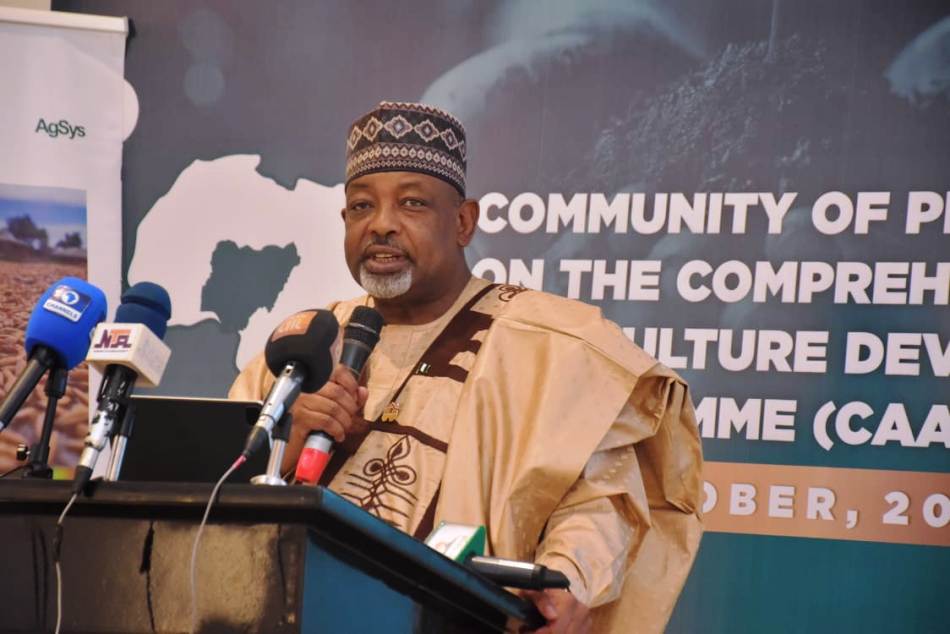
With N903 billion spent on food imports in 2024, it is heart-warming that Nigeria has adopted the ‘Kampala Declaration,’ a continental framework designed to drive sustainable food production, agro-industrialisation, and regional growth. There is no doubt that agribusiness is part of the solution to the rising food insecurity. The Kampala Declaration, which is a 10-year programme, will strengthen Nigeria’s food production system by promoting climate-smart innovations. It will also enhance agric value chains and reduce post-harvest losses. The Minister of Agriculture and Food Security, Abubakar Kyari, says that Nigeria loses over N3.5trillion annually during every post-harvest season. The post-harvest losses must be addressed. Government should work towards meeting the Kampala Declaration target of $1billion for Nigeria’s agribusiness annually with effect from next year. Nigeria cannot continue to spend trillions of naira on food imports when it has plenty of arable land to boost food production.
Nigeria’s food import bill increased by 33 per cent in the second quarter (Q2) of 2025 compared to the same period of 2024. Recent figures from the National Bureau of Statistics (NBS) show that food import rose to N1.18trillion from April-June 2025, up from N893.25trillion a year ago. On a quarterly basis, it recorded the same spike, rising 13 per cent from N1.04trillion in Q1 of 2025. It also showed that the federal government spent N15.28trillion on imports in Q2 of 2025, with food import accounting for 40.19 per cent of the total volume estimated at N22.75trillion. This indicates that Nigeria’s trade imports exceed exports. The commodities were imported mostly from Asia, Europe, and America. Imports from African countries stood at N821.4billion or 5.4 per cent of total imports. Imports from ECOWAS countries accounted for N390.8billion in the period under review.
This underlines the need to boost food production through agriculture. Not quite long ago, the federal government declared a national emergency on food security. Nevertheless, the government should go beyond mere pronouncement and ensure that the initiative is adequately implemented. It should focus on the issues hampering the realisation of the nation’s food security. To address food insecurity, the government must expand irrigation infrastructure as well as enhance water resources management.
It is ironical that Nigeria with over 84 million hectares of arable land across the country is among countries experiencing acute food insecurity. The federal and state governments must begin to prioritise food production as a way of addressing mass hunger and food imports. Food security is crucial to Nigeria’s socio-economic development. Food security will positively impact on health and productivity of the citizens. It will also boost the country’s Gross Domestic Product (GDP) and economic growth.
Other News
According to the CBN Quarterly statistics on food imports, Nigeria spent N30trillion in 2023 on food imports. This money can be used to develop other sectors of the economy if our food import is drastically reduced. It bears repeating that the expansion of our irrigation infrastructure is vital to food security. Apart from ensuring farming at all seasons, it will increase the food production level. We say this because seasonal farming is limiting and depends so much on availability of rainfall or weather conditions. Besides, our agriculture must also be mechanised for more impact. Statistics from the Food and Agricultural Organisation (FAO) indicate that irrigation can increase food production by 100 to 400 per cent. Irrigated land is known to be more than twice as productive as rain-fed cropland, and contributes 40 per cent of the global food supply.
In many parts of the country, water scarcity represents a critical constraint to food production, and a major cause of poverty and hunger. To make the Kampala Declaration work, the federal and state governments should set the right framework, policies and incentives to boost food production through huge investment in the sector. The current food import bill is a drain on the nation’s scarce foreign reserves which had experienced a huge decline in recent months. Available statistics show that Nigeria is not growing enough food to feed its citizens. This is probably why the government depends so much on food imports.
The present administration has acquired 500,000 hectares of land across the country for aggressive agricultural cultivation. It should invest more in agric business. Currently, Nigeria lacks an effective agric extension programmes that will expand the use of technology in farming. Let it come up with consistent policies that will enhance the adoption of technology in agriculture. Nigeria has the capacity to lead in the production of cassava, yam, palm oil, vegetables, maize, plantain and others. It should do so. We believe that the adoption of the Kampala Declaration will go a long way in improving our food production and ensuring food security.