Follow Us on Google
By Olakunle Olafioye
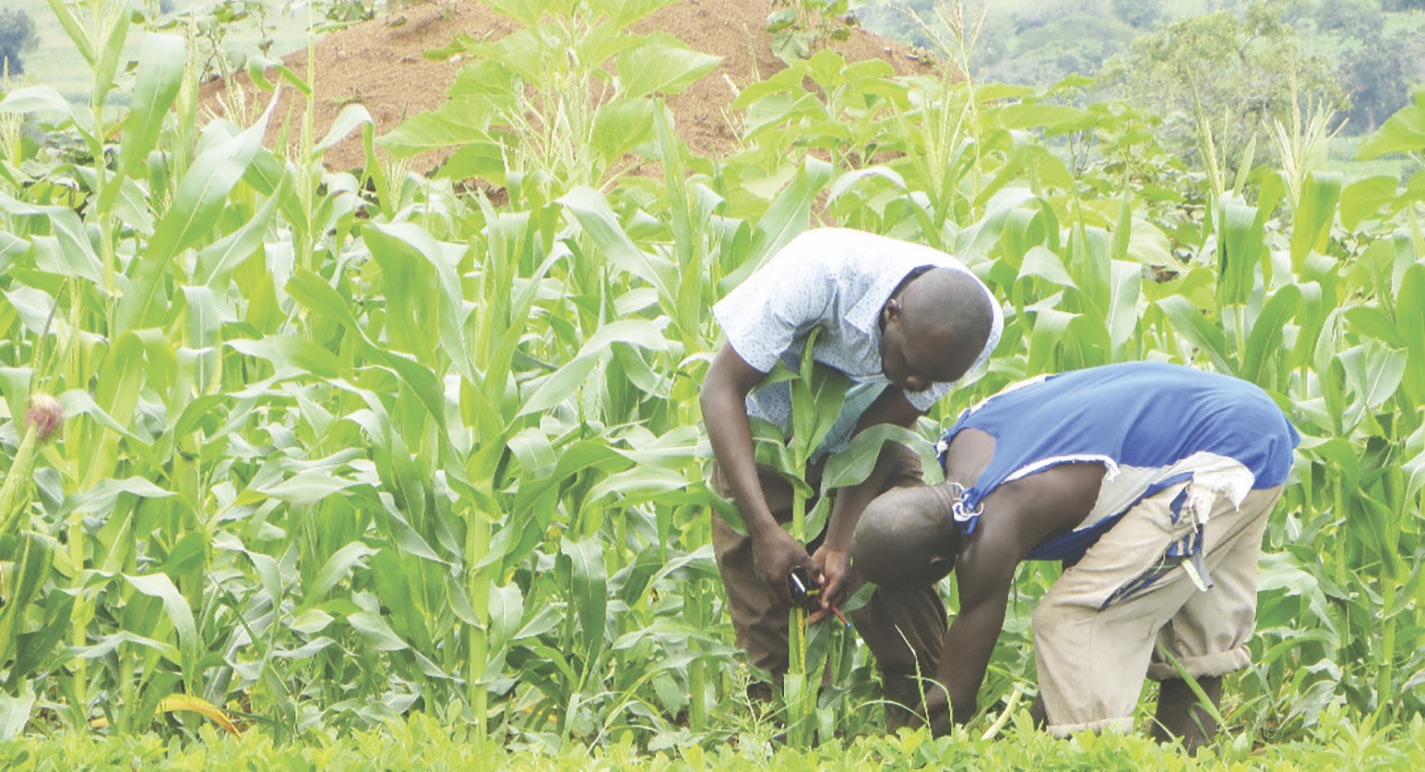
The repeated calls on Nigerians to embrace farming as a panacea to alleviating hunger in the land have not elicited the best of responses.
The majority of Nigerians who are willing to heed the calls say a horde of odds are up against their desires to venture into farming no matter how small.
Mr Olufemi Showunmi is a peasant farmer at Atan-Ota in Ogun State where he has lived and farmed for over 25 years. But the last one and half decades, according to him, has been more challenging and frustrating for him and other small scale farmers in the area as development continues to diminish the land available for farming.
Showunmi said that he, like other farmers in the area, had the rare privilege to cultivate several plots of land when he moved to the area in the late 1990s. “When I got here in 1998 a good number of land owners were eager to entrust their land to us for farming because they needed people that would help them to take care of their land and watch over it.
“But things began to change when development started creeping into the area, with houses springing up in every nook and cranny. As we speak today, the major challenge we have is that there is no more enough land for farming because the land has been sold with houses built on them. Getting land to cultivate now is becoming scarcer,” Showunmi said.
Where land is available for farming, Showunmi said, the fear of losing the land and the crops cultivated on it prematurely is another source of anxiety.
“Sometimes when you are lucky to get a parcel of land for farming one may lose the same land before what is planted on the land is ready for harvest. Two years ago I cultivated about three plots of land. But before the crop was ripe enough for harvest the owner of the land sold it to a buyer who began construction work on the land immediately.
“All the entreaties that he should give me a latitude of about two months in order to allow the plant mature enough for harvest were rebuffed. He only paid me N50,000 as compensation,” he said.
Factors militating against farming are indeed multi-dimensional.
Pa Matthew Olanrewaju is a farmer at Ishaga Orile in Abeokuta North Local Government Area of Ogun State.
The septuagenarian told Sunday Sun that farming at Ishaga Orile in the last couple of years has been very challenging owing to the activities of herders. He said that a large number of farmers in the community have resorted to what he described as fringe farming as it is becoming increasingly dangerous to move deeper into the forest where there is abundant of fertile land.
According to him, the fear of losing one’s crops to the activities of herders who graze their cattle in the forest and on other people’s farms has forced most farmers in the area to either abandon farming as an occupation completely or cultivate the areas of land that are close by.
“Most of us can no longer go deeper into the forest for farming because of the herders who grace their cows on other people’s farms. Apart from this, going deeper into the forest is no longer safe because of some criminals who perpetrate all manners of criminalities.The few of us who are still into farming can only stay very close to the village for safety,” he stated.
Other News
Pa Olanrewaju, however, explained that the inability of the farmers in the village to go deep into the forest posed a lot of constraints and challenges.
“One of such constraints is the issue of shortage of land. In the past after planting on a particular parcel of land for sometime, we would abandon it for some periods to allow it regain its lost nutrients and fertility and move to another place. But that is no longer possible in this current dispensation. What we have now is to use the same parcel of land over and over again. The same factor also ensures that farmers are restricted to small parcel of land for farming,” he said.
The situation is similar in most parts of the country as farmers are being frustrated to abandon farming over the activities of herders.
For instance, some weeks ago a group of farmers in Oriire Local Government Area of Oyo State staged a peaceful protest where they appealed to the state government and the Soun of Ogbomosoland, Oba Ghandi Olaoye, to come to their aid over incessant attacks on their farms by herders.
The farmers, who staged the protest at the palace of the Soun of Ogbomoso, came from three different villages in the local government area, namely Kedo Arigbeyo, Kedo Salami, and Mosunmaje. They lamented that they had to come to the palace to solicit the assistance of the government and the monarch, alleging that herdsmen have persisted in their destructive activities.
Small scale farmers in some parts of Lagos are equally grappling with myriad of challenges which have made farming less rewarding and attractive.
A resident of Isoto Community in Ipaja- Command area of Lagos, who simply identified himself as Yusuf told Sunday Sun that he lost almost half of the maize he planted on a parcel of land to thieves in the area recently.
Yusuf said that although losing part of the crops on his farm in such manner was not strange, he described the recent incident as unimaginable. “I used to have several farms in this areas, but most of the land I used for farming have either been sold or are being developed. I am only left with two pieces of land now. Getting land in Lagos for farming now is a tough task. In addition to this, you have to contend with thieves who steal what you plant.
“Few weeks ago someone or some people came to my farm and harvested almost half of the maize I planted. Of course, it had always happened, but I have never experienced such large scale stealing on any of my farms. It’s really discouraging,” he said.
Farmers who spoke to Sunday Sun said the governments at all levels need to go beyond the rhetoric in addressing the myriad of problems facing farming in Nigeria if the food crisis being experienced in the country is to be tackled.
Pa Olanrewaju said that farming would remain unattractive in the country unless the government shows the political will to address the problem posed by open grazing in the country.
“The biggest headache for farmers in this country is because we still allow herders to graze their cattle openly. What goes into farming in terms of energy and resources investment are massive. If at the end of the day, a farmer loses all he laboured for to a herd of cattle at one fell swoop, there is no way such person will be motivated to return to the farm in the next planting season. Should everyone of us decide to abandon farming because of this, the consequence will be starvation. May God forbid,” he said.
In his contribution, Mr Showunmi requested the government to make land available for Nigerians who are interested in farming.
The high rate of unemployment in the country, he opined, would always be an issue except the government makes agriculture an attractive option to those who are looking for job.
“My occupation is carpentry, but I still have the time to do little farming. The land I use for farming belongs to people I work for and who want me to help them look after them. Most of these plots of land are being developed, which means that I may lose them any time the owners are ready to use them. But if the government could set aside large hectares of land where people who have passion for agriculture like me can practice farming, a lot of people who are not employed will gladly take up farming as a means livelihood,” Showunmi said.