Follow Us on Google
How Gov. Sanwo-Olu’s unpopular choices averted bigger disaster in Lagos
By Adeobowale Johnson
One of the challenges of governance is that prevention rarely receives applause. When a bridge collapses, everyone notices. When a flood destroys thousands of homes, everyone notices.
But when government investments prevent a worse catastrophe from occurring, the public often takes the outcome for granted. This is where the Lagos experience deserves a more balanced assessment.
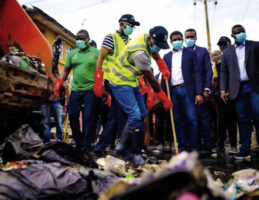
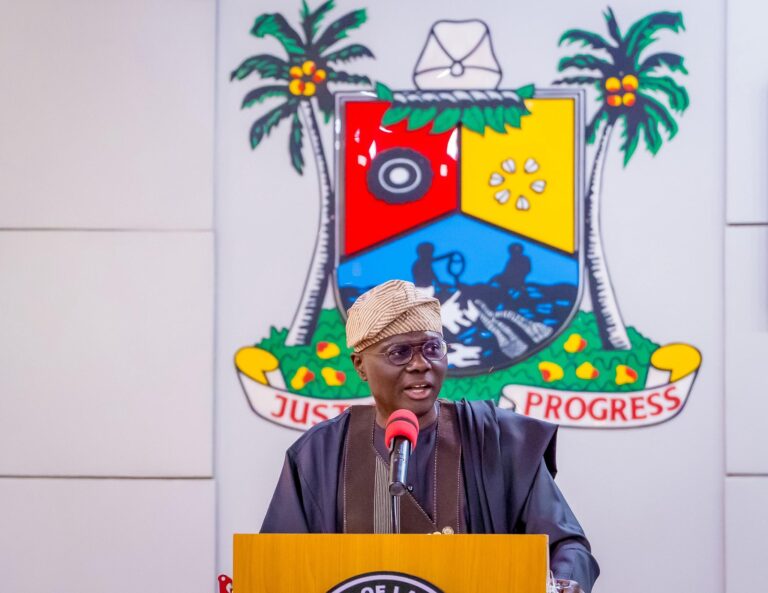
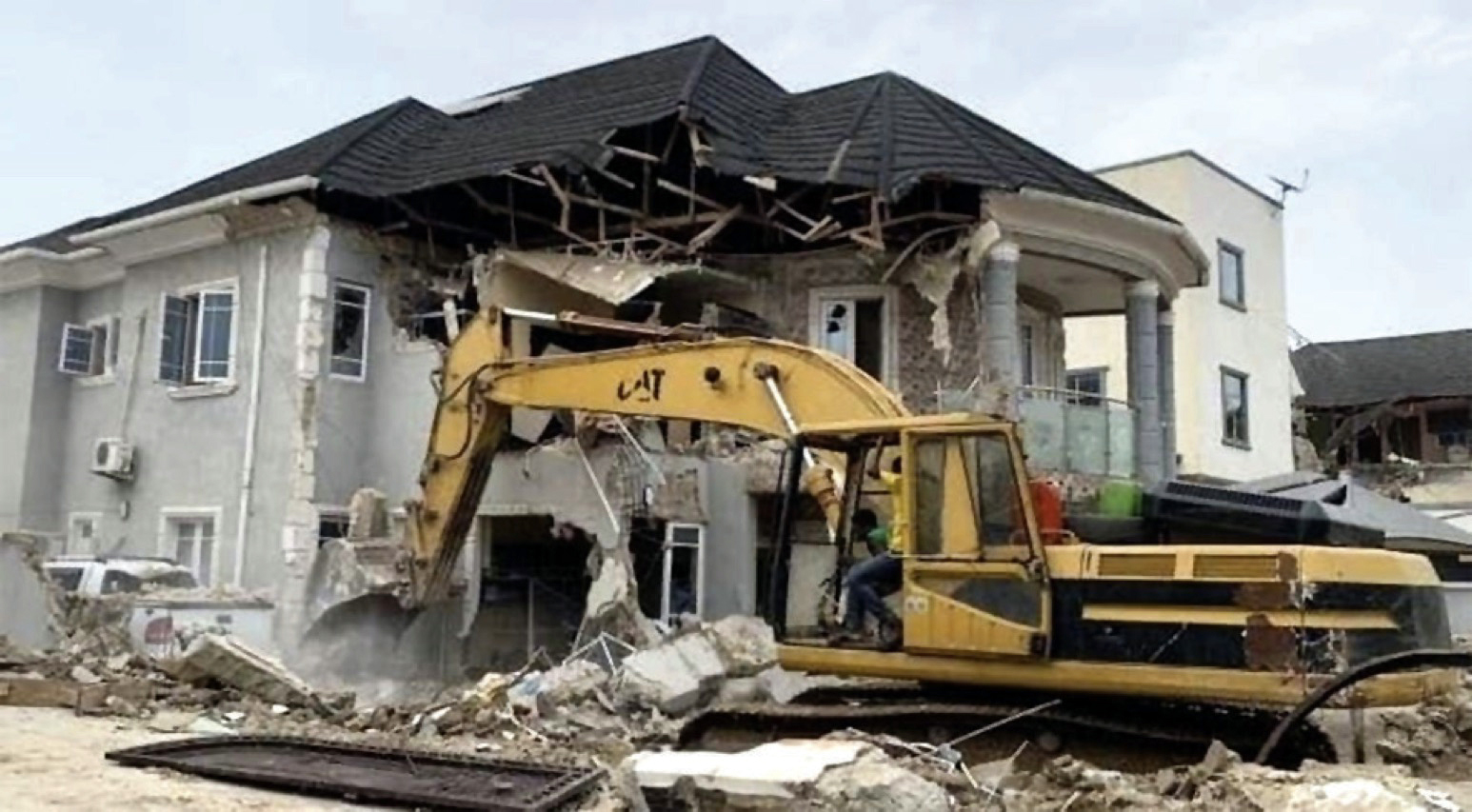
For several years, the Governor Babajide Sanwo-Olu administration has faced criticism over drainage enforcement, canal clearing, demolition of structures on drainage alignments, restrictions on development in certain environmentally sensitive locations, expansion of stormwater infrastructure, and sustained warnings to residents about indiscriminate waste disposal.
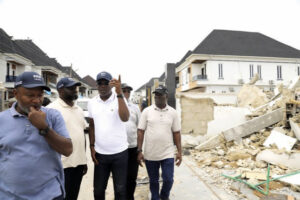
Many viewed these actions as harsh. Many considered them politically costly. Many questioned their necessity. Yet the very issues now dominating conversations in parts of West Africa are the same dangers Lagos has been attempting to confront.
The Ghanaian experience, as much as other neighbouring countries, demonstrates a reality that policymakers across Africa increasingly recognise the fact that flooding is no longer simply an environmental issue.
It is an economic issue. It is a housing issue. It is a transportation issue. It is a public health issue. It is a national security issue.
A single severe flood event can destroy roads, schools, hospitals, businesses, power infrastructure and livelihoods within hours. This is why it is a no-brainer that climate change has altered the conversation.
This is why serious governments no longer treat flood management as seasonal sanitation. They treat it as strategic infrastructure. That is precisely the direction Lagos has been moving.
Lagos is more vulnerable than most West African cities. What makes the comparison particularly relevant is that Lagos faces vulnerabilities that exceed those of many neighbouring cities.
Lagos combines a coastal location. Extensive lagoon systems. High population density. Continuous urban expansion. Massive daily economic activity and increasing climate pressures.
In other words, Lagos sits at the intersection of nearly every factor that worsens flooding. Yet despite these vulnerabilities, the city has largely avoided the scale of catastrophic urban flooding witnessed in some comparable environments.
Other News
That does not mean flooding does not occur. It does. But the question policymakers ask is different: What would have happened if the interventions had never been made?
One of the most misunderstood aspects of governance is the politics of prevention. The politician who commissions a new stadium receives applause. But the politician who spends billions expanding drainage channels often receives criticism.
The politician who allows illegal structures to remain is praised for compassion. The politician who removes those structures to protect waterways is accused of insensitivity. Yet history repeatedly shows that nature does not negotiate. Water follows physics, not politics. Floodwater does not respect election cycles.
It eventually finds every blocked drainage channel and every compromised floodplain. This is why some of Sanwo-Olu’s most criticised decisions may ultimately prove to be among his most consequential.
Another lesson from the Ghanaian experience is that disaster management cannot begin when floodwaters arrive. By then, government is already reacting. The true test is what happens years before the emergency.
The construction of drainage infrastructure. The desilting of canals. The rehabilitation of waterways. The enforcement of planning regulations. The development of early-warning systems. The removal of environmental bottlenecks. The coordination among agencies.
These are the less glamorous aspects of governance, but they often determine whether a city survives extreme weather events.
There is a tendency among critics to judge flood management by asking a simplistic question: “Did flooding occur?” A more sophisticated question is: “How severe would the flooding have been without the interventions?”
That distinction matters. Cities like London, New York, Amsterdam, Tokyo and Miami still experience flooding despite spending billions annually on mitigation. Success is not measured by eliminating every flood event.
Success is measured by reducing vulnerability, protecting lives, limiting economic losses and strengthening resilience. Viewed through that lens, Lagos deserves a more nuanced evaluation.
This does not mean every aspect of Lagos flood management has been perfect. No government can reasonably make that claim. There are still drainage challenges. There are still vulnerable communities. There are still infrastructure deficits. There are still areas requiring urgent intervention.
However, fairness requires acknowledging that the administration has consistently treated flooding as a strategic governance issue rather than a seasonal public relations problem.
The evidence lies in the sustained investments, enforcement actions, drainage projects, canal rehabilitation programmes and continuous public awareness campaigns that have characterised recent years.
The Ghana flood crisis offers a valuable reminder that leadership is often judged too quickly and too narrowly. Many of the measures now being discussed as necessary responses elsewhere are measures Lagos has been implementing for years, often amid fierce criticism.
Governor Babajide Sanwo-Olu may not receive immediate applause for every difficult decision connected to flood mitigation, urban planning and environmental enforcement. Yet if Lagos has avoided outcomes that could have been significantly worse, then some of those unpopular decisions deserve to be viewed not as political liabilities but as evidence of foresight.
History often vindicates leaders who choose long-term resilience over short-term popularity. And in the increasingly complex battle against climate-induced flooding, that may well become one of the defining aspects of Sanwo-Olu’s legacy.
Meanwhile, in the aftermath of the recent floods in Lagos, Governor Sanwo-Olu approved immediate dredging maintenance of 28 additional primary channels across the state.