Follow Us on Google
•Challenges media to champion advocacy
From Fred Ezeh, Abuja
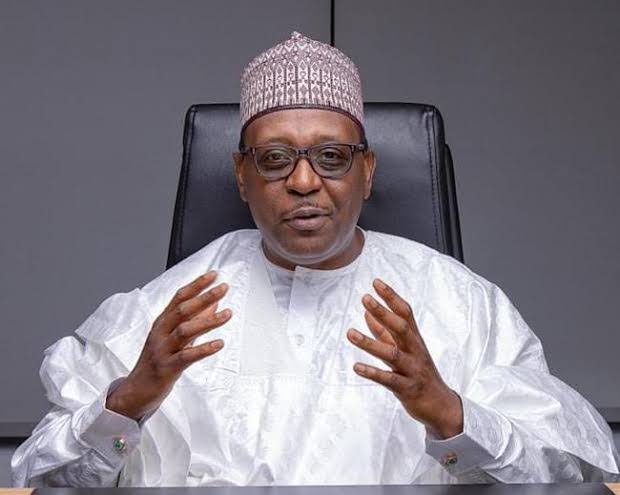
Coordinating Minister of Health and Social Welfare, Prof. Muhammad Ali Pate, has challenged Nigerians to form a strong consensus that will herald an improved health care service delivery in the country.
He stressed that the technocratic and technical expertise alone would not fix the healthcare sector, but a deliberate effort by all Nigerians, including private sector operators, would fix the challenges.
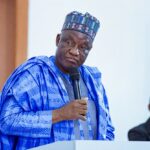
Speaking at a media advocacy dialogue organised by the International Society of Media In Public Health (ISMPH), in Abuja yesterday, Prof. Pate said the health sector suffered poor funding over the years across all levels because of the limited revenue available to the government.
“But in the last two years, the story has not been the same. The funds have been allocated to state governments, and it’s left for all the citizens to question their leaders on what they did with the huge resources that have come their way.
“We have had technical expertise for a very long time. It’s not also purely technocratic in terms of just having the right actors who know how to manage the sector. Fundamentally, it’s a political choice that is reflective of political consensus within a country that might do the magic. It is when a country does not build a consensus on the prioritization of health or of education that it doesn’t allocate the resources or use the resources in the right way.
“And that goes beyond government. It goes beyond even just political office holders. It includes the media, the civil society, and people generally. It took a while for us to get to that. In the last two years, what we have seen is an effort to build another national consensus on the development of this country, and that informed some of the hard decisions that were made, which are not easy If you look at it purely from a political lens of the office of human power, then you won’t take out subsidy that is unproductive.
“You won’t deal with the monetary policy divergence. You will have artificial exchange rates. You won’t deal with the power tariffs. You will even be hesitant to do the local government autonomy, and you will be wary of touching the tax reforms. But those are key ingredients that will translate into resources for government and of those resources to be channelled towards development.”
He expressed optimism that good times are ahead regarding the possibilities of quality and affordable healthcare services for Nigerians.
Executive Director, ISMPH, Moji Makanjuola, in her welcome remarks, said dialogue was a strategic convergence that underscores the vital nexus between health, communication, policy, public understanding, advocacy, and accountability.
Other News
She noted that the media remains the connective tissue between policy, public perception, and accountability, and beyond its traditional role of information dissemination, the media shapes the national conscience, ensures transparency, and sustains public engagement in the health reform process.
“Every well-researched documentary, every investigative feature, every community radio dialogue that informs citizens about immunization, family planning, or antenatal care contributes directly to saving lives.
“At ISMPH, we recognise the power of journalism to reframe the narrative from despair to hope, from gaps to solutions. Through initiatives like this High-Level Dialogue and the Advocacy Solutions Project, we are committed to building the capacity of journalists and editors to tell the story of health in compelling, evidence-based, and solution-oriented ways.
“By doing so, we aim to sustain pressure for accountability, amplify innovation, and ensure that health remains a central priority in governance and development discourse.”
Executive Director, National Primary Health Care Development Agency (NPHCDA), Dr. Muyi Aina, noted that Primary Health Care Centres (PHCs) are the first and most critical point of contact for millions of Nigerians, especially those in rural and underserved communities. “It represents the bedrock of Universal Health Coverage (UHC), hence the improved attention it has received in the last two years.
He said the government has succeeded in reclaiming the lost hope of Nigerians in the PHCs, as could be seen in the number of visits to the PHCs recorded over the last two years particularly at the rural communities.
He challenged Nigerians to take up the challenge of visiting the PHCs, seeking accountability, and most importantly, taking ownership by indicating interest in the system.
Meanwhile, the governors of Kaduna, Lagos and Kano were rewarded for their improved attention and budgetary allocations to the PHCs as well as the healthcare sector in general.
ISMPH said the three states, namely, Kaduna, Kano, and Lagos, are examples of progress, stressing that their experiences offer learning points for other regions, an indication that when political will meets evidence-based advocacy, transformation becomes inevitable.