Follow Us on Google

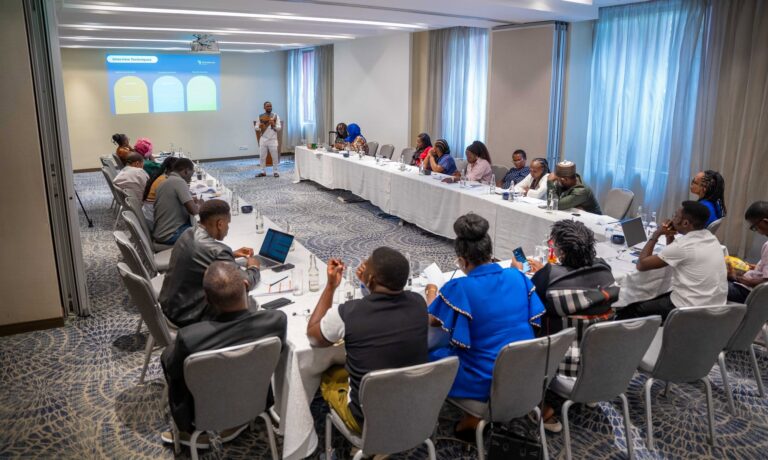
To redefine the future of cybersecurity in Nigeria, DevSecFlow, a cybersecurity solutions provider, recently hosted key stakeholders from the fintech and cybersecurity industries at an exclusive executive breakfast session in Lagos.
Themed “Beyond Compliance: AI-Powered Resilience for Nigeria’s Financial Future,” the high-level gathering spotlighted how intelligent, locally contextualised cybersecurity solutions can move Nigerian financial systems from reactive compliance to proactive resilience.
Delivering the keynote address, Francis Ofungwu, Chief Executive Officer of DevSecFlow, emphasised that the next phase of cybersecurity in Nigeria must go beyond ticking regulatory boxes to building responsive, scalable, and intelligent systems that adapt to the country’s unique digital ecosystem.
“The future of cybersecurity in Nigeria lies not just in regulatory compliance but in building intelligent, responsive systems that understand our local context and respond with speed, scale, and precision,” Ofungwu stated.
He introduced SECOYA, DevSecFlow’s advanced Security Operations (SecOps) platform, designed to help financial institutions and other highly regulated entities manage security operations with greater clarity, speed, and control. SECOYA harnesses artificial intelligence to streamline threat detection, incident response, and alert triage—significantly reducing manual workloads while maintaining 24/7 protection.
“The SECOYA platform handles critical cybersecurity functions such as threat hunting, incident response, and alert triage with greater accuracy and endurance than human analysts.
It reduces manual workflows, provides 24/7 protection, and still requires human oversight and governance to ensure transparency and ethical safeguards,” he explained.
Co-Founder Abdel Sy Fane reinforced SECOYA’s value proposition, noting that the platform was purpose-built to address systemic inefficiencies in Nigeria’s cybersecurity ecosystem. According to him, SECOYA’s AI-driven engine is embedded directly into existing workflows, learning from operational context and user behavior to deliver precision security without friction.
“We built SECOYA to solve the trust and collaboration gaps we kept seeing across tech teams. Real security does not just come from tools—it comes from understanding how people work and then designing systems that support and elevate them without getting in their way,” Fane said.
He also pointed out that SECOYA’s accessible design means even small and medium-sized enterprises (SMEs) can leverage enterprise-grade protection at scale, enabling wider adoption across industries.
The event featured a compelling panel session moderated by Ofungwu, featuring cybersecurity experts from some of Nigeria’s leading fintech firms. Panelists included Ebuka Onyejegbu (Moniepoint), Demi Babajide (OPay), Paul Oludele (PalmPay), and Sopriye Iketubosin (Kuda MFB).
Onyejegbu highlighted the industry-wide shift from traditional, rule-based models to adaptive AI-driven systems.
“While AI adoption is on the rise, its effectiveness depends on thoughtful, contextual integration,” he noted.
Babajide stressed the importance of embedding prevention mechanisms into systems from the ground up.
“Multi-layered AI systems built with prevention at their core are key to proactive security,” he said.
From a user experience angle, Oludele emphasized that AI is now pivotal in enhancing both security and the end-user journey.
Iketubosin, meanwhile, underscored the need to refocus human involvement toward high-level oversight and governance.
“AI-driven systems, when allowed to operate at scale, can significantly improve efficiency, reduce incident response times, and enhance overall security outcomes,” he affirmed.