Follow Us on Google
•World Bank, Agora Policy warn of deeper poverty if LG reforms stall
From Adanna Nnamani, Abuja
The Federal Government has restated its commitment to fully enforce fiscal autonomy for local governments across the country, one year after the Supreme Court delivered a landmark judgement mandating direct allocations to the third tier of government.
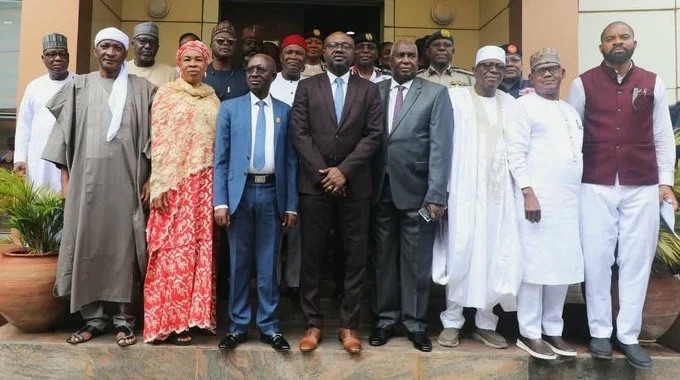
Minister of Finance and Coordinating Minister of the Economy, Mr Wale Edun, gave the assurance Tuesday in Abuja at the Policy Dialogue on Local Governance Reforms, organised by Agora Policy in partnership with the MacArthur Foundation, the Centre for Fiscal Transparency and Public Integrity, and other development partners.
Edun said the government is determined to implement the Supreme Court’s decision despite the complexities involved in overhauling decades-long fiscal structures. He admitted that the process is a work in progress but stressed that grassroots development remains at the heart of the Tinubu administration’s Renewed Hope Agenda.
The Supreme Court, in its July 11, 2024 ruling in Attorney-General of the Federation vs Attorney-General of Abia State & 36 Others, held that caretaker committees appointed by state governors to run local governments are unconstitutional. It also ruled that local government councils are entitled to direct allocations from the Federation Account without interference from state governments.
According to Edun, the government is fully aligned with the apex court judgement and has already begun taking steps to ensure its implementation. He explained that while some parts of the judgement have been enforced, others require consultations and system adjustments to ensure full compliance.
“For the local governments, the Supreme Court stated that only democratically elected councils should have access to federal allocations. Over the past year, that is what we have implemented,” Edun said.
He noted that Lagos State recently concluded its local government elections, making it eligible for direct federal transfers.
The Minister added that beyond election matters, the federal government is also working to ensure that direct payments to local governments become the norm nationwide.
Other News
He, however, noted that fully implementing fiscal autonomy is not as simple as flicking a switch, especially in areas like primary healthcare and basic education where existing funding arrangements require careful restructuring.
“We must remember that local government funding goes beyond just transferring money. It involves governance capacity, infrastructure, and accountability systems. But we are determined to dismantle the obstacles with political will, skill, and collaboration.”
Also speaking at the event, World Bank Lead Governance Specialist, Ms Deborah Isser, warned that Nigeria risks deepening its poverty crisis unless urgent steps are taken to reform local governance and improve basic service delivery.
According to her, “Government does not exist for the sake of government but to provide public services and from this perspective it’s fair to say Nigeria is in crisis. Nigeria is among the bottom 5 countries globally on metrics of maternal mortality, under five mortality and learning poverty. With a fast-growing population, this will get only worse unless there is a significant improvement in the delivery of basic education and primary healthcare.”
Isser noted that while the Supreme Court’s decision is a step forward, the real challenge lies in aligning capacity, trust, and accountability at the local level.
In her welcome remarks, Chair of Agora Policy, Ojobo Atuluku, said the dialogue was convened to assess progress since the court ruling and to push for deeper reforms. She lamented the lack of meaningful devolution of authority and resources so far.
“The questions remain: Have we seen real change? Have local governments become more responsive, capable, or participatory? Has the judgment shifted power in a way that empowers citizens at the grassroots?” she asked.
Atuluku also unveiled plans for a Local Governance Accountability Portal, which will track local government allocations from 1999 to date and provide profiles of elected officials.
She said Agora Policy will continue to advocate for transparent, accountable, and citizen-driven local governance in Nigeria.