Follow Us on Google
By Merit Ibe
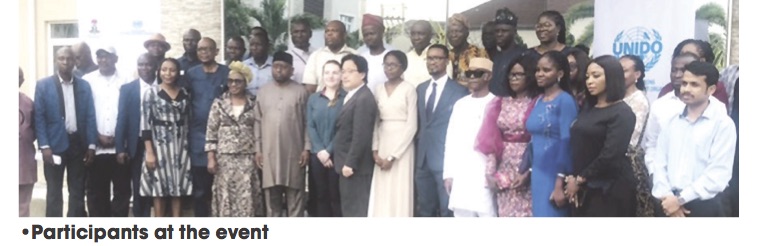
Following approval of financial and technical support from the multilateral fund of the Montreal Protocol, the Federal Government, in partnership with the United Nations Industrial Development Organisation (UNIDO), is set to implement the stage III of the Hydrochlorofluorocarbons (HCFC) Phase-Out Management Plan (HPMP) Project.
The aim of the HPMP Stage III
project is to phase-out the use of HCFC-22 in the Refrigeration & Air-conditioning Manufacturing Sector and facilitate the achievement of 67.5% HCFCs reduction
target by 2025.
Minister of environment, Mohammed Abdullahi, made the disclosure at an inception workshop in Lagos, where he noted that Nigeria has been part of global efforts towards the phase out of Ozone Depleting Substances(ODS) in all sectors of the economy from stage I, Ii and now on stage III and has demonstrated her commitment to the provisions of the Protocol by phasing out the use of Chlorofluorocarbons (CFCS) and some other Ozone Depleting Substances in 2010.
The Hydrochlorofluorocarbons (HCFCs), is substance mostly used in the air conditioning and refrigeration sectors as well as a blowing agent in the foam manufacturing sector.
The minister, who was represented by the zonal director, Lagos and South West, Mrs Oluwatoyin Agbenla, said in furtherance of efforts towards the implementation of the Montreal
Protocol, “the Ministry commenced the implementation of the HPMP project in
2011, with the objective to completely phase out 344.9 Ozone Depletion Potential tonnes of HCFCs by 1st January, 2040.
The minister acknowledged efforts of implementing agencies for the HPMP project, especially UNIDO mainly in the manufacturing sector of the project, noting that the project’s sectoral activities will be implemented by UNIDO.
On his part, National programme coordinator, Environment and Energy,UNIDO Regional Office, Oluyomi Banjo, said the phaseout project,
means that we are going to take steps in partnership with the Federal Government of Nigeria through the national liaison office to stop the usage of R22 for the manufacturing sector, which also includes looking into issues like importation and production of those refrigerants in Nigeria.
“Our second reason here today is to launch the scholarship scheme for female engineers, artisans and staff in the refrigeration and air-conditioning sector.
“Today UNIDO is partnering with the FG to launch a scholarship scheme for female technician’s and engineers. We hope to extend this to other countries in West Africa.
He disclosed that the informal sector is involved in this program. “They make a majority of the companies we are supporting in this project. They need most of the support.”
Fukuya Iino, Industrial Development Manager, UNIDO said: “We are passionate about moving forward in this project. The cooperation is leading to a successful implementation so far.
Nigeria is capable. It has the capacity and immense opportunities. I believe the future is bright.
He advised the informal sector should come together and join associations that are informed so they can learn. “There should be guidelines and best practices. Stakeholders should follow the guidelines strictly and constantly. They should not omit any point . Their should be change of behavior, make rules and stick to them to avoid a disaster. We need support and change agents.”
The implementation of the HPMP Stage III project include:
Phase-out of HCFC-22 in the commercial refrigeration manufacturing sector; Phase-out of HCFC-22 in the residential air-conditioning manufacturing sector; Kpabeb schorlarship programme for female RAC engineers and technicians.
Under the commercial refrigeration manufacturing component of the
project, HCFC-22 is expected to be replaced with Hydrocarbons, due to their low Global Warming Potential. Based on the challenges associated with natural
refrigerants such as Hydrocarbons, Ammonia and Carbon Dioxide,.
He reiterated that the Ministry
will ensure that only trained and certified technicians are allowed to handle them.