Follow Us on Google
• Over 20m out-of-school kids figure
From Fred Ezeh, Abuja
The disagreements between some agencies of the Federal Government and United Nations Education, Scientific and Cultural Organization (UNESCO) widened few months ago following claimed by the latter that the number of out-of-school children in Nigeria rose to over 20 million.
Stakeholders said the report by UNESCO was an indication that years of efforts and interventions by the Federal Ministry of Education to improve access to basic education were not yielding the desired fruit, hence the several misgivings as a result of the figure.
They were, however, hesitated in accepting the figure. Nevertheless, they admitted that the number of out-of-school children in Nigeria has risen lately but not as high as 20 million.
The Universal Basic Education Commission (UBEC), explained that Nigeria had established robust baseline data on basic education through a comprehensive National Personnel Audit (NPA) of all basic education institutions conducted in 2018 with the help of National Bureau of Statistics (NBS), National Population Commission (NPopC), UNESCO Nigeria, UNICEF and the World Bank.
It insisted that the outcome of the 2018 NPA was widely disseminated and generally accepted as credible, and the baseline data was used to estimate the number of children that were not in school at primary and junior secondary levels in Nigeria.
UBEC insisted that the 2018 NPA clearly established the number of out-of-school children in Nigeria and took cognizance of the fact that Nigeria’s designated age bracket for basic education, primary and junior secondary, age six to 14 did not extend to the senior secondary cadre, age 15–17, and the post-secondary school age of 18, which were both part of the UNESCO’s 20 million figure.
The commission said the personnel audit further provided authentic representation of the out-of-school children population in Nigeria, within the confines of basic education, notably, primary and junior secondary school as defined by the UBE Act 2004.
It said it remained resolute in its determination to provide quality education for Nigerian children in response to developmental needs, and in line with its commitment to global protocols and conventions on education, notably, Education for All (EFA), Millennium Development Goals (MDGs) and Sustainable Development Goals (SDGs).
It also reaffirmed commitment to providing conducive atmosphere for children to acquire strong and quality basic education which, it said, is the foundation of academic excellence or otherwise.
UBEC, however, lamented the poor support and collaborations from state governments, who ought to be concerned about the future of its citizens, hence should champion any cause that would provide quality education for their citizens beginning from basic education level.
The commission frowned at poor interest of some state governments to access annual financial disbursements running in billions of Naira, and also take other realistic measures to improve their basic education, because of lack of interest to make counterpart financial contributions as required by law to access the annual financial disbursements.
It alleged that many states in the South were behind in terms of accessing annual financial interventions to develop their basic education system, with many of the states having backlog of unaccessed funds running into billions of Naira, while their basic education infrastructure and systems are in dilapidated state.
But there seemed to be little or no improvement to show in the basic education system for many other states, especially in the North where many of the states are up-to-date in terms of accessing the annual interventions, perhaps, due to corruption and mismanagement of funds.
Multiple Indicator Cluster Survey (MICS) of 2021 reported that Kebbi, Zamfara, Bauchi and Sokoto states had the highest concentration of out-of-school children, while Ekiti and Lagos states had lowest number of out-of-school children.
To this end, state governments were challenged to double efforts in taking millions of children out of the streets back to the schools so they could acquire education, skills and knowledge that could enable them participate meaningfully in the development of the state and Nigeria.
Some stakeholders in education sector, particularly basic education, made reference to the fact that education, particularly basic education is on concurrent list, and as a result, states are empowered by law to legislate on education issues, and join efforts with Federal Government to tackle growing number of out-of-school children.
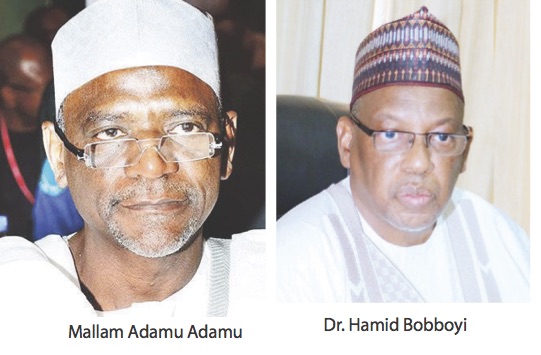
Minister of Education, Mallam Adamu Adamu, at the 2022 National Council on Education in Abuja, admitted he could not solve several challenges he ought to have solved. He said he was particularly concerned that the menace of out-of-school children was becoming embarrassing to the country despite several programmes and interventions supported by local and international partners. Rather, the number increased during his time in office:
“Most of our policies at the federal level, undoubtedly, succeeded in pulling good number of children out of the street back to the school, but evidently, the actions of the states government were, in one way or the other, pushing the children back to the street.
“Someone called my attention to the fact that I was the longest serving Minister of Education in Nigeria. Sincerely speaking, it never occurred to me and I never cared whether I was the longest or shortest serving minister.
“My worry was that I came to office as Minister of Education seven years ago to tackle myriad of issue confronting the education system, particularly the issue of out-of-school children and unending ASUU strikes that has had negative effect on our university system. Unfortunately, I failed to achieve all these expectations. For seven years, I was unable to tackle the issue of out-of-school children and several other challenges in the education sector.
“However, there are so many factors that contributed to that failure, but the key one, probably, has to do with the Commissioners for Education in the states who, alongside their principals, the governors, have not shown strong commitment to pull children out of street and back to school.
“In 2016, I developed ministerial strategic plan for the education sector, and as required, I presented the document to the Federal Executive Council (FEC). I requested that State of Emergency be declared on education particularly at the lower levels. Unfortunately, decision could not be taken on the matter because education is in concurrent legislative list, hence such interventions particularly at the lower level is strictly the responsibilities of the states government.
“But as a fall out, the President asked me to direct the memo to the National Economic Council (NEC) and I did as directed. My thoughts was that, if the NEC bought into the idea, being that its members are state governors, it would have just been a national decision and the expected objective would be achieved.
“I made the presentation three times to the National Economic Council and the expected action which is the State of Emergency was not declared on education sector.”
He reminded commissioners for education that lots of children that ought to be in school are still on the streets because “the resolve and commitment from state governments are not as strong as what is obtained at the national level.”
Few weeks ago, UNICEF confirmed that its educational intervention in the north, Girls’ Education Programme Phase 3 (GEP3), has resulted in enrollment of 1.5 million girls into formal school system in northern Nigeria. It explained that GEP 3 worked to improve the quality of education for all children, but particularly help girls gain better access to education and economic opportunities, thus breaking the cycle of poverty and disadvantage.
The agency confirmed that GEP 3 programme was implemented in six northern states, namely, Katsina, Kano, Niger, Sokoto, Zamfara and Bauchi, between 2012 and 2022, with the support of the Federal Ministry of Education, the Foreign, Commonwealth and Development Office (FCDO) of the UK, and UNICEF.
UNICEF confirmed that the attendance rate of girls in primary schools in the six states improved from 43 per cent to 70 per cent, while gender parity improved from 0.73 per cent to 0.97 per cent.
UNICEF Representative in Nigeria, Cristian Munduate, said the GEP 3 successful got more girls enrolled into formal and non-formal schools, and also improved learning outcomes: “The project raised the profile of educated girls, created new positive social norms in many communities and enabled a transformational shift in mindsets about the importance of girls’ education. So, it is critical that we advocate scaling of the approach in all states.
“The project also raised the profile of educated girls, created new positive social norms in many communities and enabled a transformational shift in mindsets about the importance of girls’ education. So, it is critical that we advocate scaling of the approach in all states.
“Much work need to be done to ensure that girls complete their secondary education. This is important not only for the economic prosperity and wellbeing of the girls and her family but to stem the high population growth expected in Nigeria.
“Overall, the GEP 3 programme trained over 67,000 primary school teachers, including those teaching in Integrated Qur’anic schools to improve their skills and ability to deliver quality education.”
Additionally, UNICEF Nigeria suggested that radio learning option be adopted in displaced communities especially in northeast states to educate the children and strengthen their knowledge. It explained that radio learning classes offer a break from the daily chaos, providing a community of friends, peace, and order that gives displaced children something to look forward to.
Lincoln Ajoku, UNICEF Education Specialist based in Maiduguri, Borno State, said: “The endgame is that the children would be mainstreamed into the formal education system after a period of nine months. And in other communities, radio clubs are helping to enroll girls in school. The clubs are led by children, and after listening to pre-recorded radio education programmes on the benefits of girl-child education, they use the information to act script plays in market squares and community centres.”
A teacher at a private school, Wuse 2, Abuja, Sophia Emmanuel, said addressing the issue of out-of-school children remains the most important because that is the foundation of learning and when a child misses that foundational learning, he or she will be struggling.
Said she: “When you get children to, at least, finish primary six, they will be able to read and write, and so when they fail to attend secondary school, they will be able to integrate into the society if they can identify and read some words and from there, if the opportunity presents itself, they can learn more or go to secondary school.”
The teacher noted that more emphasis should be placed on primary school-age children in rural areas, as that is where the highest numbers of out-of-school children are domiciled.
Emmanuel commended some programmes adopted by government and international organisations such as cash transfer and school feeding which, according to her, boosted enrollment and attract more children to school.
She said if the government will strictly adhere to that and provide the necessary learning materials and infrastructure, among other things, like good learning environment, the number of out-of-school children will be drastically reduced, if not eliminated.
An educationist based in Kabusa, Abuja, Michael Sule, said there are many parents who do not want their kids to go to school especially in the rural areas, not because they don’t see the importance of education but because of poverty and they need the children around to help out either on the farm or in other labour areas.
“If we concentrate on the primary-age children, especially those who have never been to school, and give them reasons to be in school, like providing them with a good meal, good playing ground, and make learning fun for them, no child will want to stay back at home to miss school,” he said.
A Maiduguri based teacher in Borno state, Abdul Gwoza, said the factors responsible for rising figure of out-of-school include issues such as early marriages, domestic violence, gender stereotyping, menstruation management; and access to schooling.
He added that poverty increases vulnerability to barriers such as food insecurity, fees, and school materials, stating that as many as four in 10 Nigerians live below the national poverty line.