Follow Us on Google
From Jude Chinedu, Enugu
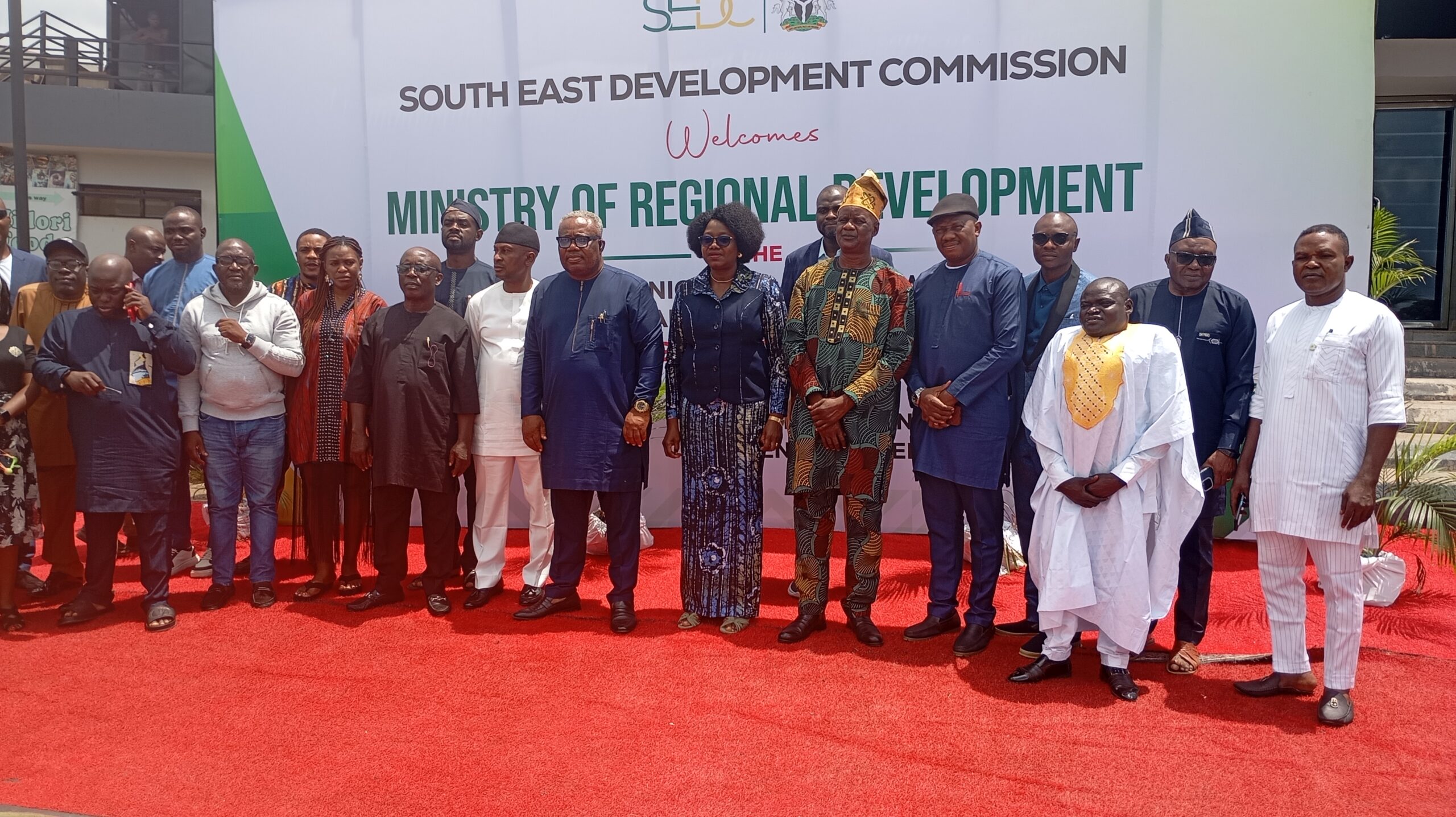
The Federal Government and the United Nations Development Programme (UNDP) on Monday brought together stakeholders from across the South East in Enugu for the regional technical validation workshop on the National Regional Development Policy (NRDP) 2026–2030.
The workshop, held at the International Conference Centre, Enugu, was organised as the South East regional consultation aimed at reviewing and validating the proposed policy designed to address developmental imbalances across Nigeria’s geopolitical zones.
Participants at the event included representatives of state governments in the South East, regional development commissions, civil society organisations, private sector operators, development partners, academics, policy experts and community leaders.
Speaking at the workshop, the Permanent Secretary, Federal Ministry of Regional Development, Dr. Mary Ogbe, described the gathering as a critical step towards building a more balanced and inclusive development framework for the country.
She said the policy was conceived to tackle longstanding regional disparities in infrastructure, economic opportunities, public services and human capital development.
According to her, “Nigeria’s development landscape is characterised by deep structural disparities in infrastructure, human capital, access to economic opportunities, and quality of public services across regions and states. These disparities are not merely statistical observations; they are realities that affect the dignity, livelihoods, and futures of our citizens.
“The National Regional Development Policy 2026–2030 is our Government’s strategic response to these challenges. It is a blueprint designed to promote balanced, inclusive and sustainable development across all regions of our federation.”
Ogbe explained that the draft policy emerged from broad consultations with states, development agencies, civil society organisations and technical experts across the country.
In his remarks, the Managing Director and Chief Executive Officer of the South East Development Commission (SEDC) Mark Okoye, represented by the Executive Director of Finance, Stanley Ohajuruka, said the workshop was particularly important for the South East given the region’s unique economic and environmental realities.
Okoye noted that while the South East remained one of Nigeria’s most entrepreneurial regions, it continued to grapple with serious developmental challenges.
Other News
“The South East is home to over 20 million people and one of Nigeria’s most entrepreneurial populations. Yet we face structural challenges: infrastructure deficits, ecological degradation, industrial limitations and youth unemployment.
“The establishment of the South East Development Commission by the Federal Government is a recognition that regional coordination is essential to unlocking the zone’s potential in manufacturing, trade, agriculture, technology and renewable energy,” he said.
He commended the draft NRDP for recognising the Aba-Onitsha-Enugu axis as a strategic industrial and commercial corridor requiring coordinated infrastructure investments, while stressing the urgent need for ecological intervention projects in the South East region.
According to him, the SEDC would focus on industrial infrastructure, ecological restoration, human capital development and investment facilitation under the proposed regional development framework.
Representing the UNDP Resident Representative in Nigeria, Elsie Attafuah, Matthew Alao said the South East validation workshop formed part of a broader national effort to reposition Nigeria’s regions as drivers of economic growth and inclusive prosperity.
“The National Regional Development Policy is one of the key instruments that can help translate this ambition into a coherent national development framework. This is a defining moment in the history of our dear nation.
“The most resilient economies across the world today are those that deliberately shape their economic geography — leveraging infrastructure, connectivity, institutions, talent, innovation and regional comparative advantages to build competitive production systems and globally connected regional economies. Nigeria must position itself within this reality,” he said.
He said the establishment of regional development commissions by the Federal Government was a major step toward addressing those challenges through coordinated development planning.
“The RDCs are strategically positioned to drive infrastructure investment, regional integration and coordinated economic transformation within their regions. They present a unique opportunity to advance bottom-up and balanced development,” he stated.