Follow Us on Google
From Okwe Obi, Abuja
To enhance food production and shore up economic development, the federal government has initiated plans to revamp the cooperative sector through the Renewed Hope Cooperative Reform and Revamp Programme (RH-CRRP) for five years.
The government explained that the initiative would reposition the cooperatives sector as strategic engines of inclusive growth, food security, and rural development by aligning them with the presidential directives and national development priorities.
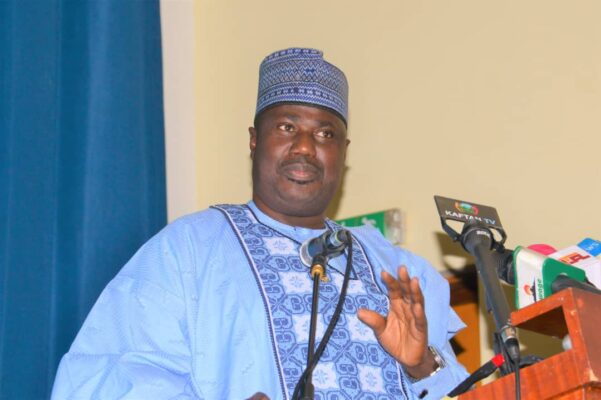
Minister of State for Agriculture and Food Security, Sabi Abdullahi, at the inauguration of the committee recently in Abuja, reiterated that the cooperative sector in Nigeria plays a vital role in the country’s economic development contributing significantly to food security, job creation, economic growth, social cohesion, and poverty reduction.
According to Abdullahi, the programme is a national response to the structural weaknesses in Nigeria’s cooperative and agricultural ecosystems.
Represented by the Permanent Secretary, Olaniyi Ogunbiyi, he pointed out that by addressing the sector’s challenges and strengthening its institutions, the scheme will enhance the sector’s contribution to Nigeria’s economic development, improving the lives of millions of Nigerians’’
He disclosed the Key Strategic Initiative (7-Pillars) of the RH-CRRP which include:
Cooperative Governance and Institutional Reforms; Cooperative Financing and the Establishment of the Cooperative Bank of Nigeria; Cooperative Sector Digitalization and Data Management Systems Capacity Building, Cooperative Education and Human Capital Development; and Value Chain Development, Enterprise Growth and Market Access.
Others are; Youth, Women and Persons with Disabilities (PWDs) Inclusion and Empowerment; and Strategic Partnerships, Investments and Global Cooperative Competitiveness.
“The expected outcomes include the following; Enhanced contribution to food security, job creation, economic growth, social cohesion, and poverty reduction, improved governance, leadership, and management of cooperative societies, increased access to funding, markets, and technology for cooperative societies.
“It would equally strengthen partnership and collaboration among cooperative societies, government agencies, private sector organizations, and civil society and increase awareness and recognition of the cooperative sector’s role in Nigeria’s economic development,” he said.
The minister tasked the technical committee to work assiduously towards achieving its mandate in line with President Bola Tinubu’s agenda in the agricultural sector as well as contribute to the one-trillion-dollar economy for the nation within the decade as projected by the President.
He revealed that the Term of Reference (ToR) is as follows; To serve as the lead coordinating Ministry from FMAFS on RH-CRRP; Review the Renewed Hope document and come up with a RHCRRP zero draft; Drive policy implementation and inter-ministerial collaboration; support Farmer Producer Cooperative (FPCOs) and Comparative Cooperative Farms (CCFs) through input access, farm out aggregation and Extension Services; and to facilitate national food system and anchor borrowers’ programme.
On his part, Director, Federal Department of Cooperative, Dr. Mohammed Abdulkadir, stated that the 8th Regular Meeting of the National Council on Cooperative Affairs (NCCA) with the theme: ‘Revitalizing Nigeria’s Cooperative Sector,’ remains a catalyst for inclusive growth and sustainable national development under the Renewed Hope Agenda.
Other News
According to Abdulkadir, the initiative is also for the establishment of the Renewed Hope Cooperative Reform and Revamp Programme (RH-CRRP) (2025 – 2030) as Nigeria’s official cooperative development framework for cooperative transformation, digitalization, and economic revitalization.
He added that ‘’as part of the approved implementation work plan, it has also provided for the composition of the FMAFS RH-CRRP Ministerial Technical Committee as lead coordinating committee in the Ministry to drive the Policy and programme implementation’’.
Equally, Ogunbiyi stated that the Special Agro-Industrial Processing Zones (SAPZ) scheme is a model for agricultural industrialization, food systems transformation, and sustainable economic development in Nigeria.
He argued the idea is geared towards reducing post-harvest losses, improving productivity, attracting private investments, creating sustainable jobs for teeming youth and women, strengthening food security, enhancing rural incomes, and stimulating inclusive economic growth across participating States and the nation at large.
He added that the SAPZ seeks to establish integrated agro-industrial hubs with critical infrastructure such as roads, power, water supply, storage facilities, logistics systems, and processing centers located close to areas of high agricultural production.
While claiming that SAPZ would transform Nigeria’s agricultural landscape by moving the country from the export of raw agricultural commodities to agro-industrial processing, value addition, and market-driven agricultural development, he added that the programme represents one of the most strategic agricultural and economic transformation initiatives of the Federal Government of Nigeria.
He said: “It is a flagship programme jointly financed by the Federal Government of Nigeria, the African Development Bank (AfDB), the International Fund for Agricultural Development (IFAD), and the Islamic Development Bank (IsDB), with strong collaboration from participating State Governments and private sector stakeholders.
“The SAPZ Programme presents a unique opportunity for Nigeria to reposition agriculture as a business-driven and industrialized sector capable of driving national development, generating employment, and increasing competitiveness within regional and global markets.
“The Programme aligns strongly with the Renewed Hope Agenda of the present administration and the Federal Government’s commitment to achieving food security, economic diversification, import substitution, and rural industrialisation. SAPZ is not merely an infrastructure project; it is a strategic platform for transforming rural communities into Centers of economic prosperity and industrial growth.”
He reaffirmed the commitment of the ministry as the coordinating Ministry to provide the necessary leadership, policy coordination, and enabling environment required for the successful implementation of the Programme. In addition, achieving the objectives of SAPZ requires strong institutional collaboration, technical synergy, and sustained inter-agency coordination.
He stated the need to strengthen technical coordination and collaboration among relevant MDAs, Development Partners, and key stakeholders for the effective implementation of the SAPZ Programme.
During his presentation, the National Programme Coordinator, Dr. Kabir Yusuf stated that ‘’the SAPZ is a cross-cutting platform to attract private sector investment into value added agro-processing to unlock opportunities for improved food security, job creation, export earnings, rural poverty reduction and increased contribution of agriculture to national GDP’’.
“The Programme Development Objective is to support inclusive and sustainable agro-industrial development in Nigeria, aimed at diversifying Nigeria’s economy through agriculture and reduction of food import bill.”