Follow Us on Google

• 30,000 conversion kits expected next week ahead of Christmas
• State House facility to serve 150 vehicles daily
Federal Government is targeting 2,000 additional Compressed Natural Gas (CNG) refuelling stations nationwide as part of efforts to reduce transportation costs, expand access to cheaper fuel and accelerate the conversion of vehicles from petrol to gas.
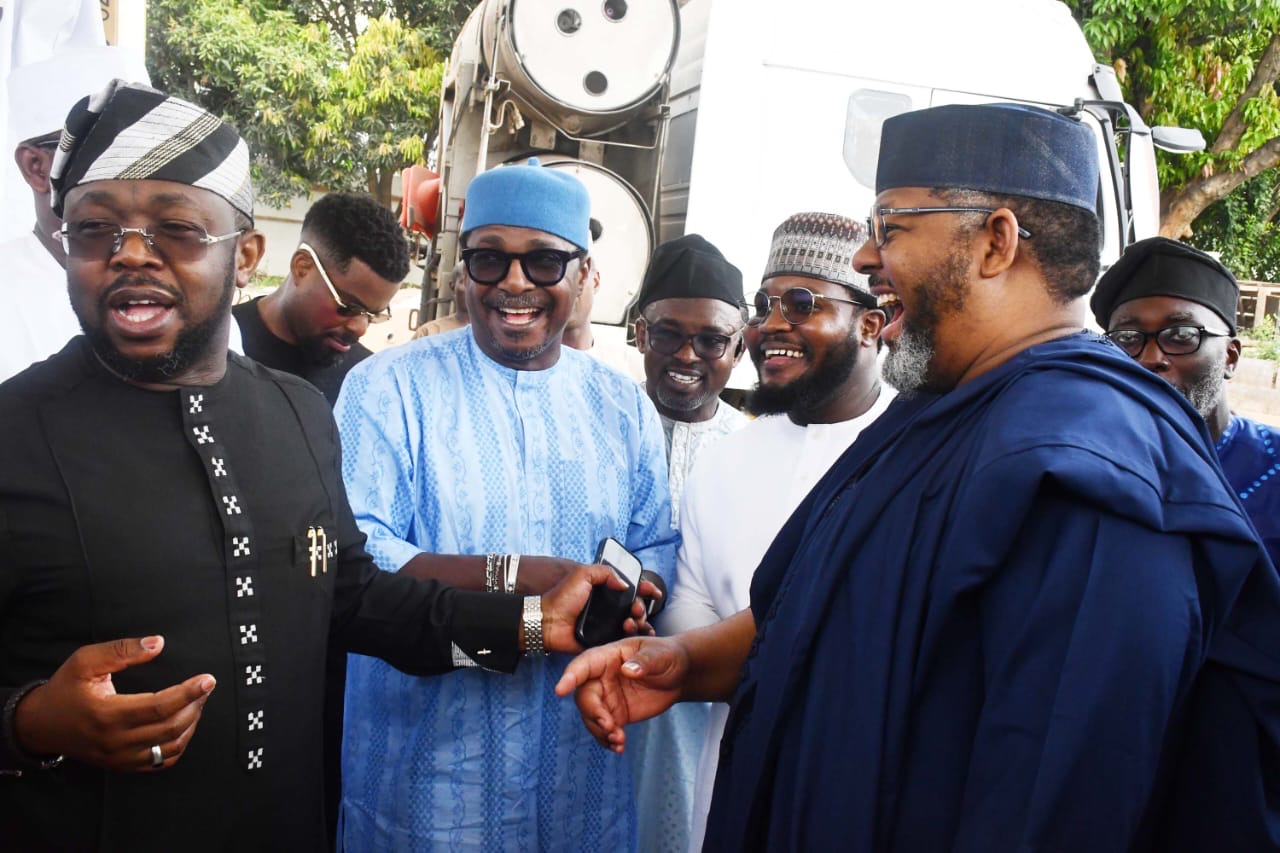
The government has also commenced plans to extend CNG vehicle conversion to interested State House personnel, following the conversion of an abandoned petrol station at the State House, Abuja, into a functional CNG refuelling facility.
The Chairman of the Presidential Initiative on Compressed Natural Gas and Electric Vehicles (Pi-CNG & EV), Ismael Ahmed, disclosed the expansion target at the inauguration of the facility, saying President Bola Tinubu had directed the establishment of 1,500 additional stations in February and another 500 in August.
He said 106 CNG stations were currently operational nationwide, while another 170 were at various stages of development or awaiting regulatory approvals.
Ahmed said the additional facilities were expected to come on stream between this year and early 2027, stressing that the initiative had moved beyond its experimental phase and was now focused on expanding infrastructure to meet the demands of Nigeria’s estimated 220 million population and 12 million vehicles.
The development comes as the administration intensifies efforts to make CNG a viable alternative to petrol and diesel following the removal of petrol subsidy.
Ahmed said the adoption of CNG-powered buses had already resulted in transportation fare reductions of between 30 and 40 per cent on some routes in Abuja, Lagos and the Kano-Katsina corridor.
He cited the Kano-Katsina route, where commuters who previously paid between N3,000 and N4,000 could now travel for about N1,500 using CNG-powered buses.
In a related development, the Permanent Secretary, State House, Temitope Fashedemi, said the government would encourage interested personnel to convert eligible personal vehicles to CNG-hybrid systems in the coming weeks.
He said the conversion programme would begin with vehicles that meet the required technical specifications, adding that the State House was already integrating the technology into its official fleet.
According to him, about 10 recently acquired JAC vehicles are CNG-hybrid models, alongside some shuttle buses operating within the Presidential Villa.
Fashedemi spoke at the inauguration of the converted facility in Karu, Abuja, explaining that the project was designed to demonstrate the government’s commitment to leading by example in the transition to cleaner and cheaper energy.
He said the abandoned petrol station was made available for conversion through a partnership between the State House, Pi-CNG and Rollin Energy Limited, without any expenditure by the State House on its rehabilitation.
The Permanent Secretary said the arrangement was also intended to demonstrate to private investors that CNG infrastructure could provide viable business opportunities.
He urged existing filling station operators and prospective investors to partner with Pi-CNG to establish more refuelling facilities and vehicle conversion centres across the country.
“All the filling stations you see around, are they owned by government? No. They are owned by people and business operators. The earlier existing and prospective business people recognise this as an opportunity and partner with Pi-CNG to establish these facilities, the better,” he said.
Fashedemi said the limited availability of refuelling stations remained one of the challenges slowing the adoption of CNG, noting that government was seeking to address the infrastructure gap by encouraging private-sector investment rather than taking over commercial operations.
He described Nigeria’s abundant natural gas reserves as an economic opportunity that could provide motorists and transport operators with cheaper alternatives to conventional fuels.
He recalled that the removal of petrol subsidy by President Tinubu, despite the economic adjustments and initial public concerns it generated, was also intended to encourage the transition to alternative energy sources.
The new facility, he disclosed, had undergone a trial period during which motorists in the surrounding community received free CNG for more than a week before its formal inauguration and commencement of commercial operations.
The Chief Executive Officer of Rollin Energy Limited, Mubarak Umar Danbatta, said the facility had the capacity to serve approximately 150 vehicles daily, depending on cylinder sizes and operating pressure.
He described it as an integrated refuelling facility, with its compressor, dispenser and other essential equipment housed in a single system. Its double-nozzle dispensers allow vehicles to refuel from both sides.
Danbatta said the State House project was the company’s second partnership with Pi-CNG, following an earlier collaboration inaugurated on May 29, 2024.
He disclosed that Rollin Energy currently operates facilities in Ilorin and Abuja, while two additional stations in Kano were expected to be commissioned the following week, with another two planned for Kaduna.
The company, he said, was targeting nearly 15 CNG refuelling facilities nationwide by the end of 2026.
Also speaking, the Senior Special Assistant to the President on Domestic Affairs, Toyin Subair, said the Federal Government and state governments were expanding investments in CNG-powered buses, trucks, tricycles and other mass transit vehicles to ensure that cheaper fuel translated into lower transportation costs.
Subair said the National Economic Council had committed to a joint financing arrangement with the Federal Government to support the deployment of affordable transportation solutions across the states.
He said the administration was targeting a reduction of 40 per cent or more in transport fares, particularly on interstate routes and in the movement of agricultural produce.
He further disclosed that more than 30,000 additional vehicle conversion kits were expected to enter the Nigerian market from the following week to expand conversion capacity ahead of the Christmas travel season.