Follow Us on Google
Shettima urges coordinated action to bridge skills gap and fuel economic growth
From Juliana Taiwo-Obalonye, Abuja
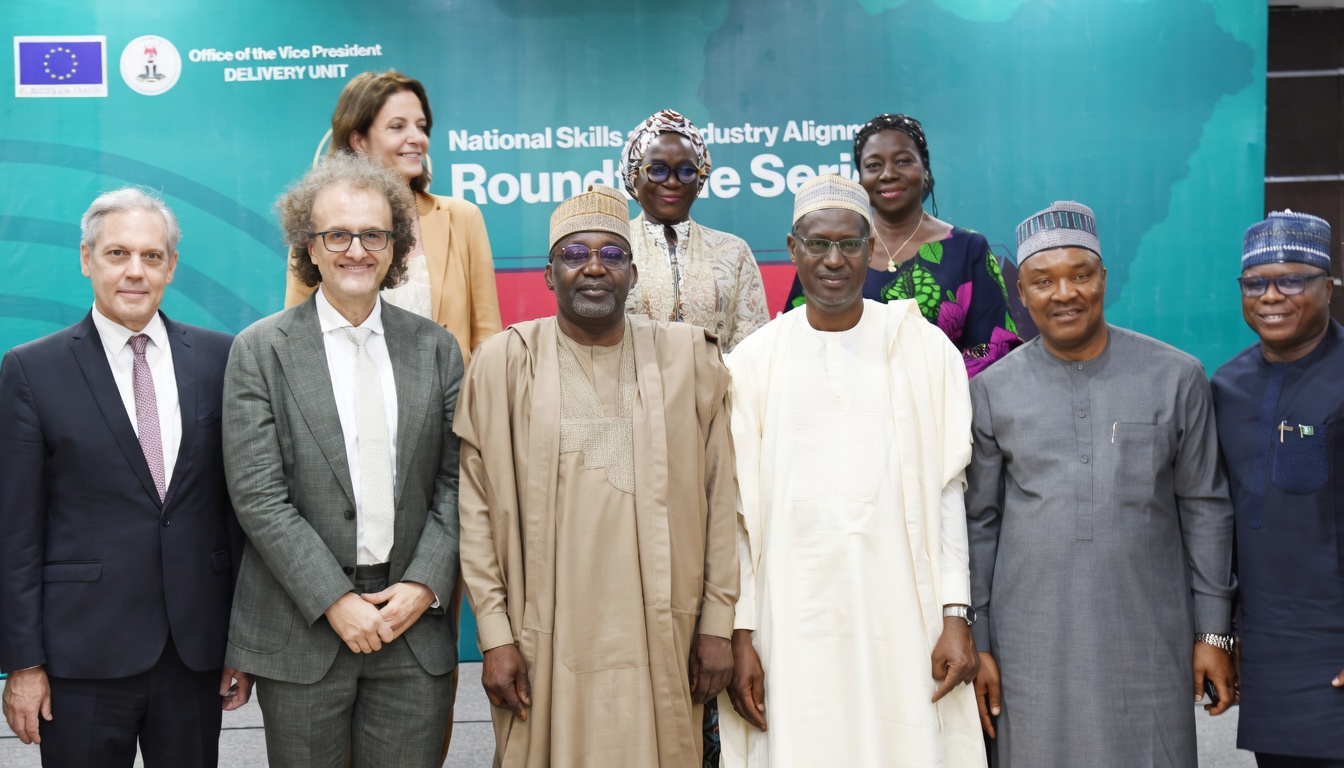
The federal government, under President Bola Ahmed Tinubu, has called on global development partners, industry leaders, and policymakers to boost investments in skills acquisition programmes targeting millions of Nigerian youths, as Vice President Kashim Shettima declared open the National Skills and Industry Alignment Roundtable Series (Q1 2026) in Abuja on Tuesday.
The event, themed “Bridging Skills Supply and Labour Market Demand”, was convened by the Office of the Vice President with support from the European Union (EU). Represented by the Deputy Chief of Staff to the President (Office of the Vice President), Ibrahim Hadejia, Shettima stressed the urgent need for clarity, collaboration, and coordinated results to transform Nigeria’s vast youth population into a productive workforce.
“Nigeria does not have a talent problem. Until skills meet industry demand, job creation will remain below its full potential,” Shettima stated, highlighting that while millions of ambitious young Nigerians enter the labour market annually, most available jobs are informal and disconnected from productivity.
He outlined the Tinubu administration’s shift from fragmented programmes to a coherent national system. “We are moving away from fragmented programmes, isolated interventions, and uncoordinated investments towards a more coherent national system—one where skills lead to jobs, jobs lead to enterprise, and enterprise drives economic growth,” he said.
Shettima spotlighted last year’s efforts, including a national mapping of the job creation ecosystem and a high-level policy dialogue, which underscored that sustainable employment requires private sector leadership with government enablement. “Job creation cannot be outsourced to government alone—industry must take its place at the table, not just as employers but as co-creators of the workforce Nigeria needs,” he added.
Other News
The roundtable aims to foster structured engagement among stakeholders, moving from dialogue to action by linking training with employment and policy with outcomes. Shettima stressed shared responsibility: “Development partners also have a critical role—not just in funding programmes but in supporting alignment, coordination, and scale around what works. Ultimately, what we are seeking is simple—clarity, collaboration, and results.”
Earlier, the Minister of Housing and Urban Development, Ahmed Dangiwa, underscored the event’s relevance to his sector, where skilled workers—from architects to bricklayers—are in high demand to tackle the housing deficit and spur growth.
EU Head of Cooperation for Nigeria and ECOWAS, Massimo De Luca, praised ongoing partnerships with the Vice President’s office, the Tony Elumelu Foundation, and others. “We grow skills where they matter, where they are required, and where they are defined,” he said, noting the EU’s focus on embedding programmes such as 3MTT within Nigeria’s ecosystem.
Senior Special Assistant to the President on Delivery and Coordination, Akubo Adegbe, described the series as a platform for measurable impacts in priority sectors.
Participants also included representatives from the Organised Private Sector, German Agency for International Cooperation, Tony Elumelu Foundation, and Aliko Dangote Foundation.