Follow Us on Google
From Fred Ezeh, Abuja
The Federal Government has reversed its earlier decision on the adoption of mother tongue as the language of instruction in schools, particularly in the basic education system.
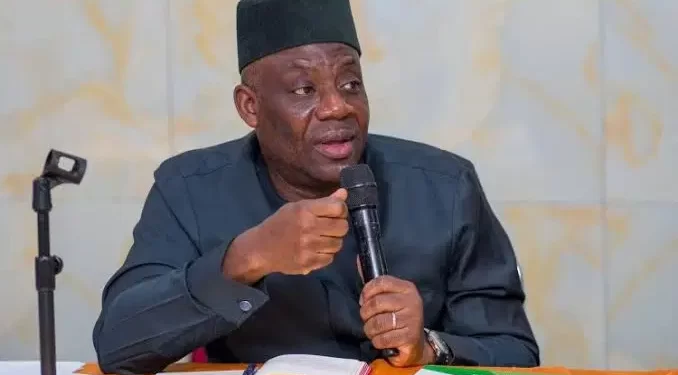
Minister of Education Dr Tunji Alausa stated this at the 2025 Language in Education International Conference, organised by the British Council, in Abuja, on Wednesday.
He recalled that the mother-tongue policy approved in 2022 stipulated that children from Early Childhood Education to Primary Six should be taught in their mother tongue or the language of the immediate community.
He said the policy was initially designed to promote indigenous languages, recognise their equal status, and improve early childhood learning outcomes, while English remained the official language for later education and formal settings.
The minister said, “The decision to cancel the policy was based on extensive data analysis and evidence showing that the use of the mother tongue as the primary medium of instruction had negatively impacted learning outcomes in several parts of the country.
“We have seen a mass failure rate in WAEC, NECO, and JAMB in certain geo-political zones of the country, and those are the ones that adopted this mother tongue in an over-subscribed manner. This is about evidence-based governance. English now stands as the medium of instruction from the pre-primary, primary, junior secondary, senior secondary and to the tertiary education level.
“Using the mother tongue language in Nigeria for the past 15 years has literally destroyed education in certain regions. We have to talk about evidence, not emotions,” he said.
Other News
Minister of State for Education, Prof. Suwaiba Ahmed, in her remarks, stated that the government is implementing other measures to address learning challenges at the foundational level.
“Now, we are designing a training package for teachers that focuses on literacy and numeracy. This specifically targets teachers of pre-primary to primary one to three. We are training them on the best methods to teach literacy and numeracy and the appropriate approach to classroom learning,” she said.
The British Council Country Director, Donna McGowan, stated that the conference under the theme “Language, Education and Inclusion: Empowering Every Learner” was organised in collaboration with UNICEF, Plan International, FCDO PLANE, Sightsavers, Save the Children and Sterling One Foundation.
She highlighted that sub-Saharan Africa is home to more than 2,000 languages, and while multilingualism is a strength of the region, the Language of Learning and Teaching (LoLT) continues to be a significant barrier for many learners.
McGowan further explained that the conference explored key areas, including language and inclusive education, the importance of foundational learning through effective language applications, effective bilingual practices and the strengthening of teacher-training and the use of appropriate pedagogy for language-diverse classrooms.
“It also highlights the potential of technology in language education and assessment approaches to support equitable education systems. Language is more than a medium of education; it is also the foundation of inclusion. Hence, the conference is an opportunity to reimagine education systems that reflect Africa’s rich linguistic and cultural diversity and ensure every child has the chance to succeed,” she said.
She reaffirmed the British Council’s commitment to supporting Nigeria’s education reforms. “We are committed to working hand-in-hand with the ministry. We work across all areas of education in terms of supporting teacher professional development, school leadership, and language proficiency,” McGowan said.