Follow Us on Google
From Isaac Anumihe, Abuja
The Federal Government is owing electricity generation companies (GenCos) and electricity distribution companies (DisCos) over N4 trillion in subsidies.
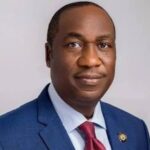
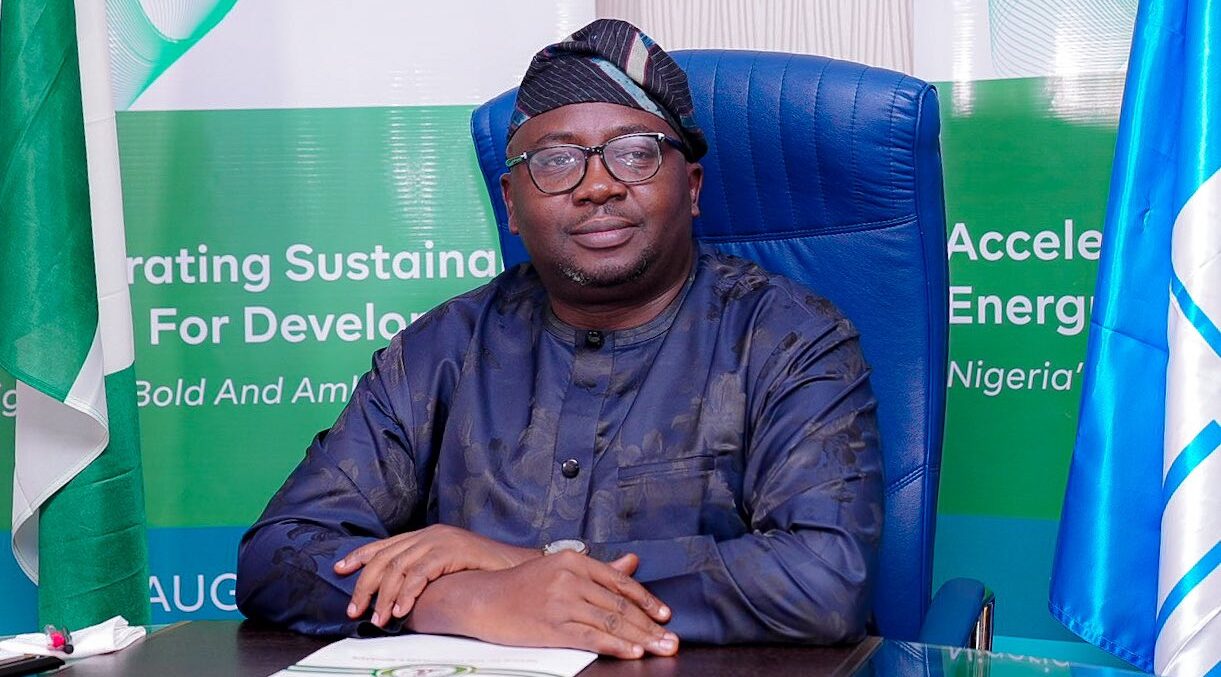
The Minister of Power, Chief Adebayo Adekola Adelabu, revealed this today in Abuja at a public presentation of the National Integrated Electricity Policy (NIEP) and Nigeria Integrated Resource Plan (NIRP).
However, Adelabu regretted the heavy debt burdening the government, saying that the debt has posed a serious problem for the sector.
Breaking down the debts, the minister said that while N2 trillion is owed to GenCos as legacy debt, another N1.9 trillion is owed to them as part of the electricity subsidy for 2024, and DisCos are owed N450 billion for the 2024 electricity subsidy.
The minister said the government would not be able to continue the current model of electricity subsidy payments, adding that a new model of intervention is in the offing by identifying a segment of the population in need of it.
“How do you expect the GenCos to perform optimally? How do you expect them to pay for gas, service and maintain their turbines and other infrastructure, as well as pay their staff, if a total of N4 trillion is being owed to them?
“I do not deceive myself. The government cannot afford to continue to fund the level of subsidy that our consumption pattern is throwing up because we have seen increasing consumption of electricity.
“The key issues are market liquidity and sector reforms. We’ll continue to focus on that. We’ll look at the tariff again. I am not saying that we’re going to increase the tariff, but we’ll look at the tariff and see how we can improve upon our modest achievement of last year,” he said.
Other News
The minister lamented the lack of investment in the distribution networks of DisCos, saying the government has not seen the migration of more customers to Band A as anticipated due to the DisCos’ refusal to invest.
“They have refused to invest in this sector. Fine, it can be explained in a way, but a lot of investment is required for us to achieve an accelerated migration of lower band customers into Band A. It is taking a lot of time,” he said.
He added that the government was considering cancelling some sections of the electricity consumer classification to make it three—Bands A, B, and C.
According to him, this is to reduce the tariff difference among them to enable those in the lower bands to enjoy more hours of electricity.
Adelabu noted that last year alone, the sector was able to capitalise $2 billion.
“We were able to capitalise close to $2 billion into this sector, and this was across the conventional electricity sector and the alternative renewable energy sub-sector. So, we are happy with this. But, as you said, we are still scratching the surface.
“It was at the last meeting of the African Heads of State on Energy—that’s the Energy Summit in Paris and Tanzania—where we presented the Nigeria Compact for Mission 300. Now, it’s an investment of $32.8 billion into the sector between now and the year 2030 to enable us to achieve universal access, of which $17 billion is expected from the private sector and about $15.8 billion from the public sector. So, capitalising on $2 billion in one year, I’m very sure that we are going to do better.
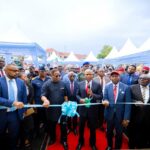
“And the positive part of this investment is that we are able to capitalise on the commission. People are so happy. It’s the world’s one-megawatt solar power system that is interconnected with the network of the Abuja Electricity Distribution Company,” he said.