Follow Us on Google

From Adesuwa Tsan, Abuja
The Federal Government, the Nigeria Social Insurance Trust Fund (NSITF) and other stakeholders have backed the Senate over a new Social Security Trust Fund Bill which seeks to widen coverage to ensure more workers benefit from safety nets..
When passed into law, it will expand protection for Nigerian workers, particularly those in the informal sector by harmonising existing laws and modernising the country’s social security framework.
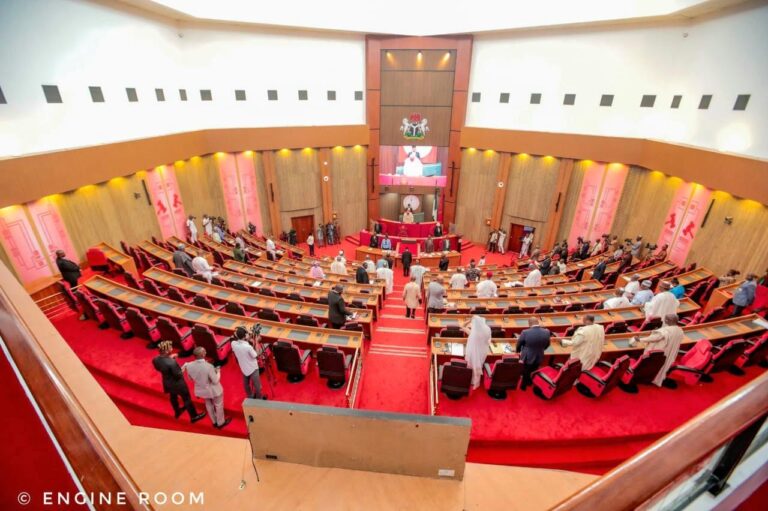
The stakeholders made their position known yesterday at a public hearing organised by the Senate Committee on Employment, Labour and Productivity, at the National Assembly, where lawmakers assured that the final legislation would be balanced, inclusive and acceptable to all.
Sponsored by Senator Cyril Fasuyi, the bill aims to merge the NSITF Act of 1993 and the Employees’ Compensation Act (ECA) 2010 into a single statute, transforming the Fund into the Nigeria Social Security Trust Fund (NSSTF). It is expected that this consolidation will eliminate longstanding operational ambiguities and usher in broader social protection for workers across formal and informal sectors.
In his presentation, the Managing Director and Chief Executive Officer of NSITF, Mr. Oluwaseun Faleye, described the proposed law as a “strategic and forward-looking legislative intervention,” that aligns Nigeria with global best practices, including ILO Conventions 102 and 144.
According to him, one of the bill’s most impactful provisions is its extension of social security coverage to informal sector workers and the self-employed groups that currently constitute the majority of the nation’s workforce but remain largely unprotected.
“The Bill’s expansion of social security coverage to include informal sector workers and self-employed persons is a historic step towards inclusive protection for all categories of working Nigerians,” he said.
Other News
He also noted that repealing both the NSITF Act 1993 and the ECA 2010 was necessary to resolve conflicts created after the Pension Reform Act (PRA) 2014 reassigned contributory pension functions from NSITF to PenCom.
However, he raised concerns about misapplication of the word ‘Board’ in the bill, warning that using the term to describe governance, oversight and daily management functions could undermine accountability.
“The Board meets quarterly, while daily operations are under the Managing Director. The Bill must distinguish clearly between the Governing Board as oversight body, Management as administrators and the Agency as the implementing institution,” he said, recommending a model similar to that of the Federal Inland Revenue Service (FIRS) Act.
He stressed that despite its concerns, the NSITF fully supports the bill, calling it “progressive, timely and aligned with global best practices.”
Also speaking, the Minister of Labour and Employment, Alhaji Muhammadu Maigari Dingyadi, commended the Senate, describing the initiative as a good idea. He appealed to the lawmakers to strike the right balance between the powers of the Fund’s management and its governing board.
Although the Nigeria Labour Congress (NLC) and NECA initially opposed aspects of the legislation, the NLC President, Joe Ajaero later softened the union’s position.
“We are not here for ‘we no go gree, we no gree,” Ajaero said. “Since many of the other critical stakeholders have supported the bill, NLC is not hell-bent on opposing it but, the grey areas we identified should be addressed by the committee.”
After extensive deliberations, the chairman of the Committee, Diket Plang, assured stakeholders that Nigerians would soon have a robust and widely acceptable social security law.