Follow Us on Google
• Defaulting institutions, individuals risk heavy sanctions, prosecution henceforth
From Juliana Taiwo-Obalonye, Abuja
The Federal Government has moved to clamp down on the growing abuse of honorary degrees by Nigerian universities, warning that institutions and individuals that flout the new rules will face stiff sanctions and possible prosecution.
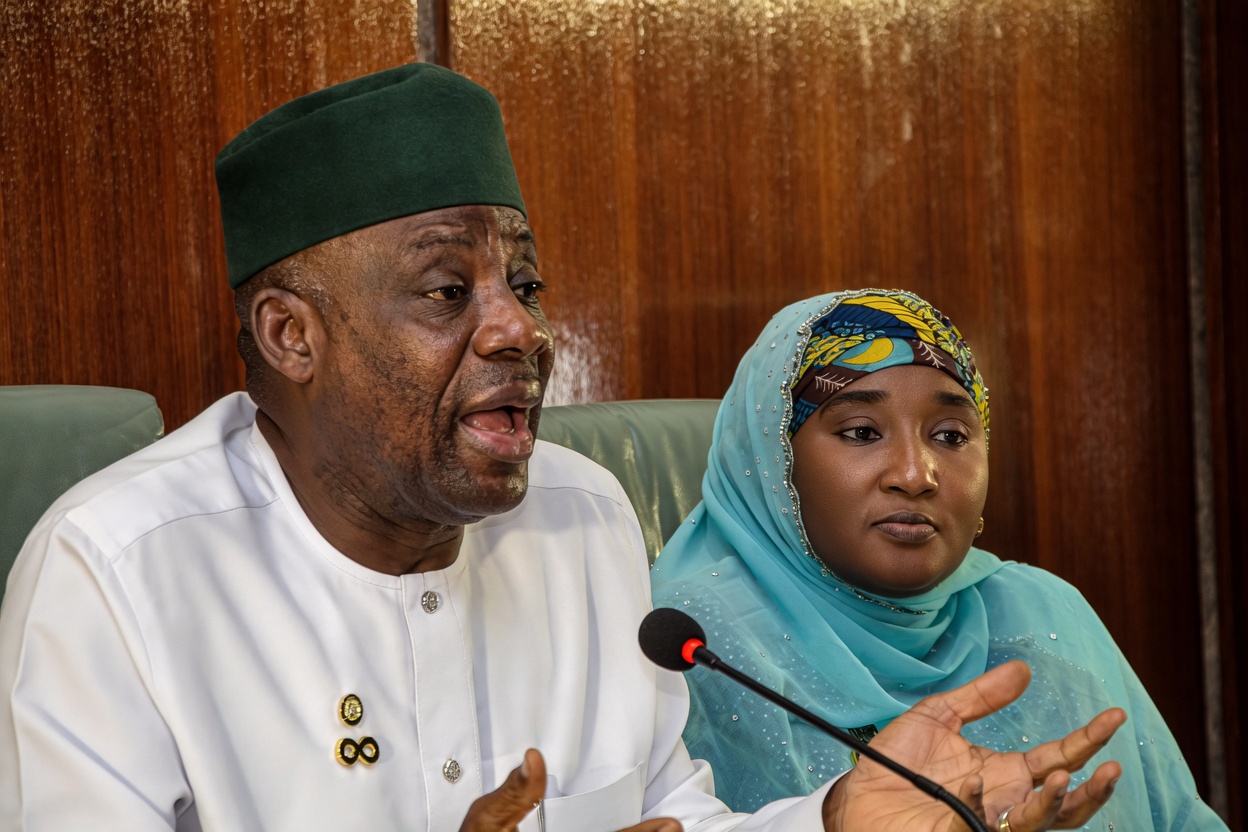
Education Minister Tunji Alausa disclosed this on Wednesday while briefing State House correspondents on decisions taken by the Federal Executive Council at its meeting last week, presided over by President Bola Tinubu at the State House, Abuja.
Alausa said the new policy was approved to protect academic integrity, restore public confidence in university honours and halt what he described as the rising abuse, politicisation and commercialisation of honorary degrees.
He said the government was alarmed by a trend in which some universities confer honorary doctorates indiscriminately, including on serving public officials, while recipients then adopt the title “Doctor” in official and public use.
Under the new policy, honorary degrees must be clearly marked as “honorary” or “honoris causa” on certificates and in all references. Recipients are also barred from prefixing “Dr.” to their names in official academic or professional settings.
“Recipients are expected to acknowledge the degree as an award or recognition and not as a formal academic qualification,” he said.
Alausa warned that presenting honorary degrees as academic credentials would amount to academic fraud and could attract legal and reputational consequences.
He added that only universities with established PhD-awarding curricula would now be allowed to confer honorary degrees, describing the practice by newer institutions without doctoral programmes as a “misnomer”.
He said the policy would reinforce the Keffi Declaration, an earlier guideline developed by the Committee of Vice-Chancellors of Nigerian Universities to curb abuses in the conferment of honorary degrees.
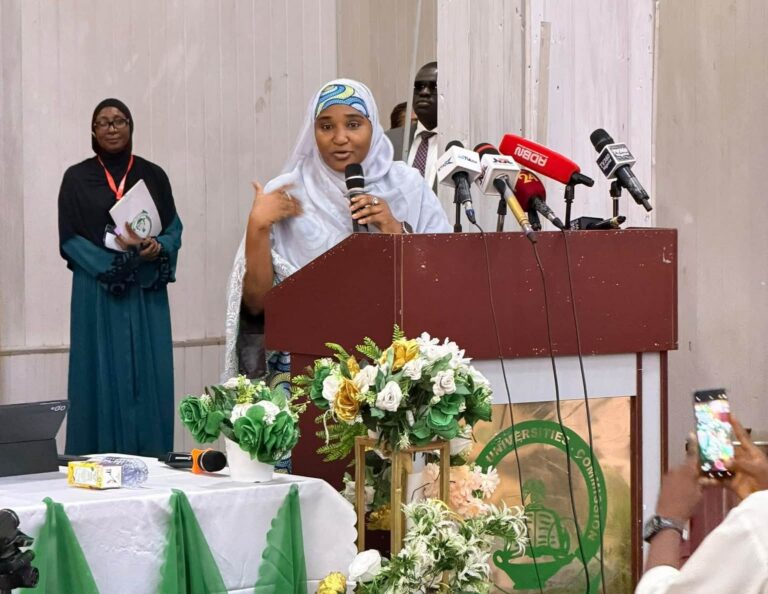
The minister said the Federal Ministry of Education, through the National Universities Commission, would issue a circular to vice-chancellors, registrars and governing councils, monitor convocation ceremonies and publish an annual list of legitimate honorary degree recipients.
“We will collaborate with the media to discourage the improper attribution of academic titles to people who were awarded honorary degrees,” he said, adding that institutions that breach the policy would be sanctioned.
At the briefing, journalists asked how the media would be involved, whether university autonomy might be affected and what penalties erring institutions would face.
In response, Alausa said university autonomy does not give any institution licence to break the law.
“Autonomy does not equate to the right to break the law in this country,” he said, adding that the National Universities Commission would develop and enforce sanctions against offending universities.
He said the media would play a key role in exposing the misleading use of honorary doctorates.
“If I turn around and say I’m Dr. Alausa because a university gave me an honorary degree, the media should call it out,” he said.
He stressed that the policy was not aimed at social use of titles, but at official correspondence and formal settings where misuse could amount to misrepresentation.
Other News
On the Keffi Declaration, Minister of State for Education Suwaiba Ahmad said the declaration was originally developed by vice-chancellors themselves as a guide for awarding honorary degrees, but lacked legal backing.
She said federal approval had now given the declaration “authoritative backing” and would allow proper implementation.
Also approved by the Federal Executive Council was the National Research and Innovation Development Fund, which Alausa described as a major step towards overhauling Nigeria’s research and innovation landscape.
He said the fund would move the country away from fragmented research efforts and towards a coordinated innovation ecosystem capable of driving national development.
According to him, Nigeria’s current research system is weakened by duplication and poor coordination among research agencies, universities and industry. The new fund, he said, would align research priorities with national needs, deepen collaboration and improve transparency in funding decisions.
“This is a game-changer,” he said. “If Nigeria wants to become a 1-trillion-dollar economy, we must unleash the potential of our researchers and innovators.”
The minister said the fund would support research across academia, the private sector and public institutions, including research institutes, through a competitive process based on merit, national relevance and measurable impact.
He said it would be structured to avoid creating “another burdening bureaucracy” and would operate as a nimble agency under the supervision of the Ministry of Innovation, Science and Technology.
Alausa said the agency would be led by a chief executive officer, supported by three executive directors and a general counsel, while technical committees and expert panels drawn from science, technology, engineering and mathematics would assess proposals.
He added that agencies and institutions receiving support would have to submit annual reports and meet agreed performance benchmarks before receiving further tranches.
According to him, the fund would be financed through a dedicated first-line charge and is expected to receive close to 500 million dollars annually.
He said the National Council on Research and Innovation would oversee the fund, with the Vice President as chairman and the Minister of Innovation, Science and Technology as vice chairman.
The council, he said, would also include ministers responsible for education, health, agriculture and food security, livestock development and environment, alongside representatives of the Committee of Vice-Chancellors of Nigerian Universities, the Nigerian National Merit Award, research institutes and professional academies, including the Nigerian Academy of Science, Engineering, Medicine, Letters and Social Sciences.
Private sector members would be drawn from the industrial and finance clusters, including the President of the Private Equity and Venture Capital Association, the Chairman of the Association of Nigerian Development Finance Institutions, and nominees from the Nigerian Association of Chambers of Commerce, Industry, Mines and Agriculture, the Manufacturers Association of Nigeria, the Nigeria Economic Summit Group and other relevant bodies.
Alausa said the Federal Executive Council had directed the Attorney-General of the Federation and the Minister of Justice to draft an executive bill for transmission to the National Assembly to formalise the fund.
He added that the new structure would not scrap existing research institutions, but would harmonise their functions, cut duplication and ensure funding is channelled into national priorities such as food security, health, security, population, environmental sustainability and social development.
The minister also praised President Bola Tinubu for backing the reforms, describing the move as a forward-looking step that would strengthen Nigeria’s academic and research systems.