Follow Us on Google
From Juliana Taiwo-Obalonye, Abuja
The federal government on Tuesday announced a comprehensive set of new incentives aimed at revitalising Nigeria’s agricultural sector under President Bola Tinubu’s Renewed Hope Agenda, promising enhanced credit access, expanded irrigation, and the creation of millions of full-time jobs in rural communities.
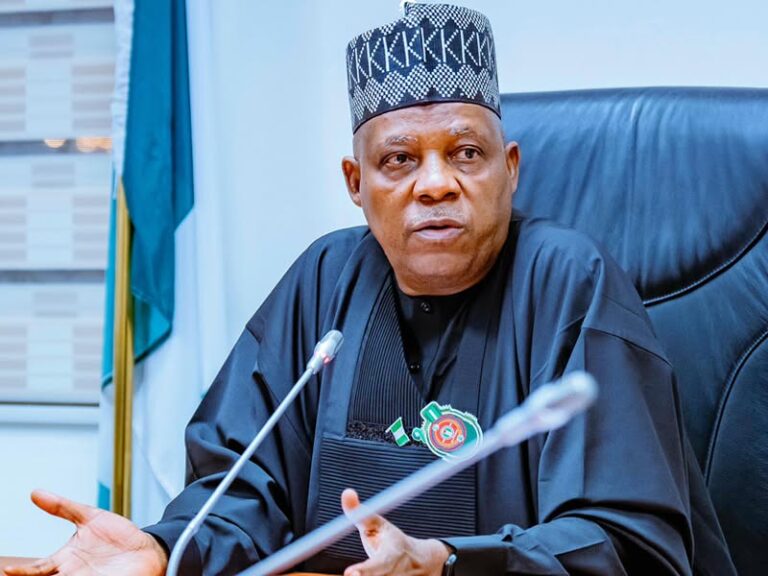
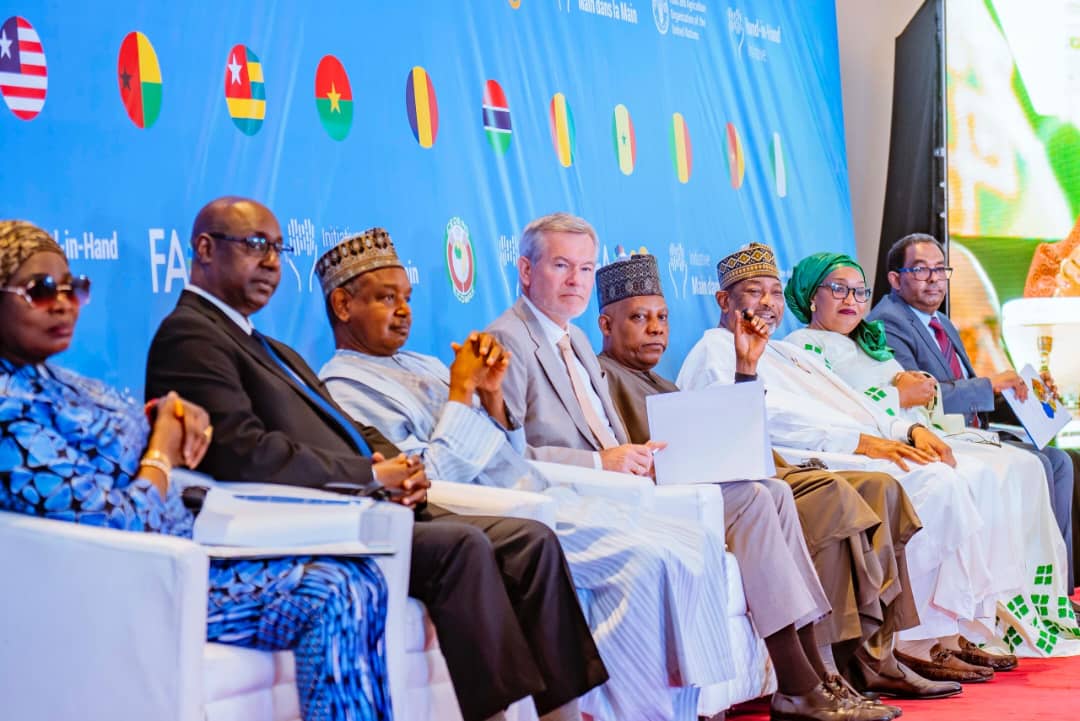
Unveiling these measures on Tuesday at the Food and Agriculture Organisation (FAO) National and Subregional Hand-in-Hand Investment Forum in Abuja, Vice President Kashim Shettima emphasised the urgency of addressing hunger as a global security concern and positioned agriculture as the strategic backbone for achieving national prosperity.
According to a statement issued by his media aide, Stanley Nkwocha, the Vice President said: “Nothing unifies humanity as much as hunger. It is the great equaliser that reveals our vulnerabilities and the shared fragility of our existence. Food is not merely a matter of survival, it is a matter of global security,” Shettima declared, underscoring the government’s strategic focus.
The Vice President detailed priority reforms that include the establishment of single-window platforms for land registration, enhancement of agricultural credit systems to better facilitate capital flow, expansion of irrigation infrastructure, and widespread promotion of mechanisation aimed at reducing labour-intensive farming practices.
“We must facilitate access to land and resources for serious investors. We must drive mechanisation to reduce drudgery and enhance productivity. We must strengthen the agricultural credit system to ensure capital flows to where it is needed most,” he explained.
Highlighting irrigation as a transformative factor, Shettima noted that although Nigeria possesses vast water resources capable of irrigating over three million hectares, less than 10 per cent is currently utilised. Strategic investments in this area, he said, could triple agricultural yields, eliminate the constraints of seasonal farming, and build resilience against climate variability.
“Nigeria is open for business, and we are ready to partner with you. Let us work hand-in-hand to build a Nigeria and a subregion where no one goes to bed hungry, where rural communities are hubs of wealth creation, and where agriculture is the true foundation of our prosperity,” he said, addressing investors and stakeholders.
Other News
Shettima also reaffirmed the administration’s intent to use regulatory reforms, public-private partnerships, and agri-tech innovations as vehicles to attract investment in agriculture. Central to this vision is the National Development Plan (2021–2025), which aims to lift 35 million Nigerians out of poverty and create 21 million full-time jobs in rural and agrarian communities while securing national food and nutrition sufficiency.
“The vehicle to this future is the quality of policies we have chosen to prioritise. At the top of these interventions stands our National Development Plan, which has set forth ambitious but achievable targets,” the Vice President added.
The forum also featured presentations from key ministers. Minister of Agriculture and Food Security, Abubakar Kyari, outlined Nigeria’s investment climate, identifying the country’s vast arable land, favourable weather, expanding digital economy, and large domestic market as unique opportunities for agribusiness growth.
Minister of Budget and Economic Planning, Atiku Bagudu, stressed that agriculture and irrigation remain critical sectors with enormous potential for economic diversification and transformation, consistent with both the National Development Plan and the Renewed Hope Agenda.
International voices at the event reinforced Nigeria’s leadership role. Minister of Agriculture of The Gambia, Demba Sabally, praised Nigeria’s rice and cassava value chain successes and urged for peer learning within West Africa to tackle shared challenges.
From the FAO, Hussein Gadain highlighted the Hand-in-Hand Initiative as a flagship, evidence-based programme driving agricultural transformation and sustainable rural development, aiming to eradicate poverty and hunger while reducing inequalities. He specifically commended Vice President Shettima for his visionary leadership and relentless efforts to attract investment and foster innovation in Nigeria’s agri-food systems.
The European Union’s Head of Delegation, Gautier Mignot, reaffirmed the EU’s support, citing a new 80 million euro investment to unlock opportunities in key agribusiness value chains across seven states. He emphasised the union’s commitment to deepening collaboration with Nigeria in using irrigation as a catalyst for economic growth and agricultural transformation.
The renewed agricultural incentives come as part of the Nigerian government’s wider agenda to catalyse food production, rural employment, and agribusiness investments, positioning agriculture as a cornerstone for national development and regional influence.