Follow Us on Google
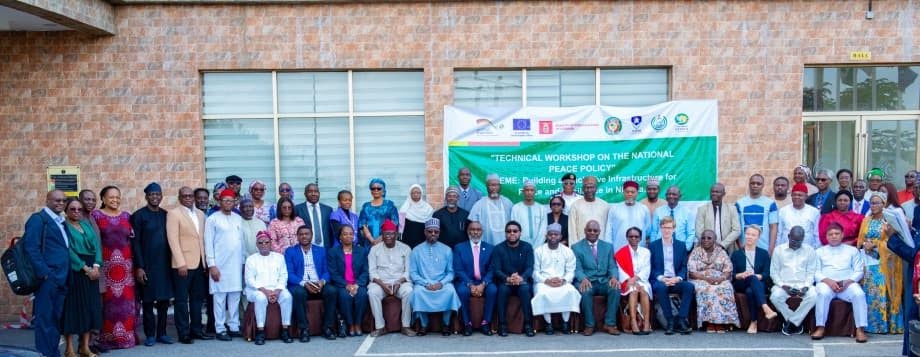
The federal government and key stakeholders in Nigeria’s peacebuilding sector have commenced efforts to develop a new national peace policy aimed at shifting the country from reactive conflict management to coordinated prevention and early intervention.
The proposed policy is expected to replace efforts initiated in 2012 and establish a stronger national framework for conflict prevention, resilience, and social cohesion.
The Office for Strategic Preparedness and Resilience (OSPRE), the Institute for Peace and Conflict Resolution (IPCR), and Triple Peace Africa jointly convened a three-day technical workshop in Abuja to begin shaping the framework.
The workshop, themed “Building an Inclusive National Infrastructure for Peace and Resilience,” brought together representatives of federal ministries, departments, and agencies, lawmakers, state peace commissions, subnational institutions, civil society organisations and peacebuilding practitioners.
Director-General of OSPRE, Chris Ngwodo, said the initiative would align Nigeria’s peacebuilding efforts with current realities and incorporate developments that have emerged since the previous policy process.
His counterpart at the Institute for Peace and Conflict Resolution (IPCR), Dr Joseph Ochogwu, described the proposed policy as the “normative and operational spine” of Nigeria’s peacebuilding architecture.
Other News
Special Adviser to the President on Homeland Security, Major General Adeyinka Famadewa (rtd), said the framework would create a systematic approach to conflict prevention by moving the country from reacting to crises to anticipating and preventing them.
Participants called for a whole-of-government and whole-of-society architecture linking federal institutions, state and local governments, peace commissions, civil society organisations and community actors.
Chairman of the House Committee on Peacebuilding and Social Cohesion, Sadiq Abbas Tafida, pledged the commitment of the House of Representatives to supporting and adequately funding the policy’s implementation.
Closing the workshop, Director-General of the National Orientation Agency (NOA), Lanre Issa-Onilu, urged stakeholders to anchor the policy in national values and make it an instrument for civic mobilisation and social cohesion.
Participating institutions signed a communiqué committing themselves to stronger coordination and collaboration, with further consultations expected across the federation before the policy is finalised.