Follow Us on Google
From Fred Ezeh, Abuja
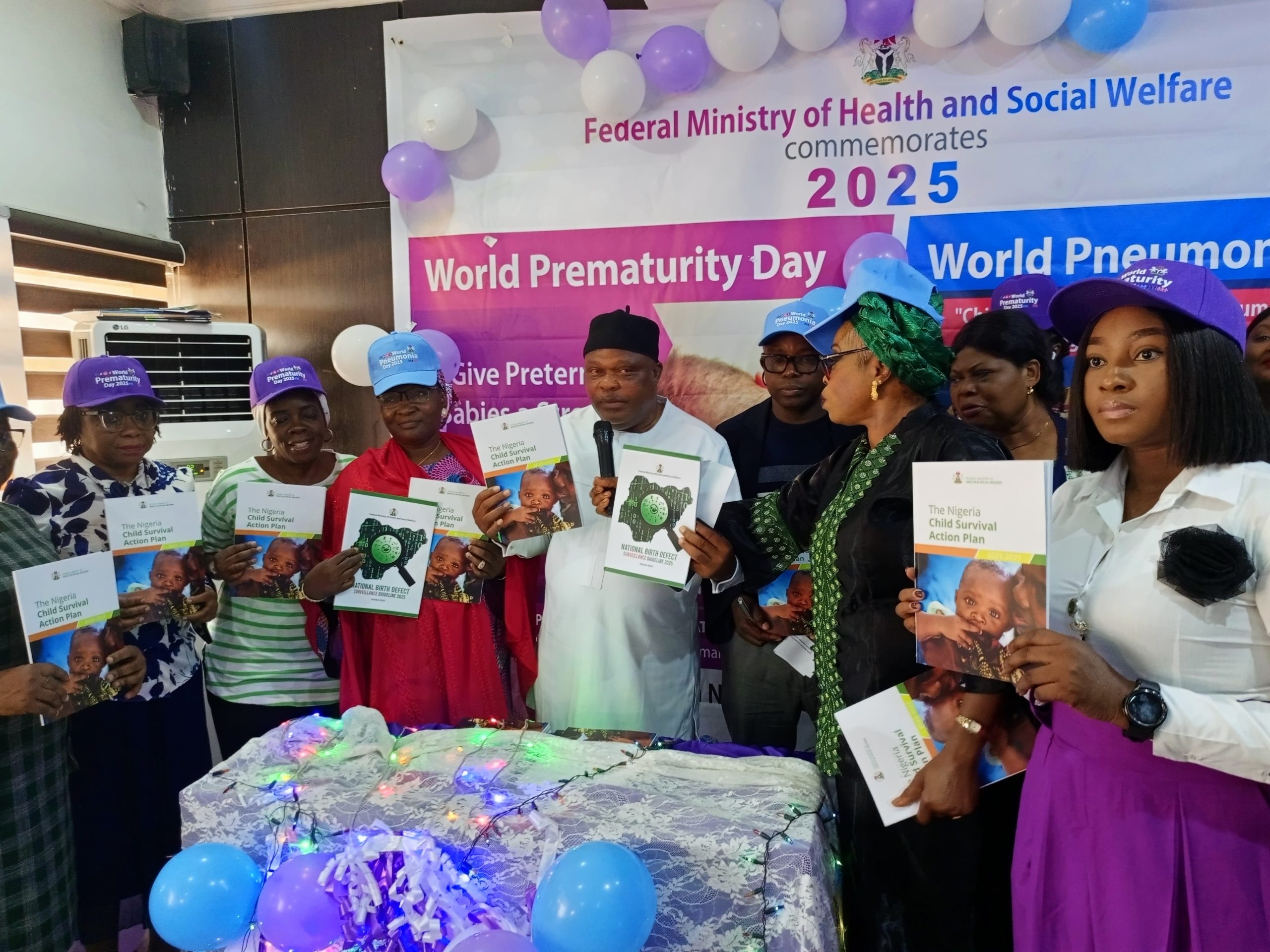
The Federal Government has launched the Nigerian Child Survival Action Plan and National Birth Defect Surveillance Guideline in response to the cases of maternal and child mortality.
The Coordinating Minister of Health and Social Welfare, Prof. Muhammad Ali Pate, who launched the document in Abuja, on Wednesday, confirmed that the country has made some significant progress in terms of reducing maternal and child mortality, but more effort is required to further reduce the number.
The Minister, represented by the Director, Health Promotion Department in the Ministry, John Urakpa, said the launch was part of the events to commemorate the 2025 World Pneumonia and Prematurity Days on the theme “Give preterm babies a strong start for a brighter future,” and that of the Pneumonia Day celebration “Child Survival.”
He said the theme highlights pneumonia’s impact as the leading infectious cause of child death, and both aligned with the aspiration and the shared values of the Sector-Wide Approach in offering quality care for newborns and the under-fives in this era of climate change.
The Minister lamented that the global health community has swiftly mobilised against Malaria, Polio, Tuberculosis, and HIV, unfortunately, childhood pneumonia, being termed the “forgotten killer” of the under-fives has not received priority attention as an important contributor to global childhood morbidity and mortality.
He made reference to data compiled by Nigeria Health and Demographic Survey (NDHS) which revealed that progress has been made in reducing under-five deaths over the last two decades, as the country’s under-five mortality rate declined from 201 deaths in the year 2000 to 110 for every 1,000 live births in 2023. This represents about 45 per cent drop.
“However, despite the modest progress, an approximate 850,000 preventable newborn and under-five deaths are predicted to occur annually and Nigeria is not yet on track to achieve the Sustainable Development Goal (SDGs) target of a rate less than 25 per 1000 live births by 2030 as the causes of under-five deaths still remained prominent.
“Approximately, 100 million childhood pneumonia episodes with associated 808,920 related deaths occur globally. Low and middle-income countries, particularly those in sub-Saharan Africa are being disproportionately affected.
“Nigeria and 14 other countries account for about three-quarters of the global childhood pneumonia mortalities. These unfavorable indices and those of the other childhood killer diseases are still responsible for the observable high under-five mortality of 110/1000 live births as reported by the 2024 Nigeria Health and Demographic Survey (NDHS).”
He stated that the collaboration of the Ministry with the Every Breath Counts Coalition and the Pediatric Association of Nigeria in the last five years has brought about an invaluable impact, as the development of the in-patient pneumonia treatment algorithm has not only strengthened the clinical skills of secondary and tertiary healthcare workers in managing severe and complicated pneumonia but to a great extent, accounted for the drop in under-five mortality rate from 132/1000 in 2018 to 110/1000 live births in 2024 as reported by the NDHS.
Other News
“While we celebrate the significant reduction in the overall under-five mortality rate, unfortunately, it is a miss-feeling for the health and survival of the newborn baby. A retrospective assessment of our data over the past 35 years showed a single-digit drop from 42/1000 in 1990 to 41/1000 live birth in 2024 NDHS.
“But apart from the huge financial and psychological burden on families, the deaths of 280,000 newborn babies within the first 28 days of life due to the problems of prematurity, an additional 162,000 childhood pneumonia-related deaths annually place a moral burden on the Nigerian health system.
“Our responsibility as key stakeholders is to act with a collective sense of urgency to scale up the prioritized interventions in the plan and adhere to the guidelines, as the implementations of these at the subnational level hold great promise towards the achievement of the SDG targets on child health. There is no room for complacency.”
The Minister assured that the Ministry will continue to explore innovative partnerships that will translate current efforts into effective action for child survival. “This will require leadership, targeted human and financial resources, and a strengthened health system to ensure that the most vulnerable and poor children get the greatest benefits of the Nigerian child survival action plan.”
Permanent Secretary, Federal Ministry of Health and Social Welfare, Daju Kachallom, in her remarks, said the commemorative event is not just ceremonial; it provides a shared platform for partners, practitioners, and policymakers to reaffirm dedication to child survival.
“It’s also signals the Ministry’s continued emphasis on collaboration, evidence-driven action and system strengthening which is a hallmark of the Health Sector Renewal and Investment Initiative (HSRII) and the Sector-Wide Approach (SWAp).
“As we commemorate these global days, we are reminded that behind every statistic is a life, a family, and a community. While challenges remain, our focus today is on renewed coordination and partnership which is the foundation for impactful implementation of our national policies and plans,” she said.
Represented by Dr. Amina Mohammed, the Permanent Secretary appreciated the international partners especially WHO, UNICEF, USAID, Save the Children and Nutrition International, Centre for Integrated Programs (CIHP), Miracle Feet, Clinton Health Access Initiative (CHAI), for their years of support.
She stressed that their commitments are highly valued and will continue to revolutionise the newborn and child health space in Nigeria.
“As we embark on implementing the actions and activities in these documents, the success lies in our partnership and in the ownership of solutions that resonate within our health system. Together, we can shape a healthier future for every child across Nigeria,” she stated.