Follow Us on Google
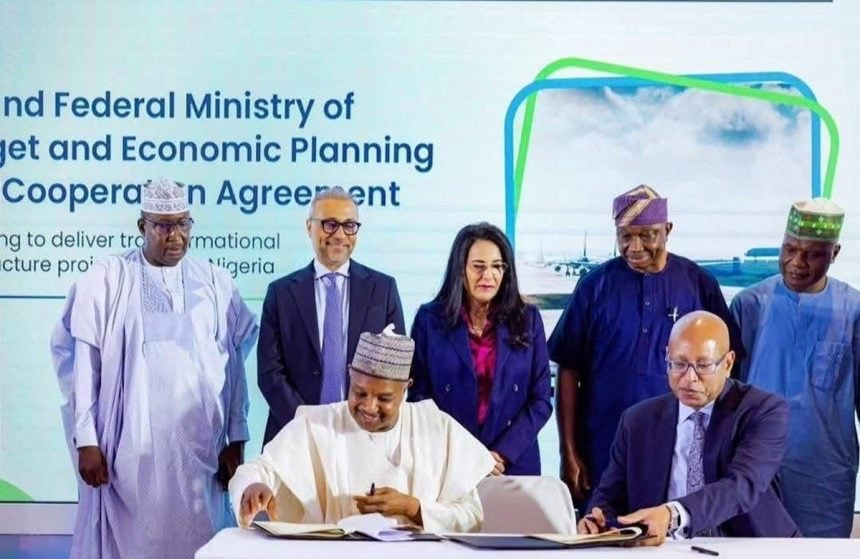
The federal government, through the Ministry of Budget and Economic Planning, has entered a key cooperation agreement with the International Finance Corporation (IFC), a member of the World Bank Group, aimed at boosting project preparation, mobilising private capital, and accelerating the delivery of bankable infrastructure projects critical to Nigeria’s economic transformation.
The signing ceremony, held in Abuja on Tuesday, drew top government officials and senior executives from the World Bank Group and IFC. Among those in attendance were the Minister of Budget and Economic Planning, Senator Abubakar Bagudu; the Minister of Finance and Coordinating Minister of the Economy, Mr Wale Edun; and the Minister of Health and Coordinating Minister of Social Welfare, Dr Ali Pate.
Addressing the gathering, Bagudu described the agreement as a strategic step toward ensuring Nigeria’s vast infrastructure needs are met through well-prepared, investment-ready projects capable of attracting private-sector funding.
“Nigeria is a country brimming with opportunities. With a population of over 230 million, our needs in rail, energy, water security, healthcare, and digital infrastructure are extensive. This agreement aims to ensure that we prepare projects adequately so investors can have confidence and clarity on where to allocate capital,” Bagudu said.
He drew a parallel with Nigeria’s early mobile telephony investments, noting that initial investors could hardly have imagined a market of 500,000 subscribers, which has now grown into a digital economy of over 100 million users.
“This demonstrates the country’s vast absorptive capacity,” he added.
Bagudu stressed that the agreement aligns with President Bola Ahmed Tinubu’s reform agenda, which has prioritised bold policy choices to stabilise the macroeconomic environment, ensure predictability, and attract private-sector investment. He highlighted that Nigeria’s Agenda 2050 and constitutional framework firmly establish the country as a market-driven economy, where private-sector leadership, guided by supportive public policy, is essential for sustainable growth.
Speaking on behalf of IFC, Vice President for Africa, Mr Ethiopis Tafara, described the agreement as the culmination of a year of close collaboration and a shared vision for Nigeria’s future.
Other News
“This is not just about signing a document. It is about establishing the groundwork for transformative projects aligned with President Tinubu’s Renewed Hope Agenda—initiatives that generate employment, attract investment, and enhance lives,” Tafara said.
He explained that the agreement will strengthen budget planning and project preparation by facilitating the identification, structuring, and delivery of high-impact, investment-ready projects across key sectors. Tafara noted that World Bank Group financing and guarantee instruments will support both federal and state governments in these efforts.
“Nigeria’s infrastructure gap cannot be closed by public budgets alone. Public-private partnerships are not optional; they are vital. IFC is ready to assist the government in developing a credible pipeline of projects across transport, energy, digital infrastructure, water, and other priority sectors,” he added.
Dahlia Khalifa, IFC Regional Director for Central Africa and Anglophone West Africa, described the agreement as a milestone for Nigeria’s broader development journey. She pointed to the country’s bold reforms, youthful population, and vast potential as factors that can only be harnessed through robust infrastructure, bankable projects, and effective public-private collaboration.
“That is what today is about—creating the framework for partnerships to thrive and deliver shared prosperity for all Nigerians,” Khalifa said. She reaffirmed IFC’s commitment to Nigeria, highlighting over six decades of operations in the country and mobilising approximately US$20 billion in investments across energy, digital infrastructure, agriculture, manufacturing, and financial services over the past five years.
Khalifa noted that IFC’s staff presence in Nigeria has quadrupled over the past two years, reflecting its increasing engagement. She praised the Federal Ministry of Budget and Economic Planning for its coordination role in aligning Nigeria’s economic priorities and enhancing project development processes.
She added that the agreement will facilitate the identification, structuring, and delivery of transformative projects in transport, energy, and small and medium-sized enterprise support. “This is the kind of collaboration that turns ambition into achievement. Together, we will build something meaningful for Nigeria—projects that connect markets, power industries, and unlock the full potential of the Nigerian people,” Khalifa said.
The cooperation agreement highlights the federal government’s commitment to deepen partnerships with development finance institutions, strengthen public-private collaboration, and mobilise private capital to promote sustainable growth, create jobs, and advance shared prosperity across Nigeria.