Follow Us on Google
…says Nigeria can’t risk another disaster
From Charity Nwakaudu, Abuja
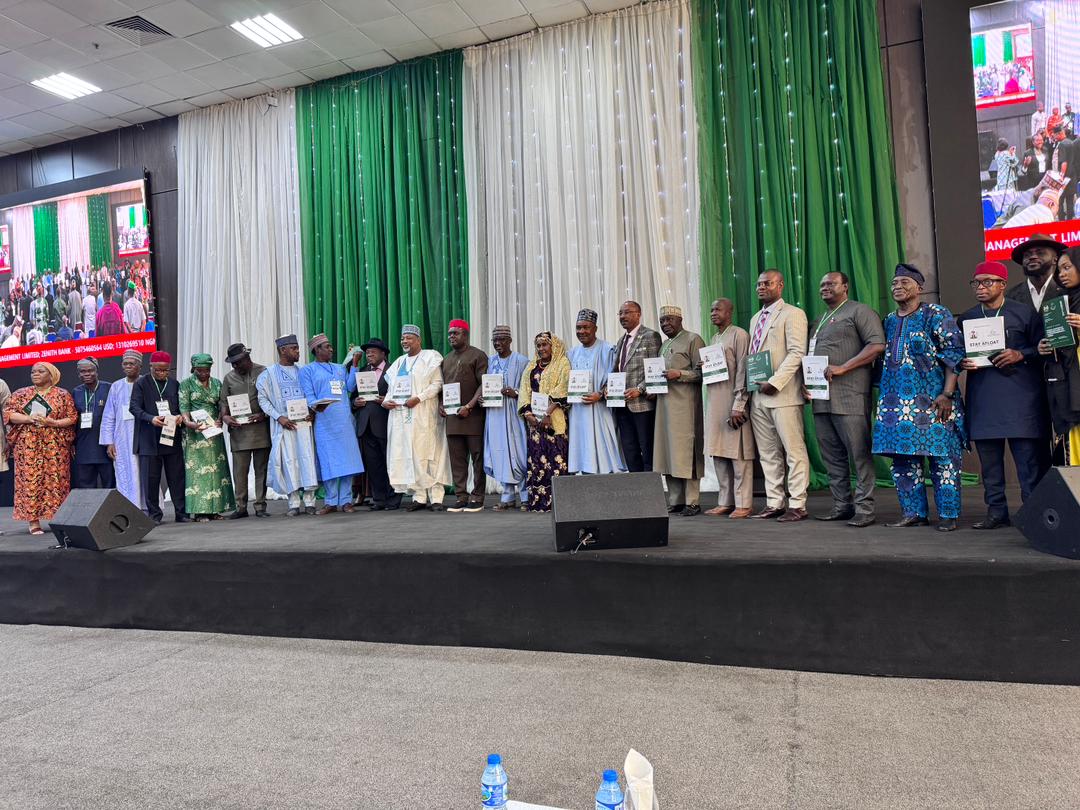
The Federal Government has declared that Nigeria must move beyond lamenting yearly floods and embrace long-term resilience, as it officially launched the Global Flood Disaster Management Project (GFDMP) and its “Stay Afloat” initiative.
President Bola Tinubu, who was represented by the Minister of Agriculture, Alhaji Abubakar Kyari, said the initiative signals a new era in confronting what he described as “a global threat with far-reaching consequences for security, the economy and sustainable development.”
He warned that floods are no longer seasonal inconveniences but destructive events that wreck farmlands, displace families and cripple infrastructure nationwide.
“Climate change does not operate on a seasonal basis. Its effects are cumulative and its solutions must be strategic, coordinated and sustainable,” he said.
The President listed the four pillars of the GFDMP—early warning systems, resilient infrastructure, capacity building and community engagement—noting that they will equip government and citizens with “the precious gift of time” to prepare and save lives
According to him, the project will boost hydrological and meteorological forecasting, install real-time monitoring tools and deploy digital alert systems across communities.
On infrastructure, he said priority will be given to reinforced drainage networks, embankments, wetland restoration and smart urban planning.
He insisted that Nigeria is ready to fully collaborate with global partners, adding that flood resilience is “a responsibility owed to today’s citizens and future generations.”
Also speaking, the Chairman, House Committee on Hydrological Services, Dr. Pascal Agbodike, assured that the National Assembly will back the programme with strong legislation, oversight and accountability.
He said the initiative aligns with the National Flood Emergency Preparedness Framework, stressing that Nigeria must shift from reacting to disasters to predicting and preventing them.
Agbodike urged government, the private sector and philanthropists to invest heavily in flood resilience, describing it as a shared national duty.
Chief Host and Chairman of NIHSA Governing Board, Professor Salihu Mustapha, reminded Nigerians that floods are natural events that cannot be stopped completely—but can be properly managed.
He lamented that the tendency to blame government for every environmental problem, saying the new initiative rightly places responsibility on all stakeholders, including the public.
In his keynote address, diplomat and environmental advocate, Ambassador Godknows Igali, warned that the world is now witnessing “monster floods”—events powerful enough to wipe out entire communities.
He cited the devastating 2024 floods in Germany, Italy and France as proof that even advanced nations are not immune.
Igali blamed climate change, melting ice and rising sea levels for worsening flood threats, but noted that floods also offer opportunities for agriculture and water management when properly harnessed.
“Preparedness is the only effective response to an inevitable natural phenomenon,” he said.
Earlier, NIHSA Director General, Umar Mohammed, said recent flood-risk figures represent real families whose livelihoods have been disrupted.
He maintained that preparedness is far cheaper than emergency response and must be built deliberately before disasters strike.