Follow Us on Google
By Philip Nwosu
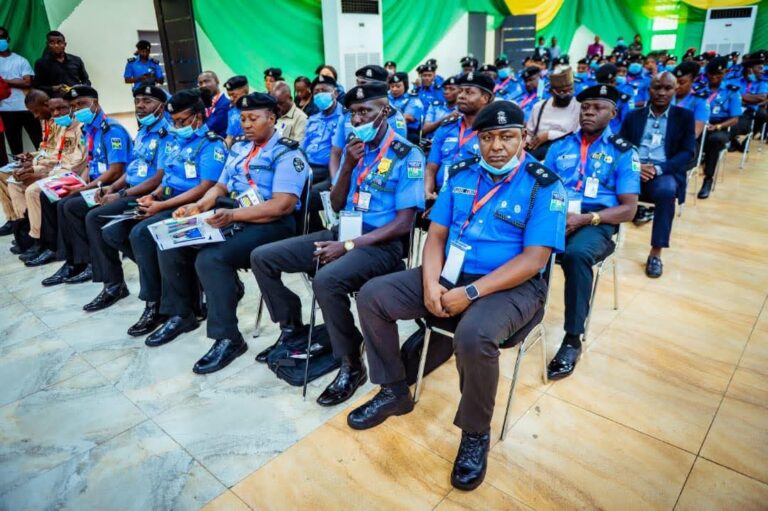
The Federal Government has declared an emergency on the training institutions of the Nigeria Police Force (NPF) and the Nigeria Security and Civil Defence Corps (NSCDC) as part of sweeping reforms approved by President Bola Ahmed Tinubu to restore professionalism, morale, and efficiency within the nation’s internal security architecture.
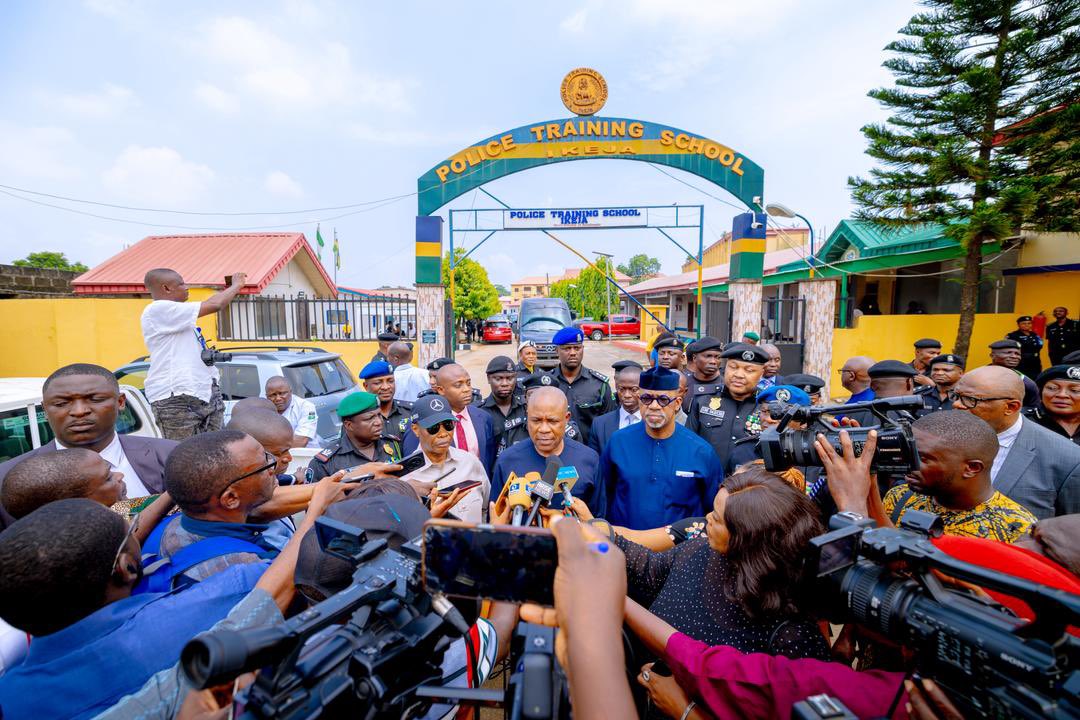
The declaration was made during an assessment visit by members of the National Economic Council (NEC) Ad Hoc Committee on the overhaul of police and civil defence training facilities. The inspection tour covered institutions across southern Nigeria, with another team led by Governor Abdullahi Sule of Nasarawa State visiting those in the North.
Addressing reporters after the inspection, the Chairman of the Committee and Governor of Enugu State, Dr. Peter Mbah, said the move follows the president’s earlier directive during the National Executive Council meeting on October 23, when he approved the inauguration of the ad hoc committee to conduct a comprehensive review of all police and civil defence training facilities nationwide.
His words: “What we have seen today is consistent with the president’s vision when he approved the inauguration of this committee; the president recognises that there is a need for bold and urgent steps to restore the pride, professionalism, and confidence of our men and women in the security space.”
The committee, which has a 30-day mandate to submit its report, includes technical consultants tasked with conducting an in-depth assessment of the facilities, identifying areas for rebuilding, re-equipping, and sustaining the institutions.
Responding to questions from reporters, the official confirmed that the Federal Government plans to establish an intervention fund to finance the renovation and modernisation of police and civil defence training centres across the country.
“The president saw this as an emergency, and this is an intervention,” he said. “The aim is to rebuild, renovate, and re-equip these training institutions. As you know, the president has approved the recruitment of 30,000 new police personnel, and this cannot be implemented without adequate facilities to train them.”
He added that the government is approaching the initiative with the urgency it deserves, given the dilapidated state of many training centres, some of which were built as far back as 1948.
Other News
On whether the reform will include digital upgrades, the official affirmed that the government intends to introduce modern technologies and 21st-century training methods into the institutions.
“We cannot use the systems of the 20th century to train a 21st-century police force,” he explained. “Our officers must be equipped with evolving digital skills such as artificial intelligence, robotics, and mechatronics. This is a comprehensive revamp — a transformation that will ensure our personnel are trained in environments that reflect modern realities.”
Quoting President Tinubu, he added:
“You cannot expect men and women who are protecting our communities and upholding law and order to be trained in inhumane environments. That is unacceptable.”
Asked whether the move was a reaction to recent international comments, particularly those attributed to former U.S. President Donald Trump, the official clarified that the initiative was not reactionary but a forward-thinking reform conceived before those events.
“This is no knee-jerk response,” he emphasised. “It is the vision of a proactive president who recognised that our training institutions have suffered decades of neglect. We are determined to rebuild them, equip them, and make them consistent with global standards.”
The committee’s inspection continues across various training institutions nationwide, with findings expected to shape a new era of modernised, technology-driven policing and civil defence training in Nigeria.