Follow Us on Google
By Maduka Nweke
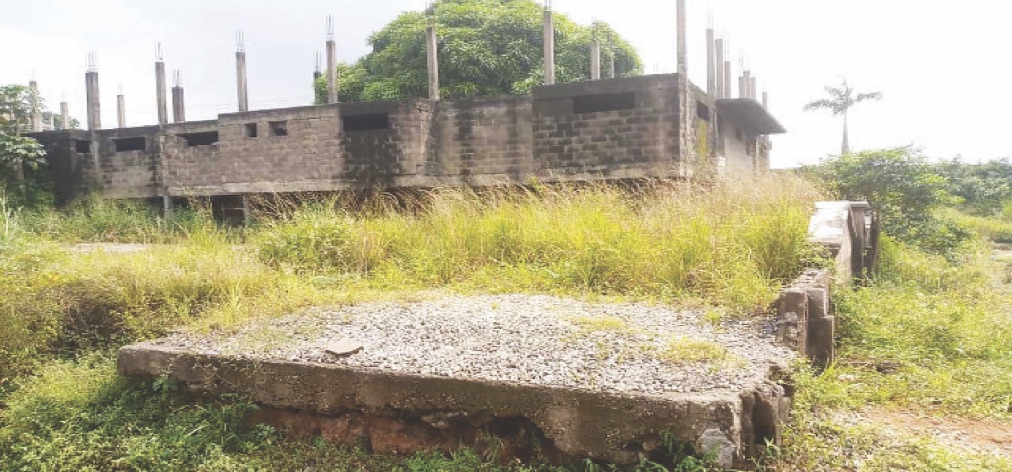
Stakeholders in Nigeria’s real estate and construction space have welcomed the Federal Ministry of Housing and Urban Development’s renewed push to clamp down on non-performing contractors, describing it as a long-overdue move to restore accountability to constituency and zonal intervention projects.
The commendation follows the Ministry’s partnership with the Independent Corrupt Practices and Other Related Offences Commission (ICPC) to carry out a nationwide verification and tracking exercise of projects executed under its supervision. The joint initiative, which recently kicked off in Kano, is designed to assess project quality, implementation status, and value for money, while exposing contractors who collect public funds and abandon sites.
For industry operators, the exercise sends a clear warning that the era of impunity may be drawing to a close.
Chief Paul Okoye, a Lagos-based property developer, said the collaboration would help curb the abuse that has long plagued government-funded projects. “A lot of people collect government contracts, take the money and vanish into thin air and they will not be tracked down because of their connection in government,” he said, adding that systematic monitoring would force contractors to either deliver or be held accountable.
Mrs. Eucharia Obodoechina, a property agent, also described the initiative as necessary but questioned why such measures were not institutionalised earlier. She argued that weak follow-through by successive administrations had encouraged corruption and waste. “Once the government gives contracts and there happens to be change in the Government, it means the money is lost,” she said. “Government attitude in this direction is poor because it encourages corruption in the system. A lot of money has been lost in this way through successive governments.”
Despite her concerns, Obodoechina agreed that the ongoing verification exercise could mark a turning point if sustained. According to her, closer scrutiny would ensure projects are delivered strictly according to approved specifications, reinforce transparency and probity, and guarantee real value for money for Nigerians who ultimately fund the projects through taxes.
Other News
Under the arrangement, the Ministry’s Special Projects Unit is responsible for supervising the execution of Federal Government constituency and zonal intervention projects, while the ICPC provides statutory oversight to enforce compliance, integrity, and due diligence in budget implementation and public expenditure. The joint teams have been deployed across states where the projects were implemented to conduct on-the-spot inspections and assessments.
Speaking at the flag-off ceremony in Kano, the Permanent Secretary of the Ministry, Dr. Shuaib Belgore, represented by the Director of the Special Projects Unit, Olatunde Ajayi, said the exercise was deliberately structured to move beyond paperwork to physical verification. “This joint verification and tracking exercise with the ICPC is aimed at evaluating the impact of these projects and ensuring that they are executed to standard for the benefit of the people,” Belgore said.
He noted that the initiative reflects the Ministry’s commitment to transparency, accountability, and responsible management of public resources, while also serving as a firm message to contractors accustomed to cutting corners. “The Ministry, in collaboration with relevant oversight agencies, will not hesitate to invite contractors for corrective action where deficiencies are identified, or demand refunds to government coffers where projects have clearly failed to meet contractual obligations,” he added.
Belgore explained that reports generated from the exercise would guide evidence-based decision-making, help the Ministry determine whether projects align with development needs, and identify gaps that require adjustment in future planning. According to him, the findings will strengthen the design and execution of subsequent constituency interventions.
From the ICPC’s perspective, the collaboration fits squarely within its preventive mandate. The Commission’s Head of Constituency Projects Tracking, Bello Idris Bakori, said ICPC’s involvement was aimed at stopping corruption before it takes root. He explained that the joint effort is intended to deter sharp practices, improve transparency in project execution, and ensure that public funds allocated to constituency projects translate into visible socio-economic benefits. Bakori assured that all findings would be properly documented and followed up in line with existing laws and procedures to protect the public interest.
During the Kano flag-off, the joint team inspected several projects, including the provision and installation of solar streetlights at the Government Girls Secondary School, Kwa, as well as in Bichi and Rimingado local government areas. Other sites visited include the construction of a sporting facility comprising an indoor complex, football pitch, and pavilion in Gwarzo town, and the Badume–Kyauta road linking Dawakin Tofa and Bichi local governments.
Officials said the tracking exercise in Kano State would continue, with more sites scheduled for inspection.
For stakeholders, the hope is that the initiative will not end as a one-off event but evolve into a sustained culture of monitoring that finally delivers completed projects, deters corruption, and restores public confidence in government interventions.