Follow Us on Google

From Oluseye Ojo, Ibadan
The Federal Government of Nigeria is committed to graduating Nigeria from a monolithic economy to a diversified economy through leveraging on Micro, Small and Medium Enterprises (MSMEs).
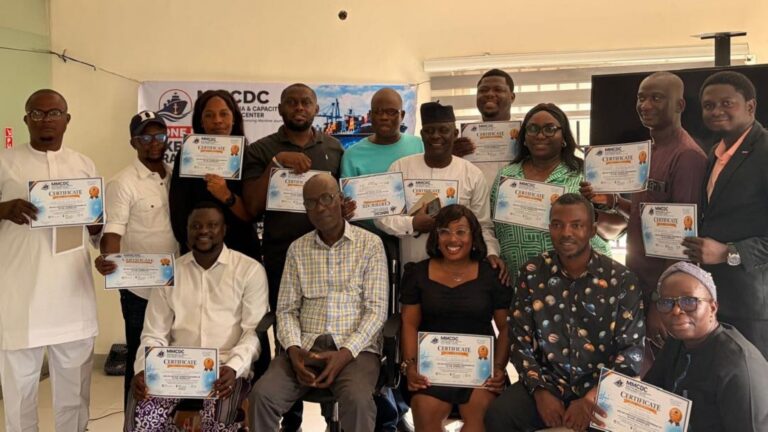
Acting Director, National Centre for Energy Efficiency and Conservation (NCEEC), Prof Olawale Ajibola, made the disclosure at a stakeholders’ workshop on Energy Efficiency, Energy Audit and Energy Management for MSME’s in South-West Nigeria. The opening of the five-day programme was held on Monday at the International Conference Centre, University of Ibadan, where technical sessions are still ongoing.
According to him, “this is an initiative of the Government of the Federal Republic of Nigeria, and in particular, President Muhammadu Buhari, whose passion is to see that Nigeria graduates from the current monolithic economy to a diversified economy, majorly driven by MSMEs.
Ajibola noted that the Director-General/Chief Executive Officer, Energy Commission of Nigeria (ECN), Prof Eli Jibere Bala, “is dedicated to the president’s vision.”
He stated that to achieve the feat, “the role of energy cannot be overemphasised,” adding that the MSMEs is being targeted because it is the backbone of the business sector.
Quoting from a scholar, Faith Birol, Ajibola said: “When I look at the many energy-using sectors such as businesses, households, electricity generators, the transportation sector, I see that the business sector is the one which uses the energy efficiency potential the highest because they know that using energy more efficiently will also reduce their costs”.
“But all over the world, the backbone of the business sector is the MSMEs. It is therefore imperative that the government focuses on MSMEs for rapid economic growth. According to findings, energy consumes about 50 per cent of the profits of MSMEs.
Speaking on the way forward, Ajibola said: “I am sure everyone here present will not agree less with Jen Martin Skibsted when he said in part that ‘… More efficient use of energy means that less fuel is required to generate a given amount of energy, which in turn means lower costs for the provider and cheaper prices for the customers.”
He stated that another scholar, Barnie Sanders, said: “Every day we are paying more for energy than we should, due to poor insulation, inefficient lights, appliances, and heating and cooling equipment: the money we could save by investing in energy efficiency. The road to energy efficiency is, in theory, a sustainability sweepstake’. Other areas where we waste energy, causing us to pay more, especially in Nigeria, include poor architectural designs, uncultured attitudes towards energy usage, to mention but a few.
“This is where Energy Efficiency, Energy Audit and Energy Management will play key roles. People in the Western world are not more careful than us, but the difference is their investment in energy efficiency technologies. Zac Goldsmith once said, ‘A pound invested in energy efficiency buys seven times more energy solution than a pound invested in nuclear power.’ The time to invest in energy efficiency is now.
He quoted Faith Birol, saying that “Fossil fuel subsidies are a hand brake as we drive along the roads to a sustainable energy future.”
Ajibola, however, appreciated the government of Governor Seyi Makinde of Oyo State for tackling the problem of energy engineering head-on by establishing the Ministry of Energy, saying: “We shall establish a close link with the ministry to further the course of energy economy and energy engineering.”