Follow Us on Google
From Idu Jude, Abuja
The Federal Government of Nigeria has reaffirmed its commitment to transforming Nigeria’s transport and logistics sector through digitisation, strategic investments, and stakeholder collaboration.
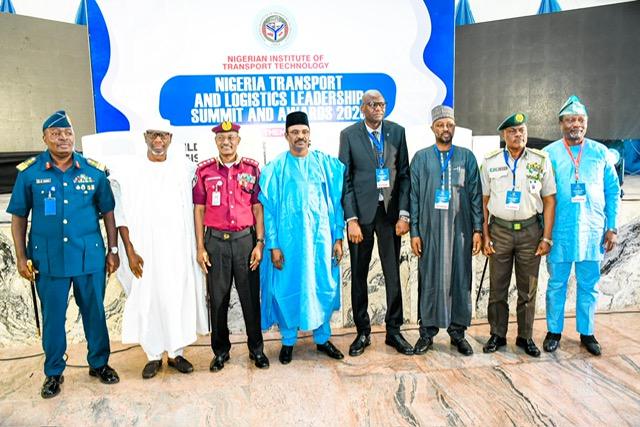
Minister of Transportation Said Alkali stated this on Tuesday at the Nigerian Transport and Logistics Leadership Summit in Abuja.
He described transport and logistics as the “lifeblood of Nigeria’s economy” and emphasised the sector’s role in driving national development. The event, themed “Building Sustainable Transport and Logistics Infrastructure in Nigeria: Current Trends and Future Insights,” brought together policymakers, industry leaders, and stakeholders to chart a sustainable path for the future of transport in Nigeria.
Organised by the Nigerian Institute of Transport Technology (NITT), the summit focused on leveraging innovation to address sector challenges and unlock economic potential.
Alkali noted that under President Bola Ahmed Tinubu’s Renewed Hope Agenda, key priorities include the transformation of the rail sector, modernisation of pipeline infrastructure, and the adoption of future-focused technologies.
Other News
He highlighted ongoing rail projects nearing completion, such as the 284-kilometre Kano–Maradi standard gauge rail line, expected to reach Katsina by December 2025 and full completion by March 2027, and the Kaduna–Kano rail line.
The minister also disclosed that the Federal Executive Council has approved $3 billion for the completion of Eastern Rail projects, underscoring the administration’s resolve to make public transportation efficient, safe, integrated, and affordable.
Alkali praised President Tinubu for championing far-reaching transport reforms, saying the policies are laying the foundation for a truly modern transport system.
NITT Director-General, Dr Bayero Farah, said the summit provides a timely platform to bring together stakeholders, policymakers, researchers, investors, operators, and leaders of thought in the transport and logistics sector.
Farah added that addressing climate change, rapid urbanisaton, and the growing demand for mobility and trade is essential for Nigeria’s long-term competitiveness in the global logistics landscape.