Follow Us on Google
ν Says SSANU VP, insists public varsities in terrible shape, totally ill
By Gabriel Dike
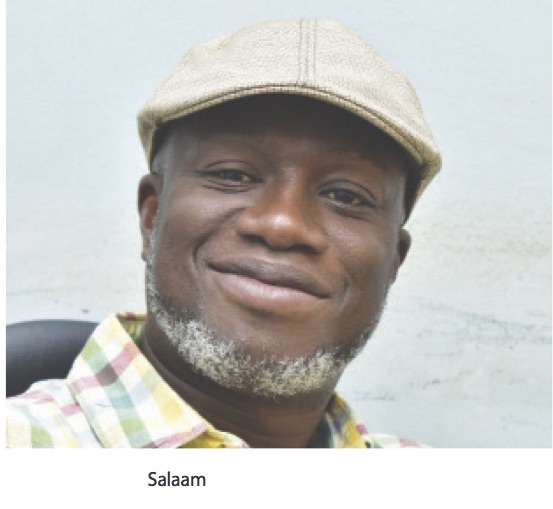
National Vice President, Senior Staff Association of Nigeria Universities (SSANU), Salaam Abdussobur, says public universities are in bad shape. He also faults government attempt to criminalise strike:
How are SSANU members faring?
SSANU members reflect the sorry state of public universities. Quite honestly, since the university system is not faring well, SSANU members are also not faring well. As at today, we have so many unfortunate realities affecting SSANU members such as poor remuneration, lack of motivation, poor conditions of service, negative environment for productivity and service delivery to the system and erosion of our functions by other cadres within the system.
Where we find ourselves today is a function of the dislocations within the system, internal challenges, degeneration of the university culture, disrespect and cloaked contempt for the university system by external bodies, among other causes. The situation has even worsened in the last few months, with the existential hardships occasioned by government’s removal of fuel subsidy.
To change the situation has been the reason for our various agitations in the last few years. Our agitations over the years have been to draw the attention of all stakeholders within and outside the university system to the challenges facing the system.
Our agitations have not been selfish or just simply about ourselves. Our contention is that if we get the university system right, all stakeholders, including SSANU members stand to gain more.
SSANU members are agitating for the payment of withheld salaries, why must government pay the money?
The issue of payment of our withheld salaries is a matter of right and not a favour. Let us be clear. SSANU and NASU under the auspices of the Joint Action Committee (JAC), embarked on strike owing to failure of government to actualise or bring to fruition, previous agreements reached with the unions.
Ultimately, the liability for the strike lies with government, having reneged on agreements freely entered into, with the unions. You do not deny a child of his breakfast, lunch and dinner and expect him not to cry. We had agreements, not one, not two, not three, signed with government, which they failed to keep to their side of the bargain.
To thus expect us to keep mute like slaves, in the face of the dishonorable actions of government not respecting or keeping to agreements, would be doing great disservice to us as a union. It must also be made clear that SSANU and NASU followed all due processes before embarking on the strike.
There were letters and reminders, due notices and follow-ups before we embarked on the strike. We followed all laid down procedures. To withhold our salaries therefore, is an attempt to criminalise our strike, which we find highly unjust and unfair.
The liability for the strike lies with government and its disrespect for Collective Bargaining Agreements. Government should rather be sanctioned for its irresponsibility and not SSANU.
Be that as it may, I use this opportunity to request that government toes the honorable path of paying our members their four months withheld salaries. It is the most honorable thing to do and government should toe the path of honor in this regard.
Has the issue of the sharing formula on earned allowance be resolved?
The issue of sharing formula on earned allowances is being resolved. Our contention is that we should have moved beyond the 2009 agreement and had a new renegotiated agreement by now. Also, our last Memorandum of Understanding with government had resolved this issue by agreeing that monies for earned allowances should be paid to individual university council and not through unions.
Only the universities, being employers of their staff, can determine who has earned what; being that those universities are the ones who assign the staff with the responsibilities or job schedules that determine their eligibility to earned allowances. The idea of earned allowances to be paid through unions is an anomaly and we have agreed with government that this must be stopped.
Some SSANU members are agitating for non-teaching staff to be involved in the VC selection exercise, do you agree?
The issue of non-teaching staff being involved in the appointment process of VCs is only proper. A vice chancellor is not only an academic leader. His functions span through all facets of the system, including administration, infrastructure development and management, funding and finance.
The VC is the chief accounting officer of the university. His appointment should not have the input of academic staff only, but also that of the non-teaching staff. After appointment, a vice chancellor is not responsible for academic functions alone but the entire university.
Our position therefore, is that such a VC must be acceptable to all constituencies in the university system. This can only be possible if the process of appointment of Vice Chancellor is made more democratic, to have increased non-teaching staff involvement.
What is the update on some alleged victimised SSANU members in federal and state universities?
Victimisation of workers is a general phenomenon and not restricted to the university system. Coming home, however, we have many cases of victimisation of SSANU members in federal and state universities. In recent times, we have had more challenges of victimisation in state owned universities than federal.
We have many vice chancellors who are socially and administratively immature and cannot accommodate the scrutiny and dissenting voices of unions. While I quite agree that we have many leaders across unions who exhibit immaturity, overzealousness, and exuberance in their prosecution of union agitations, a good vice chancellor will find ways of engaging such union leaders constructively and productively.
Unfortunately, due to poor administrative grounding and poor conflict handling acumen, we find vice chancellors muzzling unions, persecuting their leaders, and going the extreme hog of the illegality of proscribing unions.
We are, however, tackling such irregularities and treating each case as it comes. We have a duty to train our members to abide by laid down rules of engagement. But this can only be successful if there is reciprocity on the part of management’s.
We have a few VCs that exhibit great maturity in handling union issues. But we also have some VCs who also need training in industrial relations management.
How can the government fund public universities?
The issue of funding is multi- faceted. This is because there are many sources of funding for universities. SSANU believes that the government needs to greatly increase its funding to the university. However, there should be more clarity on the issues surrounding autonomy of the universities, among other contradicting guiding concepts.
What do I mean? Government places a peg over what universities can charge as fees. The same government does not augment what those universities would lose on account of not charging appropriate and cost reflective fees. The cost of maintaining a university is extremely high.
Let’s look at it from the issue of power supply alone. We operate generator universities due to poor electricity supply. The fund the government allocates per university is not enough to power the university, talk less of other services and activities.
Going forward, I believe we must have a proper conversation between stakeholders on their various roles in funding the university system. There is a role for government, role of other stakeholders like the industry, alumni, and a place for internally generated revenue in the funding of the university system. These must be clearly agreed upon.
With the current economic reality, should public universities be free?
I will give a realistic and simple answer. No. I do not subscribe to free education at tertiary level. The focus should be access to free education at primary and secondary levels. Education at tertiary level can be subsidized but should not be free. It’s my personal opinion though.
How healthy are public universities?
Very unhealthy. Public universities have undergone great degeneration and deterioration in the last few years and cannot be described as healthy in any form.
Our public universities suffer neglect from their proprietors either at federal or state levels. We witness a deterioration of manpower and decline in qualities of infrastructure and facilities.
The university culture and ethos are gradually going extinct. Public universities are gradually becoming appendages of the civil service or seen as parastatals of government rather than autonomous entities on their own. Gone are the days when a Vice Chancellor could recruit an international scholar based on his assessment of need to the university.
Today, to employ the lowest cadre, even a cleaner or gardener, a VC must make no less than two visits to the offices of the Head of Service of the Federation and Accountant General of the Federation. It is that bad! The public university system is in terrible shape and totally ill due to many factors within and without, too numerous to enumerate.
Some people have called for the suspension of license for new private universities, do you agree?
Suspension of licenses of private universities does not fall under the purview of unions. However, if you ask me, I would say that the criteria for approval of private universities appear too soft and should be firmed up. Private universities have an overriding or underlining profit motive behind whatever services they render.
For that reason, approval for licenses should not make private universities to become what private primary and secondary schools have become. Similarly, private universities must not be propagated or promoted at the expense of public universities, as the case appears to gradually becoming.
Do you think strikes have made NUS better or worse?
Strikes are a two-way traffic. It is not one way as we always assume. If opportunities for dialogue are open and constructive engagements are not foreclosed, there would be no place for strike. Thus, strikes only come about as a function of the doors for dialogue and constructive engagements being shut.
However, be that as it may, while I am not a strike proponent, it appears that a lot more has been achieved through strikes especially in the areas of funding, staff motivation, staff training and infrastructure development. Strikes have also caused delays in graduation, distortion of academic calendars and negative perception of stakeholders and the international community.
Nevertheless, our advocacy in SSANU is that government must open all windows for dialogue, engagement and collective bargaining. Strikes should not alone be the language government understands.
Some universities have three deputy VCs, is it necessary?
Universities having three Deputy Vice Chancellors are totally unnecessary! It’s just increased cost of governance with duplication of responsibilities. What roles one Deputy VC or at most two cannot perform? What are three DVCs doing? Having three DVCs is a sheer waste of resources and totally unnecessary load to the cost of governance of the University.
When ASUU gets certain demands, why does SSANU want the same treatment rather than negotiate their own?
That assumption is totally false and wrong. It is a very unfair narrative. I must make it however clear, that the university is a system. Typical of any system, what affects one part definitely has an effect on the other parts.
To that extent, isolating a section of the university system and assuming that once that section has been appeased, all problems have been resolved, which is very wrong. Because there are push and pull factors, when you appease a part in the system, it creates frictions in other parts.
Therefore, every solution to problems in a system must be addressed holistically and not by parts. The tendency to address issues by parts in the system has been the cause of most of the frictions and what is perceived as rivalry. Issues must always be totally addressed in the university system to avoid friction and tension.
Having said that, let me point out that SSANU has never demanded the same or equal treatment with ASUU. That is another fallacy. Each union and its members have specific roles in the system, and our contention is that each worker should be compensated according to the value of his or her roles in the system.
Our position in all engagements has been equity and not equality. We are not in competition with ASUU, and we must always get this clear. There are so many misrepresentations about SSANU or non-teaching struggles that the media especially does not help.
There have been many demands gotten by SSANU that have benefited ASUU. We do not measure their demands to make ours, but because we work in the same system, there are issues of common interest where our demands appear alike. We are, however, not in competition and do not want to be seen as such.