Follow Us on Google
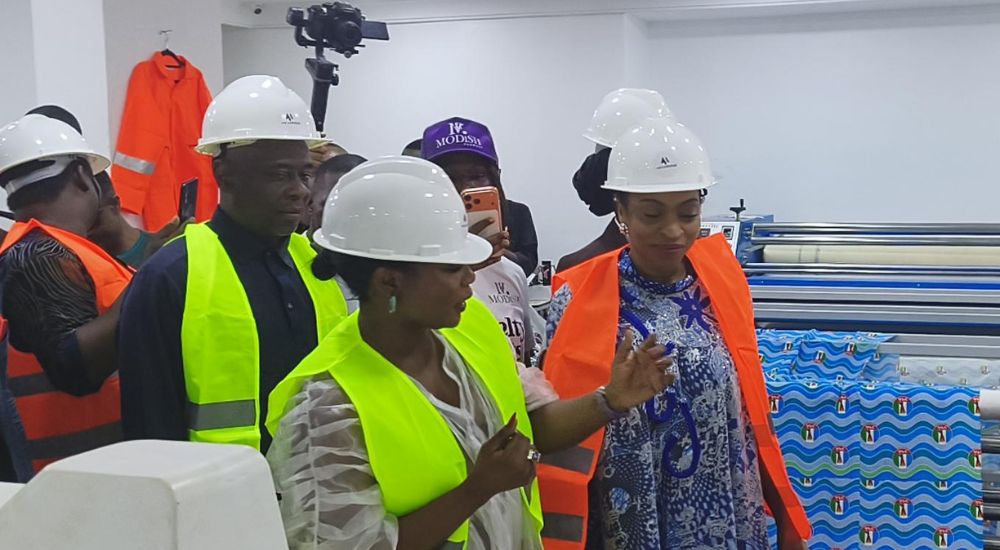
From Okwe Obi, Abuja
The Federal Government has pledged to back local garment factories in the country to curb $6 billion annual import cost.
Minister of Industry, Trade and Investment, Dr Olajumoke Oduwole, gave the assurance yesterday, in Abuja, at the unveiling of a garment factory and Mo’Afrique’s new brand, Modish.
Oduwole lauded the Founder and Creative Director, Mo’Afrique, Omobolanle Olawole, for the investments in the Nigerian textile industry, in the last 10 years.
She said: “I am extremely proud of Nigerian entrepreneurs, they are determined, dogged to face the challenges, and we support them to solve the business climate challenges.
“We expect you to have your garments all across Africa and the rest of the world using the African Continental Free Trade Area.
“It is a pride for the Ministry, it is a pride for the administration. This is what generates jobs, employment, and the GDP.
“I have already charged her to be exporting her garments to the rest of Africa and the world using AfCTA.
“This is what this administration stands for, supporting entrepreneurs for productivity, and we support them to solve business climate challenges and that is why I am here to support today, and today is really a day of great work, and Omobolanle, I am proud of you.
Other News
She added: “The road was not always easy, but we remained steadfast, guided by excellence and sustained by the trust of our clients and partners.
“The Nigerian garment industry has long faced challenges. Between 2010 and 2025, it struggled with high-volume, low-cost imports competing against a high-potential but underdeveloped local sector.
“Nigeria spends approximately $6 billion annually on imported clothing, with over 90% of popular fabrics like Ankara imported. Smuggling, porous borders, and limited infrastructure have further hampered domestic production.
“Despite government interventions, such as the Nigerian Industrial Revolution Plan and the Cotton, Garment and Textile policy, consistent results remain elusive.
“The paradox is clear: while Ankara is central to our identity, most of it is imported. Yet amidst these challenges, locally made garments of high quality are emerging, proving that with modern technology and vision, we can build a competitive industry.”
She further explained that, “It is against this backdrop that Modish has emerged, not just as a brand, but as a solution. With our 5–10 year plan, we aim to work across the textile and clothing value chain to ensure that today’s challenges become stepping stones toward a truly local and integrated clothing industry.
“Our factory is not only a production hub but also a model of innovation and sustainability, positioning us as leaders in garments and clothing in Nigeria and beyond.
“To power this vision, we have invested in infrastructure. Our new garment factory, built to global standards, is a hub of innovation equipped with advanced technology, modern machinery, and run by skilled professionals.
“It is designed to produce at scale without compromising quality, delivering efficiency while nurturing creativity. This facility will empower local talent with training and jobs, proving that Nigerian fashion can compete globally—not only in creativity but in manufacturing excellence.”