Follow Us on Google
From Okwe Obi, Abuja
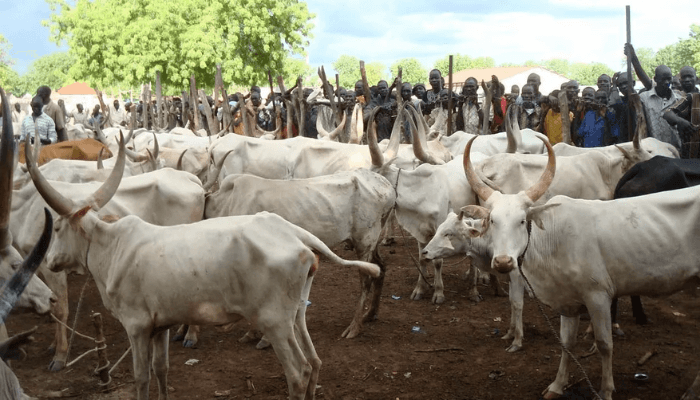
Hopes of ending incessant farmer-herder conflicts and improving Nigeria’s livestock sector have brightened with 10 states aligning with federal government’s efforts to provide land and critical logistics to enhance production.
With water and pasture being the core triggers of conflict in the industry, the renewed collaboration aims to tackle these issues head-on and drive sustainable growth.
Representatives of Gombe, Borno, Kogi, Bauchi, Benue, Plateau States, among others, have made encouraging commitments to drive the livestock agenda.
They spoke at a recent two-day stakeholders’ meeting organised by the Livestock Productivity and Resilience Support Project (L-PRES) and the World Bank on technology and livestock management.
Kogi State Commissioner for Livestock, Olufemi Bolarin, said the state was ready to provide the land and other necessary logistics to boost livestock production.
He said: “His Excellency is passionate about commercial pasture production. We started the experiment through the L-PRES. When the World Bank came, they asked us to make it in a commercial quantity.
“His Excellency has taken the challenge and he is performing the best of care. We have produced a small booklet as a guide which I will give to the organisers and the researchers.
“We hope that at the end of the workshop, the impact of the workshop will be felt in the increase in pasture production, colleges for the livestock, and increased opportunities in the investment forum of the pasture development.
Kogi is now inviting investors in terms of pasture development. According to His Excellency, if you come, we will give you all the necessary supports because he has put all the amazing environment in place.
“We have the land, we have the water, and we have the manpower. All we need is the technology.
“It is so fascinating that the Israeli technology can come to Kogi State. We will be able to not only feed the Nigerian livestock but even export the pasture production in Kogi State to Africa and beyond in the next few months.”
Also, the Gombe State Commissioner for Agriculture and Animal Husbandry, Barbara Malle, identified lack of water and lack of feeds as some of the challenges.
According to him, the government would start using modern technology for artificial insemination to address the problem.
“We have traditional way of rearing animals. And this workshop is timely, and we are trying to improve this quality, the traditional way, and the importance of technology.
“So, the Minister was there; he has seen the challenges that we are having. During this time, the harvests will be settled in the greater desert. But starting from October to May, they will leave the greater desert because of certain factors.
“First, lack of water, lack of feeds, and other essential amenities. So, the Minister was shown some of the structures that are there now.
“He saw them by himself, and the Governor requested his support for developing greater desert and other settlements.
“Presently, we have started improving our indigenous animals by doing AI — artificial insemination — and we are waiting for the outcome.
“So, with this workshop, I know we are going to have innovations that will also assist the state to improve on livestock production, especially on pasture and fodder,” he said.
Other News
In addition, the Borno State Commissioner for Livestock, Umar Usman Kadafur, said the state was willing to provide land for livestock production.
On his part, L-PRES National Coordinator, Sanusi Abubakar, said the event was organised for stakeholders to share ideas on how to provide the two key drivers of conflict — water and pasture.
“So, we are handling the pasture. What we are doing, we are looking at technologies to improve the pasture production.
“The expected outcome is to get knowledge on the technologies, share knowledge and see how the states can adopt this.
“For instance, a lot of states have a lot of programmes across the grazing reserve, across the livestock farm. So we want to see how the states can adopt these technologies and utilise it.
“We want to commercialise pasture. Like you used to go and buy feeds for poultry, we want to buy feeds for cattle, and sheep and goats, so that you can reduce the radius of conflict.
“I have to appreciate the current federal government, the government of President Bola Tinubu, for even creating the Ministry of Livestock because it is a step in the right direction.
“And we are collaborating because we are under the Federal Ministry of Livestock. We are collaborating to see how we can reduce this issue. I told you clearly, two aspects: water and pasture.
“And that is what we are doing in L-PRES. If you address these two, you are addressing the drivers of conflict. You reduce the radius of movement of the pastoralists.
“If you reduce the radius, you are reducing the conflict. So that is what we are doing and there’s a seriousness,” he said.
Beyond collaboration, the Minister of Livestock Development, Idi Mukhar Maiha, tasked stakeholders to ensure that all projects on livestock should be revisited and engrafted into the current livestock agenda of the Federal Government.
Maiha, represented by his Special Adviser on Livestock Enterprise, Ishiaq Bello, said: “There was a strong relationship between the implementers of the National Livestock Project Division and the former Nigeria Agricultural Cooperative Bank.
“During that time, this pastoral project was financed by the project; funds were domiciled with the Bank of Agriculture in all aspects of the livestock value chain. We had the cattle factory, sheep factory and so on.
“I am appealing that we bring back those implementations and collaboration between L-PRES, other projects and the Bank of Agriculture. Because the Bank of Agriculture has a lot of branches all over Nigeria.”
He also implored banks to give loans to farmers with low interest rates in order to boost agriculture.
“On behalf of the farmers, we are requesting for low-interest loans — less than 10%, single digits.
“The pursuit of sustainable pastoral management is not merely an agricultural undertaking, it is part of environmental stewardship, social stability, and economic resilience.
“This workshop underscores the importance of global partnerships, including collaboration between esteemed institutions and government agencies, to harness climate-smart technology and digital innovation.
“The involvement of our local and international stakeholders, like farmers, researchers, policymakers, and development partners, enforces our shared commitment to transform the sector,” he appealed.