Follow Us on Google
From Juliana Taiwo-Obalonye, Abuja
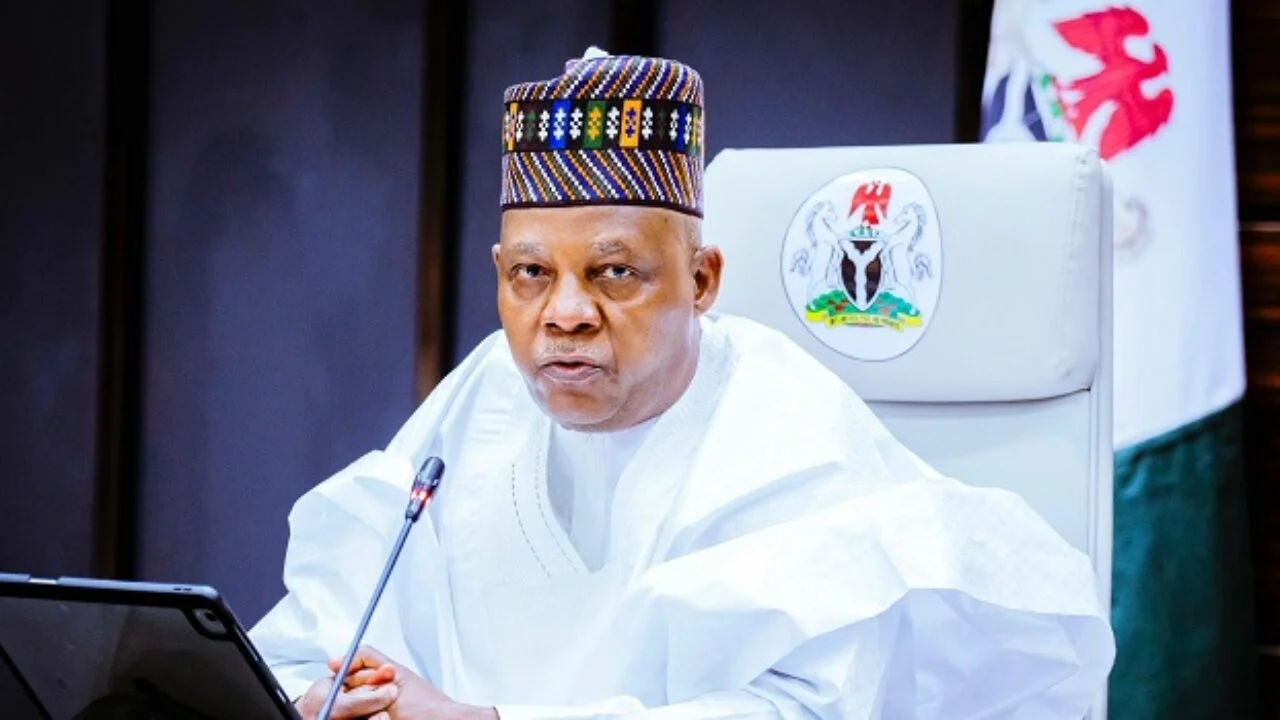
Federal Executive Council (FEC), presided over by Vice President Kashim Shettima, has approved the 2026 Appropriation budget with aggregate expenditure projected at N58.47 trillion—a six percent increase over the 2025 budget estimate.
Director-General of the Budget Office, Tanimu Yakubu, briefed State House Correspondents on the details, accompanied by Minister of Information and National Orientation, Mohammed Idris; Minister of Finance and Coordinating Minister of the Economy, Wale Edun; Minister of Budget and Economic Planning, Atiku Bagudu; and Minister of State for Finance, Doris Uzoka-Anite.
Tanimu outlined key components of the proposed spending. This includes N4.98 trillion for government-owned enterprises and N1.37 trillion for grants and donor-funded projects. Statutory transfers are set at N4.1 trillion, while debt service takes the largest chunk at N15.52 trillion—including N3.38854 billion allocated to the sinking fund for retiring maturing local contractors and creditors.
DG Tanimu detailed the breakdown: “The aggregate expenditure for 2026 is projected at 58.47 trillion naira. Six percent higher than the 2025 budget estimate. This includes projected spending of government-owned enterprises, amounting to 4.98 trillion naira, and 1.37 trillion naira for grants and donor-funded projects.”
He highlighted debt pressures, noting statutory transfers at N4.1 trillion and debt service at N15.52 trillion. “This includes 3.388.54 billion naira for the sinking fund to retire maturing issued local contractors and creditors,” he said.
Other News
On personnel costs, he added: “Personnel costs including pension: 10.75 trillion naira, which includes 1.02 trillion for government-owned enterprises and [is] seven percent higher than the 2025 provision. Overhead cost stands at 2.22 trillion naira.”
Capital spending drew emphasis on caution. “Capital expenditure: 25.68 trillion naira, 1.8 percent lower than the 2025 capital provision, reflecting a more conservative approach to capital planning and the focus on completing ongoing projects,” the DG stated. He specified priorities: “Capital allocation priorities include MDAs 11.3 trillion naira, multilateral and bilateral loans 2.052 trillion naira, and the capital component of the development levy: 1.8 trillion naira.”
He framed the budget’s philosophy: “The 2026 budget reflects a deliberate balance between macroeconomic stabilization and development imperatives and the medium-term fiscal framework. Budget assumptions are conservative and realistic, particularly on oil price, exchange rate, and government-owned enterprises dividends.”
Revenues show progress in diversification. “Revenues decline year on year, but non-oil revenues now account for roughly two-thirds of total receipt, confirming a structural shift away from oil dependence.
Corporate tax, VAT, customs, and independent revenues remain the main fiscal anchors,” he explained.
Expenditure drivers are mandatory, not expansive. “Expenditure growth is driven primarily by debt service, wages, and pensions rather than discretionary expansion,” DG Tanimu noted. “Capital spending is marginally reduced to prioritize completion of ongoing projects and value for money.”
On the deficit, he clarified: “The larger deficit reflects prudence rather than policy loosening. Financing relies on domestic borrowing, complemented by concessional multilateral loans.