Follow Us on Google

From Okwe Obi, Abuja
It was established in 1991, by Maryam Babaginda, wife of former Head of State, Gen. Ibrahim Babaginda, as part of her pet projects targeted at showcasing the culture of the original inhabitants of the Federal Capital Territory (FCT), Abuja, create employment opportunities and to be used as a tourism destination to rake in revenue for the government.
Ushafa Pottery Cultural Centre, as it is known, has played hosts to the crème d’ la crème of society, including former President of the United States of America, Bill Clinton.
In fact, many multinational organisations, hotels and even churches used to purchase their artworks in large quantities from the centre to beautify their premises.
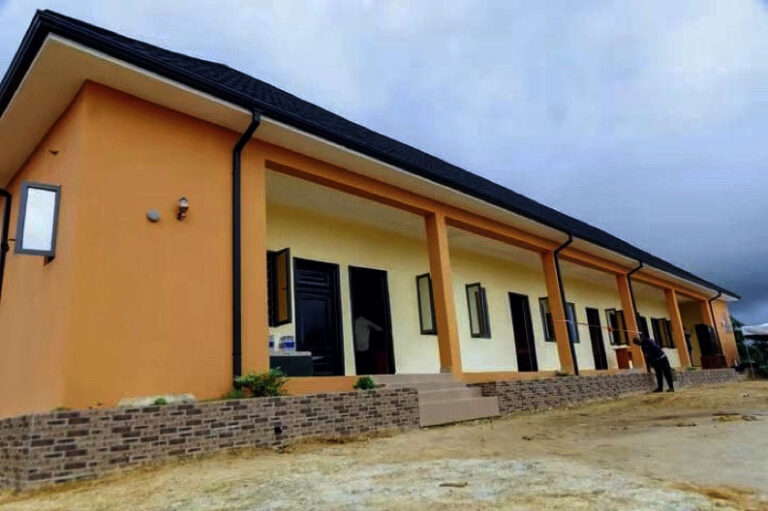
But 30 years after, the once-cherished edifice is now in a deplorable state, to the point of staining the resplendent memories of lovers of art.
The road leading to the premises has been partly snatched by petty traders who now sell their goods almost in the middle of the road. Even at that, one would have to contend with motorcycle and tricycle riders to meander through.
The main entrance is about to collapse. Some of the shelves are almost empty because of the unavailability of sculptures like pots, cups, flower vases and ceramics.
Behind the building lies a large tract of arable land overtaken by grass for lack of use and maintenance.
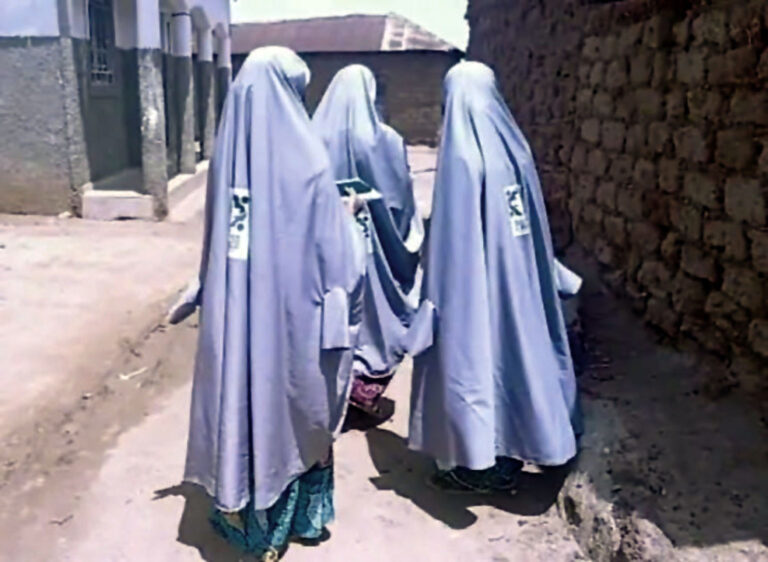
Some of the potters, mostly women, identified lack of water, clay, trucks to bring in sand and modern technologies to scale up production as their main setbacks.
The visibly worried potters recounted what they go through to get grass to bake up sculptures in order to make them stronger.
Their pangs worsened during the lockdown by the Federal Government to tame the spread of COVID-19, as they were unable to move around to search for materials.
According to one of the facilitators and executive director of Mario Women Foundation, Mario Isa Barnabas, some of them go as far as Katsina State to buy grass, which cost N5,000 and above.
Barnabas said: “I am very happy that you are here to take note of the challenges of Ushafa Pottery Centre.
“We are the original inhabitants of the FCT and, when you look at FCT today, we, the original inhabitants, have been driven up and down.
“There are some lands that, before anything is done, a test ought to be carried out to look at the potential of the place. During the lockdown occasioned by the pandemic, our sources of livelihoods were affected.
“We get some of the materials like clay inside the bush. Where we normally farm and source for materials, the Federal Government has taken it away from us.
“We are pleading with the government to come to our aid, especially in this pottery centre; it should be rehabilitated. Mind you, it is owned by the Federal Government. And you cannot do pottery without water. For more than eight years, we have not had water.
“We beg and buy water with jerry cans, which ought not to be so. When Bill Clinton visited Nigeria, this is where he came. We are calling on the government to come to our aid. I believe that, if this place is rehabilitated, the youth of Abuja, not only Ushafa, would get jobs.
“We are not saying government should bring back our land, because land belongs to the Federal Government. But let there be proper compensation. Not all lands should be sold.
“Some lands have cultural significance. If you look outside, there is a land that belongs to government. And there was a day some people were digging soak-away pit, our people from this pottery centre went there to pack the clay, they refused.
“Even when we offered to give them laterite in exchange for the clay, they refused. So, what we are saying is that, before land is collected from us, there should be a proper test because of the mineral resources imbedded in it.”
Another worker at the centre, Tanko Ushafa, noted that production capacity depends on the size of the pot.
“In a month, somebody can produce 200 pieces. But it all depends on the size. So, if it is the bigger size, it can be like 10 because you will have to do like two to three in a week. It is not something you can do and finish immediately; it has a process.
“The small ones are easy because you can mould them at once and heat up immediately.”
But, there might be respite, as the executive director, Resource Centre for Human Rights and Civic Education, (CHRICED), Zikirullahi Ibrahim, promised to support in rebuilding the centre, mainly by empowering the Mario Women Foundation, Ushafa, to train about 5,000 interested potters to enable them eke out a living in the nearest future.
Ibrahim, who did not hide his feelings at government’s negligence in showcasing locally made artifacts to the world, encouraged the original inhabitants of Abuja to hold on to their culture.
He said, “First of all, we found out people who are very passionate about their heritage, cherish their culture and what to sustain it by whatever means, they can sustain it.
“Some of them have realised that they were trained by the product of pottery and, therefore, even as some of them have gone into civil service and retired, they return because they want to promote that sustainability. I commend them for that.
“You could also see the hard labour the people are putting in to sustain the culture, which, in this time and age, ought not to be. The government cannot talk about not having resources if they truly value our heritage.
“The culture of people is their live wire; take away their culture completely, they are finished. We are not in an age where government shows up our artifacts that were stolen from Nigeria.
“So, this is the time for us to promote our culture. This products you’re seeing here are a means of livelihood for so many of them. You talk about a centre that is at the back of a dam yet they suffer lack of water for years.
“There is no borehole. So, everything that is done here is manually. And we feel very strongly that, if the government really wants to support, these are things that they can fix quickly because these things are very important.
“We call on the government and the area councils to, please, come to the aid of Ushafa Pottery Centre and ensure that the modern gadgets that they need to work effectively and sustainably are provided for them.
“We cannot quantify how much would be needed to revamp this place. What we are after is to see a progressive step being taken by the government. It may take sometime.
“In CHRICED, we feel that this is one of the important means of survival and livelihood for original inhabitants of Abuja and that is why we are investing in it and, also, supporting the Mario Women Foundation, Ushafa, to train others. You can see a child of about six years old currently on holiday and he decides to do this work.
“The boy will definitely grow up with it. We know how our system is today; there is no work anywhere. You see graduates roaming the streets for years without jobs.
“Even when you get job, it is not sustainable. So, that child is also building his capacity and building skills, but what we need is for him to be integrated into modern society because we are in a computer age.
“There is a need for both the public and private sectors to intervene to ensure that we sustain the pottery centre.”