Follow Us on Google
• It is not over yet, says PDP
• Poll blatantly rigged, but we have learnt our lesson –ADC
By Romanus Ugwu and Ndubuisi Orji
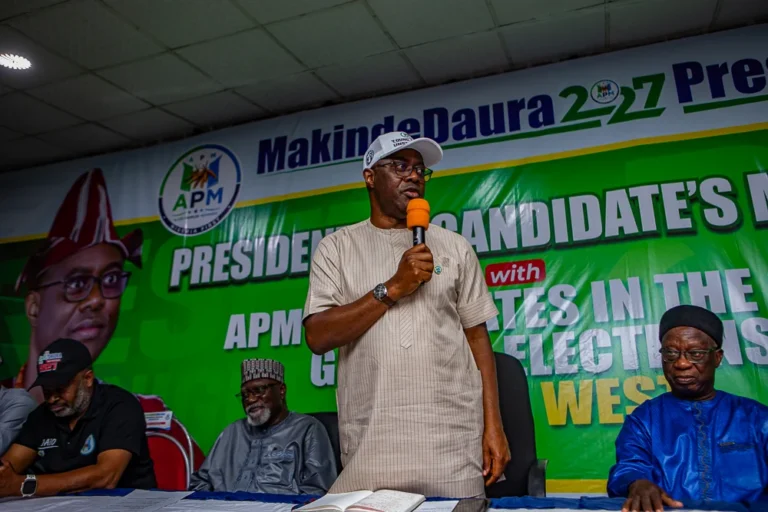
The backlashes, criticisms, and, on the flip side, celebrations that have trailed the outcome of the recently conducted Federal Capital Territory (FCT) Area Council election have understandably continued to dominate political discourse across the country one week after the poll.
To a large extent, in the perception of many, the Area Council election can metaphorically be likened to the different impressions many blind persons would hold about the different body parts of an elephant they touched.
Therefore, to many politically exposed Nigerians and even the ordinary persons on the streets, the FCT election was purely a practical demonstration and dress rehearsal of how the forthcoming next year’s general elections, particularly the presidential poll, will play out.
For the Independent National Electoral Commission (INEC), the FCT poll provided it with a reliable platform and opportunity to test run the reliability and operational readiness of the logistics and technological arrangements it intends to deploy for the two off-cycle governorship elections this year and ultimately next year’s crucial general elections.
Yet to the political parties, it was an election to test their might, forte, voters’ acceptability, and, derogatorily, to experiment on the efficacy and potency of the rigging machine and methodology they intend to put in motion during the 2027 general election.
The post-election appraisals, comments, and assessments from democratic stakeholders, domestic, foreign election Observers and the leaders of political parties, are in sync with the conclusion that previous endemic factors clearly reared their ugly heads during the FCT poll despite the hostile condemnations of them in the past.
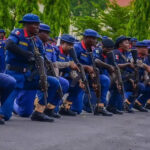
For many critical stakeholders, there were clear manifestation of such factors like unnecessary restrictions of movements for several hours by the government, total closure of markets and business outlets, resulting in monumental revenue loss, gross voter apathy, unprecedented intensity in vote buying, crass impunity in the modus operandi and manner the security agents operated, particularly the use of canisters of teargas on defenceless electorate, and violent intimidations, harassment of voters, electoral officers, security personnel by political thugs.
Equally, there were the same endemic challenge of late arrival of election materials, mutilations of result sheets, attempts to disrupt voting process, snatching of ballot boxes and disappointingly, the usual technical glitches, which failed technologies like the Bimodal Voter Accreditation System (BVAS) and the contentious automatic real-time electronic transmission of results into the INEC Results Viewing (IReV) portal among many others.
Regrettably, according to many observers, political thugs and hoodlums, comprising mainly youths under the influence of drugs, were brazen in their deployment of forces to intimidate hapless, vulnerable electorate, and even rough-handled a Department of State Services (DSS) personnel.
Reports in the public domain confirmed that apart from multiple arrests the security agencies carried out across the six Area Councils, and the needless unleashing of brutal attacks recorded during and after the election, the Economic and Financial Crimes Commission (EFCC), had revealed that no fewer than 20 suspects were arrested for different electoral offences, and over N17 million recovered, particularly from the suspects arrested with the sum of N13.5 million in a car parked beside a polling booth in Kwali Area Council.
“Two of the suspects were arrested in Abaji; nine in Gwagwalada; four in Kuje, and the remaining four in Kwali,” EFCC’s Head of Media and Publicity, Dele Oyewale had disclosed in a statement after the election.
There were also voter redistribution challenges, and while voter participation was influenced by broader political and social dynamics, administrative delays and confusion further contributed to discouraging participation in certain areas.
By the time the dust settled, the electoral commission had declared the following APC candidates, Danjuma Shekwolo, Kuje, Umar Abdullahi Abubakar, Abaji, Nuhu Daniel, Kwali, Christopher Maikalangu, AMAC, Joshua Ishaku, Bwari and PDP’s Mohammed Kasim, Gwagwalada as the newly elected chairmen to pilot the affairs of the six Area councils.
In its post-election appraisal, civil society groups under the auspices of Civil Society Legislative Advocacy Centre (CISLAC) and Transition Monitoring Group (TMG) had decried the widespread voter apathy, logistical failures, and alleged political meddling in the elections, warning that Nigeria’s democracy risks turning into a selection rather than a true contest.
“When citizens no longer turn out to vote, it is no longer an election but a selection,” Auwal Musa Rafsanjani, Executive Director of CISLAC and TMG, quipped in a statement, lamenting: “The polls were largely peaceful but marred by deep-seated flaws. The trend was dangerous for democratic governance as Nigerians lost faith in the process.
“Nigerians are gradually losing trust in the electoral process. It is a very dangerous trend for democratic governance. Persistent voter apathy poses a serious threat to democratic participation and public confidence in elections,” they cautioned further, emphasising that, “Security agents must show strict impartiality, particularly at the collation centres.”
But, despite the pockets of complaints, the leaders and chieftains of the ruling party, the All Progressives Congress (APC), have understandably commended the process loudly, highlighting the importance of its comprehensive victory in the five out of the six Area Councils ahead of next year’s general elections.
Instructively, while the election seemed to have come too impromptu for the most vociferous opposition coalition party, the African Democratic Congress (ADC), and its other opposition counterparts, it perhaps provided a bright opportunity on a planter for the ruling party, APC, to send strong signals about its high momentum, resolution and readiness to win every election regardless of how insignificant it could be.
Retrospectively, the ruling party, in approaching the election, had constituted a 138-member campaign council to kill an ant with a sledge hammer, which paid off with a resounding victory of a clean sweep in the chairmanship positions in Kuje, AMAC, Kwali, Bwari, and Abaji Area Councils, sacrificing Gwagwalada to an already weakened opposition.
To underscore the importance the ruling party attached to the election ab initio, and the resolution to make a bold statement with it, every notable political figure and chieftain of the party except President Bola Tinubu and his Vice, Kashim Shettima, that operated behind the scenes, was conscripted, directly or indirectly, into the campaign council mandated to ensure a comprehensive outright victory for the party.
A strategic composition of the crème de la crème, political erudite and distinguished personalities in the security, legal, and administrative circles, deft and knowledgeable in prosecuting and winning elections previously, the ruling party had defined its mission and readiness to crush every obstacle between it and the victory.
The members were strategically drawn from members of both chambers of the National Assembly, State governors’ forum, the presidency, members of the Federal Executive Council, renowned retired security personnel and experts, former appointive and elective political office holders, and all the members of the party’s National Working Committee (NWC).
In reality, the crack team was actually an assemblage of NASS principal officers led by the President of the Senate, Senator Godswill Akpabio, his deputy, Senator Jubril Barau, their House of Representatives counterparts led by the Speaker, Rt Hon Tajudeen Abbas, and his deputy, Rt Hon Benjamin Okezie Kalu, who took charge of logistics as the Campaign Council’s General Secretary.
Others drafted into the committee include an unprecedented solids team of 25 State governors led by the chairman of Nigeria Governors Forum (NGF), AbdulRahman AbdulRasaq of Kwara State, who headed the committee alongside co-chairmen like the APC Progressive Governors Forum (PGF) chairman, Hope Uzodimma of Imo State, Mai Mala-Buni of Yobe, and Mohammed Umaru Bago of Niger state alongside 21 of their colleague governors.
Ministers like Engr David Umahi, his counterpart in Budget and National Planning, Abubakar Atiku Bagudu, Minister of State for Defence, Bello Muhammad Matawalle, and Minister of the FCT, Nyesom Wike, who collapsed his rainbow coalition into APC fold, and openly worked for the ruling party, were equally very active in fortifying the campaign committee.
The mission and purpose of APC constituting such high-powered political ranking individuals into the campaign council was understandable and obviously self-explanatory.
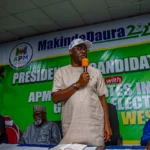
Beyond other considerations, the campaign committee underlined the intense, deadly rivalry between the APC and the, ADC, particularly rattled by the fact that its leaders, like Peter Obi and Senator Ireti Kingibe, had been intensely involved in the vigorous campaign in almost all the Area Councils ahead of the election.
And for the ruling party, regardless of whatever impression anybody may hold about its approach to the election, it was a case of the end justifying the means.
From President Tinubu to the party’s national leadership, members, and chieftains who even justified the allegations of the party spearheading the massive vote buying and selling, there was no remorse and magnanimity in victory.
For example, while defending the alleged incidents of vote buying during the council poll, an APC chieftain and party’s collation centre agent in Kuje, Jato Haruna, boldly said that vote buying has become part of the election in the continent.
Responding to the trend during the election in the Area Council, Haruna said: “Vote buying has become an African culture. It is difficult for anybody to kill a culture. That is the simple truth.”
Other News
As for President Tinubu, the mandate given to his party, the APC, was a ‘sacred trust’ from the people. And in a statement by his Special Adviser on Information and Strategy, Bayo Onanuga, he had urged the victors to serve with humility, patriotism and dedication.
He had singled out the FCT Minister, Nyesom Wike for praise, noting that; “Democracy is enriched with the vibrancy of participation and competition. I commend the courage and discipline displayed by all the contestants. The elections strengthen Nigeria’s democratic culture, and I call on INEC to continue improving its efforts to deliver even more exemplary electoral processes.”
If President Tinubu was magnanimous in commending the victory, APC’s national chairman, Prof Nentawe Goshwe Yilwatda, was merciless in chiding the opposition’s outing during the election.
Describing the victory of the ruling party as a resounding endorsement of President Tinubu’s reforms and governance direction, Yilwatda, in a statement by his Special Adviser, Abimbola Tooki, attributed to victory to the strength of his party.
“I heartily congratulate the teeming supporters of the APC in the FCT on the successful, peaceful, and credible conduct of the polls. The victories recorded by our great party are a clear testament to the resilience, unity, and grassroots strength of the APC.
“The Abuja election, in particular, is a powerful statement by Nigerians from all walks of life that they stand firmly with President Tinubu and his bold reform agenda. As residents of the nation’s capital, their verdict sends a strong message of widespread support, renewed hope, and confidence in the ability of this administration to reposition Nigeria for sustainable growth and prosperity.
“As we celebrate these victories, we must remain united, focused, and committed to delivering good governance at all levels. The message from the people is clear: they want results, accountability, and continued reforms in line with the Renewed Hope Agenda. The APC will not disappoint,” he promised.
While slamming critics as “emergency democrats,” FCT Minister, Wike claimed that, “The election has indeed shown that Nigerians now know the ruling party and the real opposition party.”
“Also, the election has further exposed the hypocrisy of people who go about buying corn and groundnuts from roadside sellers for the campaign just to deceive Nigerians. The residents of FCT demonstrated that they cannot be deceived by emergency democrats, who have chosen not to see anything good in our country and its government,” he lampooned the opposition leaders.
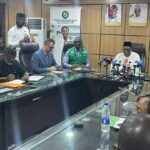
But, apparently miffed by the endless criticisms against certain flaws that characterised the conduct of the election, INEC boss, Prof Joash Ojo Amupitan, in providing a compressive explanations, admitted them but announced his resolve to wield the big sticks against the staff, electoral officials found complicit for certain failures and blacklist the transporters involved in the delayed arrival of election materials during the Council elections.
While reading the riot act in his remarks at the meeting with RECs in Abuja, Prof Amupitan confirmed that some of his staff in the Kuje Area Council, responsible for the logistics delay, have been queried, just as the transporter who caused some delay in Kwali will be blacklisted.
The electoral umpire boss admitted that there is still considerable work to be done over the disturbing voter apathy to deepen voter engagement and confidence.
He said that though every election is both a test and a teacher, the FCT Council poll provided the commission with reassuring and sobering lessons, noting: “Another area that requires frank discussion is logistics and punctuality. According to our Election Operations Dashboard, only 45 per cent of polling units opened by 8:30 am.”
“Although we achieved 100 per cent by 10:00 am, the initial delay is unacceptable. Let me repeat what I said at my meeting with staff: there will be consequences for any act capable of sabotaging the process. 45 per cent opening at 8:30 am is not satisfactory. It fell short of our standards. It undermines public confidence. And it will not be tolerated.
“We have identified some of the staff in Kuje Area Council and Kabusa Ward in the Municipal that caused logistic delay, and I have directed that they should be queried. In addition, the transporter that caused some delay in the Kwali Area Council will be blacklisted. We are still reviewing our transport logistics model for effective performance.
Appraising the performances of the commission during the poll, Amupitan said: “We commend the generally peaceful conduct of the FCT election in all the polling units. No violence was recorded during the voting exercise. We commend the security agencies for this feat.”
“However, we must admit the ugly incident that occurred in Kuje, where the central collation centre was invaded by thugs during collation, and also at another collation centre in Kwali Council. The ugly incident was squarely addressed, and the results were finally collated without much ado,” he noted.
Amupitan further argued that there are many positive takeaways in the election, explaining: “I must not fail to mention the improvement we have introduced in our result management system. We have identified that the greatest threat to our electoral process is not even the voting at the polling units but the actual collation of the results at several levels.”
“We have introduced some safeguards to the BVAS system, which is to curb all manner of manipulation on the results that will be transmitted to IReV. The Presiding Officer is required to capture and upload an image of the completed Form EC8A to the IReV portal and enter the scores of each political party directly into the BVAS device.
“The BVAS performs internal validation checks to ensure that the total votes entered do not exceed the number of accredited voters, the figures entered are mathematically consistent, and over-voting is automatically flagged and cannot be finalised.
“This was tested during the FCT election. The results of the election uploaded to IReV were found to be correct. As we speak, an average of 97 per cent of the results for the FCT election have been uploaded to IReV. Despite the above safeguards, we received complaints of result manipulation, especially the Kuroko Health Centre polling unit in Yangoji ward, Kwali, which was alleged to have recorded 1,219 votes for a political party, despite having only 345 registered voters and 213 accredited voters during the election.
“After due investigation, it was found that discrepancies in the reported result were due to an error by the Presiding Officer while entering the score of the party,” he explained.
While using the FCT election to put the RECs on their toes, he urged them to take responsibilities in their states, stressing: “Although there is no perfect election, I must make it clear to you all that Nigerians are looking to us with heightened anticipation and scrutiny, and I must emphasize that there is no room for error or excuse in this crucial process.”
Head or tail, the biggest takeaway for many pundits is the confirmation that a heavy financial war chest is the game changer in every election contested in the country.
The fact that the ADC leaders campaigned but could not make a serious impact because they lacked the funds to buy votes at the polling stations is a stark reality that the name of the game is money.
Meanwhile PDP National Publicity Secretary, Ini Ememobong, told Sunday Sun that the Federal government apparatus was weaponised against opposition parties, ahead of the contest. Ememobong, who stated that the opposition party is keeping his next action close to its chest, noted that elections in the country are not over until the courts have concluded their works.
He said” We have set up a legal term to analyze issues that came out from the election. You know that with the judicialisation of politics, elections are not over until the courts have concluded their works. So, we are still analyzing in terms of petitions to be filed and all the rest. The outcome of the elections, I am sure that people did not even expect the PDP to come out anywhere.
“You saw former members of the PDP pressurizing others to step down for the APC. You also heard a President make a categorical statement that the Minister’s job would be on the line, if he does not deliver the FCT. What more threat could have been issued in the circumstance?
“So, while they are internal factors-the crisis within the party; the fact that some of the candidates themselves were not people of principle, you also saw the weaponization of government apparatus against political parties; You saw the 22 hours curfew. The militarization of elections. So, we are looking at it. And of course, our next step is very close to our heart. But we have learnt lessons from what they have done and we will clearly respond accordingly.”
Similarly, the African Democratic Congress (ADC) told Sunday Sun that the FCT Area Council election was allegedly rigged, noting that it has taken lessons from the contest and has returned to the drawing board to plan for the next election.
The ADC National Publicity Secretary, Bolaji Abdullahi, told one of our reporters: “The position of the party is that we reject the FCT election result, because we believe that it was fraudulently rigged. Having said that; we have learnt important lessons and we are returning to the drawing board. We are moving on, preparing for the next election.”