Follow Us on Google
By Omoniyi Salaudeen
When in July, President Bola Ahmed Tinubu declared state of emergency on food security, farmers in the country heaved a sigh of relief.
The farmers and other Nigerians believed that in few months, they would begin to reap the benefits of this declaration, among others.
But over three months down the line, food inflation has continued unabated in the country.
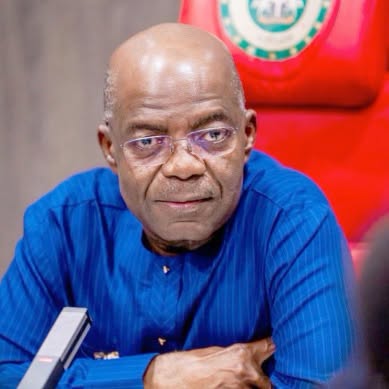
In this interview, the National President of All Farmers Association of Nigeria (AFAN), Dr Yunusa Halidu Yabwa, speaks on the government’s lack of commitment to the successful implementation of the policy.
As a stakeholder in the agric sector, what do you think has happened between the time of the declaration of the state of emergency on food security and now?
For us as farmers, nothing good has happened since the declaration of the state of emergency by President Bola Ahmed Tinubu. Food inflation is still on the rise. Even with the opening of the borders, there is still hike in food prices. I don’t actually know what they meant by a state of emergency. By my own understanding, once a country declares a state of emergency on a particular sector, every action of government, including financial budget should be focused on that sector. Unfortunately in Nigeria, that is not the case. Out of the supplementary budget recently approved by the National Assembly, the agricultural sector got just N170 billion plus while security gulped N600 billion. Till date, I don’t know what they meant by a state of emergency. They are not serious about it. When the declaration was made, one would have expected the government to put an action plan in place to monitor the implementation. But that was not the case which is why food inflation is on a steady rise. I often wonder how people are surviving in this kind of situation.
Are you saying that your association as a critical stakeholder in the sector is not involved in the implementation of the policy declaration?
We have never sat down with anybody to discuss the modality for the implementation. We are the umbrella body of farmers in Nigeria. We have over 14 million farmers in our data bank. In the whole of this country today, no organization has members like ours. Yet, we are not in the decision making; we are not in the implementation. They just made the declaration to the public, but nothing is happening in that sector.
What specific thing do you want the government to do to carry you along as stakeholders to ensure the success of the declaration?
Agriculture is the largest sector in Nigeria. The Federal Government alone cannot handle the sector. There should be no ministry of agriculture. Instead, government should create an enabling environment. In other parts of the world, private sector drives agriculture and not government. If the government is serious about the state of emergency on food security, they should encourage every big man to invest in agriculture. All big men who are benefiting from this government should come and invest in food production because food is the primary need of every living thing not only human beings. Some people have rice mills, which can produce 200 metric tons per day, but they don’t have one hectare of land at the back of their factories where rice can be cultivated. What they do is to source for rice from unknown farms. Government itself does not have contingent farm of 10 thousand hectares of rice, they allow bandits and cattle rustlers to occupy uncultivated vast lands available everywhere. It doesn’t cost much to do all this. Even state governments can do it, but they refused. If they can’t do this, how do you talk of state of emergency on food security? They know what to do, but they are deceiving Mr. President. They are giving him fictitious report about what is happening.
Having waited this long to see the action plan of the Federal Government, what has your association done to interface directly with Mr. President to let him know your position?
We only interface with Mr. President through the media because he is the number one person in this country. Even the Minister of Agriculture has not met one-one-one with us since he came into the office. Any time you book appointment, they are always unavailable. They are busy travelling all over the world. When you go to their office, they are busy attending to visitors. We are the largest farmers’ association in this country; we don’t need to book appointment to see the Minister of Agriculture. We have set this government aside because they are not ready to work with us. Recently, they said they wanted to cultivate 100,000 hectares of wheat. How much will it cost to cultivate 100,000 hectares? But they have done groundbreaking ceremony in Jigawa and Kano even when it is obvious that they don’t have enough seeds that can cultivate it. Agriculture is not about sitting down in an air conditioned office drinking tea. You have to go to the field. You don’t go to the field with Babanriga to do a groundbreaking ceremony; you have to wear T-shirt to work on the farm.
How has the private sector investment in the agricultural sector fared under the present security situation in the country?
Security is everybody’s business. Government alone cannot tackle the problem of insecurity. These bandits and other criminal elements live in communities, but people don’t want to talk. Insecurity cannot stop people from doing their farming activities. If you go to the villages in the North, this is the time of harvest. People are already harvesting maize and sorghum. We as farmers association are cultivating 600 hectares of rice in collaboration with some private sector investors. We have started harvesting paddy rice in other places. Agriculture is not a one-man business. To engage in agricultural produce, you need inputs like fertilizer, seeds, mechanization machines, extension workers and so on. It is not as simple as sharing inputs in a warehouse and you think that you are supporting farmers. No, it doesn’t work that way.
Are you saying that seedling and other inputs government provided after the declaration of a state of emergency didn’t get to your association?
Do they have the statistics of farmers in this country? Government has a good policy, but the people who are running the system are not serious. They know what to do, but they don’t want to do it. It is only in Nigeria you see a Minister of Agric who does not have a farm. You cannot have a Minister of Health who is not a medical doctor. But that is not the case with agric sector because that is where they can carry money and nobody will know.
What is the way out for the country to overcome the current food crisis?
The government knows the way out. So, it is not for me to tell them what to do.
As an investor in the agric sector, what are your concerns about the recent lifting of ban on rice and other 42 items?
No real-time farmer in Nigeria is happy with the lifting of ban on rice. But the issue is that 90 per cent of rice we consume in this country is our rice. As of today, we have all the polishing machines that make our rice look like imported rice and people will sell it to you as foreign rice because you always believe in foreign rice. Another secret is that some people are conniving with those in government to build warehouses in our neigbouring countries where they store rice we produce here in Nigeria. After January, they will say there is shortage of food in the country and the government will give a marching order that they should bring in rice from other country. Then, they will start shipping in what they have stored in those warehouses. As it happens in petroleum industry with fuel subsidy so it happens in the agric sector too. If we didn’t have enough locally produced rice during the time of COVID-19, we would have been eating grasses because no food was coming in from anywhere during the lockdown. We survived Corona period because we had enough food to feed ourselves.
If genuinely there is sufficient production of rice locally, why is the price going up?
Before now, a bag of fertilizer was N3,500 today, it is N25,000. In 2020, a tractor was N8 million, now it is N25 million. We are selling according to the cost of production. When the cost of production is high the price will also go higher. You want me to produce and sell to you at a cheap price. It doesn’t work that way. Until we sit down to find a way to reduce the cost of production, price will continue to go up. The government knows all these problems, but they are not ready to address them. I am telling you, 90 per cent of rice we eat is produced in this country. I just came back from Kano; I saw trailers carrying 300 of paddy rice from one mill and all sourced from Nigeria. And we have many of them in that axis. The problem is that we don’t appreciate our own.