Follow Us on Google

By Wilfred Eya
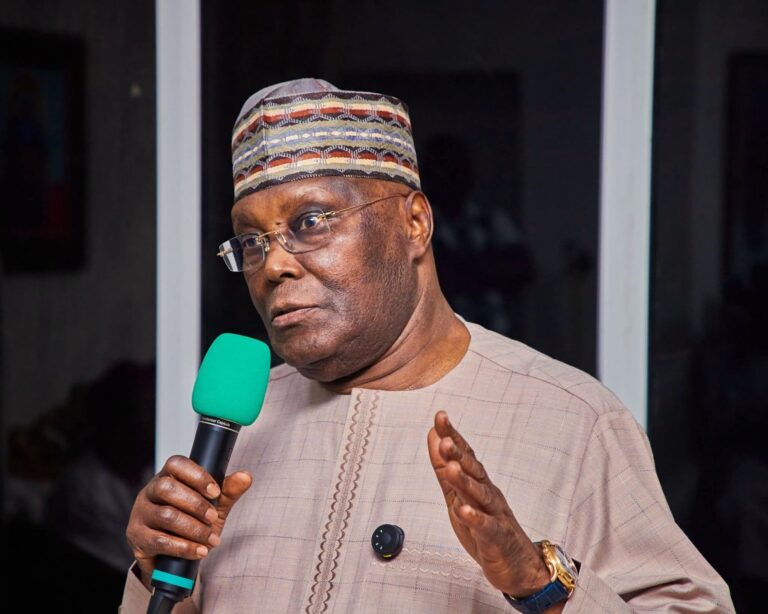
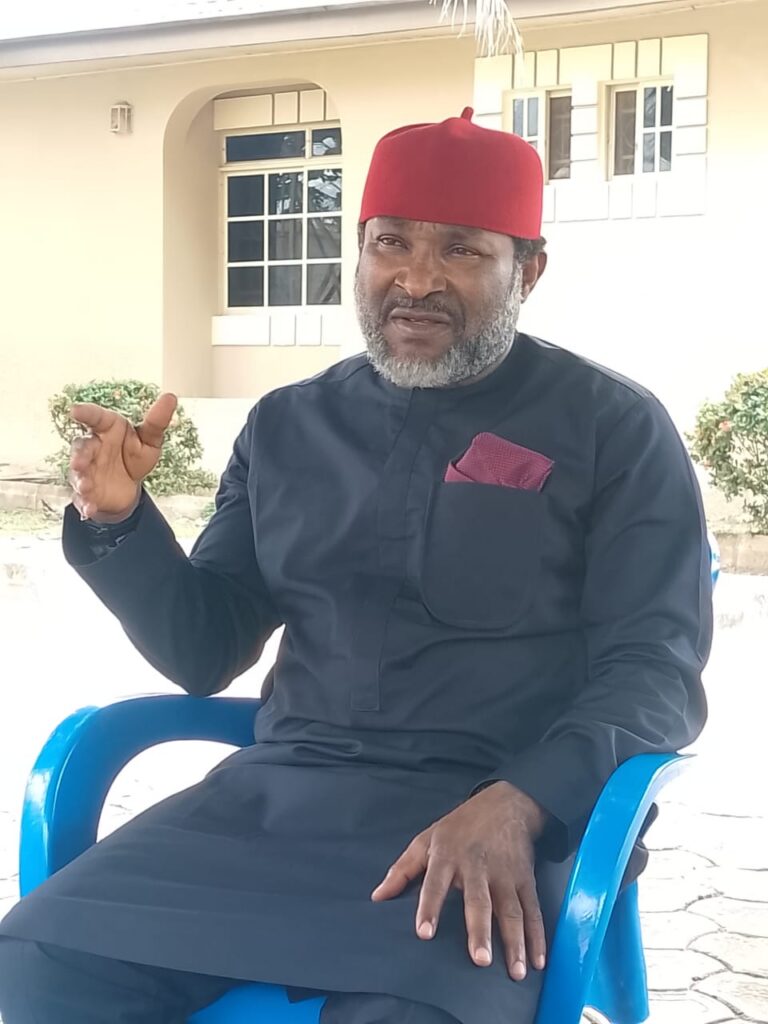
Sokoto State Commissioner for Animal health and Fisheries, Professor Abdulkadir Junaid believes that the era of farmers/ herders clashes would be over if other states would adopt the cattle breeding model in the seat of the Caliphate. In this interview, he spoke on the potential in the nation’s agricultural sector among other issues.
What is the Cattle Breeding centre all about and what does the state government hope to achieve by this project?
The concept is that you have divisions or components of the programme. The project you see here, the owner is one of the 13 beneficiaries of the initial programme. We were able to give him nine breeds; exotic breeds imported from South Africa. One of the conditions for us to give you is for you to also have our own local breeds. It is so that when you crossbreed them, you would be able to produce another breed. We brought in Holstein, Jersey and Brangus. This is the first country in the state to bring in the Brangus breed which is meant for meat. At an age of less than one year, it weighs more than 100 kg. The breeds which we have produced after cross-breeding, some are weighing about 500 to 100 kg. That is more meat and more money for our farmers. In fact, because of the performance of the breed, I just came back from South Africa where I was awarded an honour of Friend of the Brangus for the year 2022. They give it annually in the International Society for Brangus. The headquarters is in South Africa. We went for a technical meeting and surprisingly they gave me that award in an interview on the international television station. They monitor the performance of the breed. You can see that the quantity of meat in terms of kilogramme will increase seriously. As for milk, our Sokoto Gudali, our local breeds of cattle could only produce two, three and maximum of four litres of milk per cow. Currently, as I am talking to you, the cross-breed is producing between 10 to 30 litres of milk in a day. You can now see the increase in the quantity of milk that is being produced and this is against the background that the government is trying to prevent the importation of milk. A litre of milk is costing N300 to N500. So, this is where the money is. What the state government wants to do is to empower people in this sector so that we can generate more employment opportunities. In addition to giving all these cluster this assistance, we also decided to introduce artificial insemination and embryo transfer programme. The programme is to afford our pastoralists as well as other people that cannot afford it to buy these animals because they are costly. Even when we are giving 50 per cent discount, some people cannot afford it. We decided to give them to offer artificial insemination and embryo transfer. So, we have covered more than 30,000 people. We intend to in this first phase cover 50,000 people. Interestingly, we are in the process of producing our own semen because we have an embryo transfer centre where we are producing our own liquid nitrogen. Currently, we are the only state producing liquid nitrogen which is meant for the storage of the semen and also bacteria and viruses, and other scientific needs. We produce at least 45 litres of the liquid nitrogen daily. Each litre when you buy it in the market, it is between N2000 to N2,500. This is another way to generate money. We have a comatose dairy unit which was established since almost the colonial time. We have now reconstructed it and that place, we are producing 5000 litres of yogurt collected daily from these farmers as part of the payment plan. They don’t give us money. We collect milk from you and record; when you have five offspring, we collect two and leave three with you. We give to other farmers what we collect so that it would be a continuous process. As part of the sustainability programmes, we are in touch with some milking companies. I have been to Morocco and Tunisia because of that. Currently, the milk producers of South Africa are coming either in March or April to have a meeting with us and they produce 9million litres everyday from 1000 farmers. So, I told them we cannot import milk. I told them let them come in so that we can upgrade our own. They have agreed that they are coming so that we would not have the problem with the market. In fact, we do not have problems with the market even within the country. I have been to Lagos and we had a meeting with the Commissioner of Agric. Lagos State alone consumes 9000 cattle daily. I have also been to Port Harcourt and if we are able to produce these animals, then we are in business. From my estimation, we realised that we can generate N500 billion from this project annually. Our budget it less than N200 billion. The rest would be surplus for capital projects. Another area which is very important is pasture development projects. You need the support of pasture to be able to feed these animals. We started by clearing 5000 hectars in Rabah local government and because of insecurity, we suspended it. We now moved to Dogo-ndaji in Silame local government. We have only done that of rainy season; currently they are preparing for irrigation system in that place. The cultivation will be such that we will be supplying these farmers at subsidized rates so that it would reduce the burden of feeds for them. Seventy five per cent of the whole production of livestock and poultry is on feeds. So many people go out of the business because they cannot feed their birds and livestock. If you have 3500 birds for instance, the minimum that you are going to feed them everyday is 12 bags. Each bag costs nothing less than N1200. So, the intention also is to see that the pastoralists, by the time you have feeds for them, you have no problem. We have 19 grazing reserves in the state which has the capacity of more than 20000 hectares which we have started developing and demarcating. If these farmers come in, they would remain there. There is a village called Dogo-ndaji and there is another village where the farmers and the herders are staying in the same place. They are farming together and they are rearing together. Both of them have farms and animals; so they do not have any problems. The essence for us is to develop these grazing reserves.
When I went to Zamfara to deliver a paper, I said they have started on a wrong note. You do not build houses for a Fulani man to stay. Even if you build Aso Rock for him, he would not stay there if there is no feed and water. Bring feeds first. Create dams and boreholes and they would stay there; the Fulani man would not move. Here in Sokoto, we have such dams and we are planting grass for them. We have planted more than seven types of plants and we are going to commence another irrigation system. By the time we cover all our grazing reserves including our 5000 hectares and another 1000 in Dogondaji and the ranches that we want to establish in the three senatorial zones, you can be rest assured that we would not have any farmers/ herders clashes. Currently, we have the least problem of farmers/herders clash because of our operations here.
So, what is the state government doing in terms of training the herders who may not find it easy to leave their traditional way of carrying out their businesses?
Before we gave these animals to them, we had a training on the modern way of doing things and signs of the diseases that they can call any of our doctors in to take care for them. Each farm has two dedicated doctors that visit the farms every week. They take records and assess the situation. The owner and the managers have the telephone numbers of these doctors so that even if they cannot reach them, Sokoto is the only state that offers 24 hours veterinary services in the region. Any time, you meet our veterinary doctors on duty. We have ambulance vehicles that move to any village in this state. We have a call duty vehicle that goes to any doctor, specialist for that matter if the doctors need his assistance. The farmers have no reason to complain; unless they decide not to call them but that would be their own waterloo. Even our pastoralists that are in the bush, all they do is to give a call and the doctors would move in there. We have 141 veterinary doctors under the employment of the Sokoto State government. Currently, we are trying to get another 20 who are graduating very soon. At the same time also, in order to support our people to study veterinary medicine, we are giving scholarship and when you reach 400 level, you are going to be on salary grade till when you finish. And when you finish, you just continue with the service in the state. The issue is that most of the students would not like to read long courses because they realise that I will enter into the university with you, you have graduated and started earning salary and I would still be burying my head in the books reading. But when you support them, they would now see the need to spend more time in the school. You may realise that we have about 15 females that are veterinary doctors, all Hausa. Many are surprised because veterinary medicine is very hard and harsh. So, for a lady especially in this part of the country to do that shows that there must be some encouragements somewhere. This government is doing much in that direction.
So what should other states learn from Sokoto to stop the incessant farmers/herders clashes?
Ours has been a model. I was at the federal ministry of Agriculture on one function and the permanent secretary called me and told me that he was going to send a team to Sokoto to understudy us. He was surprised with what we were doing. Incidentally after that, there were assessments of all the states and our state got the best in terms of performance both in agric and livestock. I was given that award by the minister of agriculture. They gave me the best performing commissioner in terms of animal health and livestock development because ours happens to be a model. If you follow our model, you would not have the problem of farmers/herders clashes when you domesticate them. If you create ranches for instance, you are creating jobs and solving lots of problems. When people are shouting that people do not have places to ranch especially in the South, I just laugh; look they do not need to stay there. God has blessed us with vast land in this part of the country. A Fulani man moves not because he wants to but because he wants to feed his animals. If you can provide facilities in one place, they can achieve the same results and you generate more revenue and improve on the economy of the country. By the time they move with these cattle, they reduce the quality of meat because they have over exercised. All the nutrients would have gone. But when you put them in one place, it would improve both the quantity of the milk and meat you are producing. And believe me, most of the Fulani are now relocating because our programmes are resettling them. In fact, one of the villages they told me they went to for artificial insemination, I was surprised because it has been long I went there. In one of the grazing reserves very close to the boundaries, I was there myself and they said I should not go and I said no. I said just give me security and I would go to see what is there. So, if you can get these grazing reserves and house these animals; build clinics for them both for humans and animals; build schools for them and provide other facilities for them, they would just settle down and do their businesses. One of the challenges is that many of the herders feel they have been abandoned. Once you let people loose, it is to our own peril because some people would capitalize on that and do their own things and people would believe that everyone of them is doing it. Even in this state, we have some sort of flashes especially at the borders where they come from either Zamfara or Niger. It is just like hit and run and they move but the real herders that we know do not engage in that because they have no reason to.