Follow Us on Google
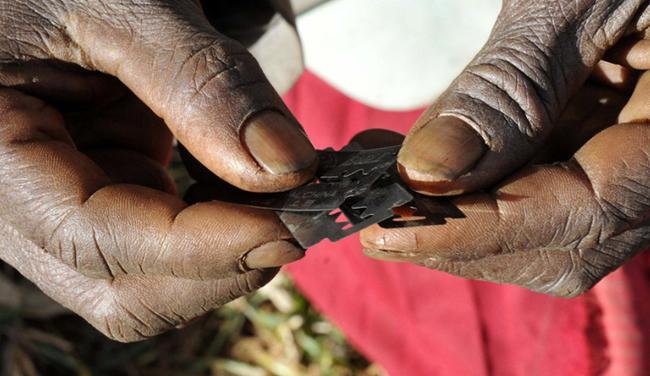
The parents of 1-year and 6 months old Stella-Maris Chizaram Emenike have been ostracised by their community in Nanka, Orumba North Local Government Area of Anambra State, for refusing to subject their daughter to the age-long harmful tradition of Female Genital Mutilation (FGM).
For defying the pressure from the community’s elders, known as the Umuada, responsible for carrying out the dangerous practice, the family became the object of ridicule and persecution, which eventually led to ostracisation, as they stoutly resisted the practice.
It is unfortunate that in the 21st century, such cultural practices still deeply influence many aspects of people’s lives.
The event which happened in August, 2017, the 1year and 6 months old baby became the focus of a growing controversy after members of the Umuada, a group of elder women considered as the custodians of cultural values, attempted to force her to undergo the harmful procedure, citing tradition and “rites of passage” as justification.
FGM, which involves the partial or total removal of the external female genitalia, is internationally recognised as a human rights violation and has been banned in Nigeria since 2015.
However, despite legal prohibitions, the practice persists in various rural and traditional communities, often carried out in secrecy and with the backing of local customs.
Stella-Maris’s parents, who are well-informed about the dangers of FGM, strongly resisted the move, publicly refusing to allow their daughter to be subjected to the harmful act; a development that eventually forced the community to ostracise them. “We cannot knowingly allow our child to be harmed in the name of culture,” a family member reportedly said. “We are aware of the physical and psychological trauma which FGM causes and we will not stand for it”.
“But, the community would not listen to any explanation. They don’t care about the health risk it poses to young girls”.
Other News
“So, for having the courage to stand against that, they started attacking us through various means, although some people supported us, particularly the younger generation. But the custodians of the people’s tradition are the old people, who felt that we have committed a heinous crime against the land for not allowing our daughter to undergo the ritual.
“They eventually ostracised my family for that. We felt that nowhere in Nigeria is safe anymore for my family and I, hence our decision to leave the country entirely.”
Health experts warn that FGM can lead to life-long consequences, including severe bleeding, infections, complications in childbirth, and increased risk of newborn deaths. Psychologically, it can result in anxiety, depression, and post-traumatic stress disorder. According to the World Health Organisation (WHO), there is no health benefit to FGM, and all forms of the practice are considered harmful.
The Nigerian government criminalised FGM under the Violence against Persons (Prohibition) Act, yet enforcement remains a challenge, especially in areas where community traditions hold sway over national laws.
Activists are calling for stronger community engagement and education, particularly targeting traditional leaders and women’s groups who often enforce the practice. “It’s not enough to ban FGM on paper,” said Amaka Onwudiegwu, a local human rights advocate. “We need consistent grassroots education, alternative rites of passage, and support for families who say no to harmful traditions.”
As the conversation around FGM continues to evolve in Nigeria, the brave resistance of Stella-Maris’s parents may serve as a pivotal moment in the fight to protect young girls from this dangerous and outdated practice.
But the consequences of such resistance are what the government, child rights organisations, social crusaders and other well-meaning individuals need to look into.