Follow Us on Google
From Okwe Obi, Abuja
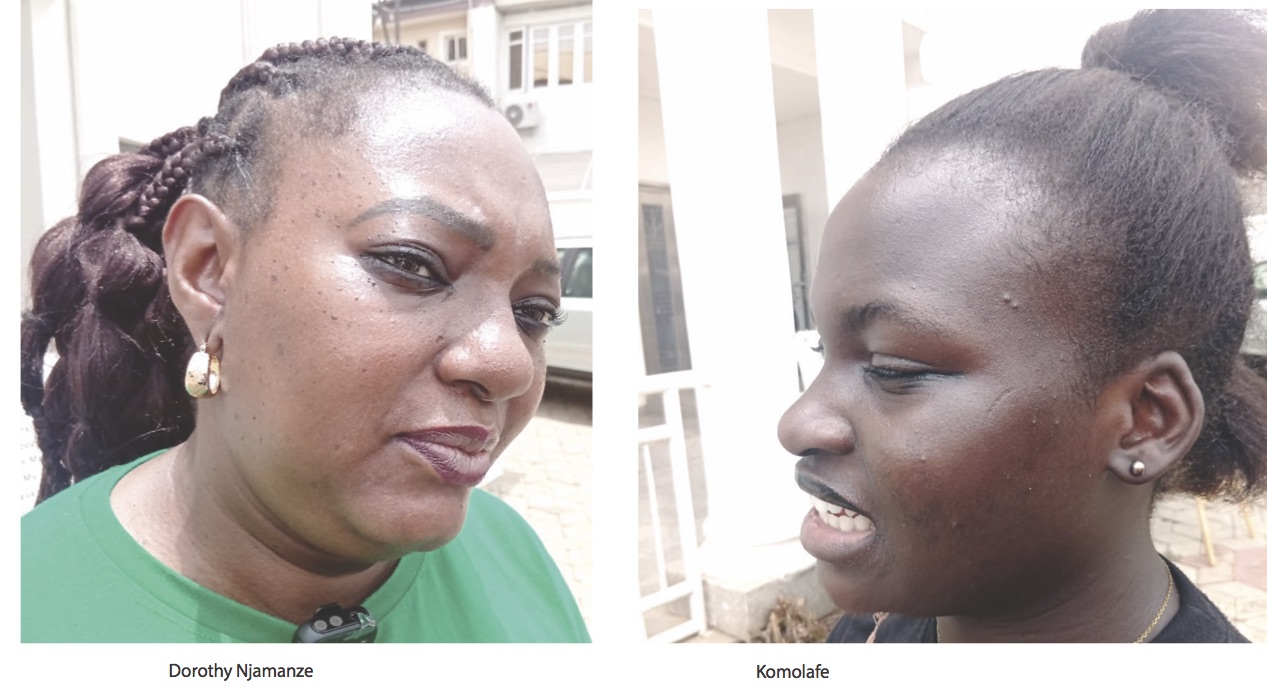
When Miracle Komolafe was born, she had pictured a family of bliss. But her hope became bleak when she approached puberty. Her father, whom she thought would be her greatest protector and defender, serially molested her, from the age of seven to 15.

Komalafe, who hails from Akoko Edo Local Government Area in Edo State, stated how her father would inflict injuries on her if she resisted his advances.
Her words: “I was sexually abused by my dad for nine years, from the age of seven to 15. Whenever I don’t let him have his way to sexually abuse me, he would give me these scars out of anger.”
Miracle said when she told her mother, she brushed it aside in disbelief. But, according to her, her mother caught the father in the act. On that day, she said hell was let loose as her mother vowed to walk out of the marriage.
“But my dad begged her, so she forgave him, saying that she was trying to protect her marriage,” she said.
Sadly, that was not the only psychological trauma she had to bear. Her mother, at the slightest provocation, would taunt her.
“Most times, when my mom was angry with me, she would be like, Well, I don’t blame you. It is because we are all eating from the same plate, that is why.”
Luck located her when the Dorothy Njamanze Foundation rescued her from her abusers about five years ago.
She said: “I told a friend before I got to know about the Dorothy Njamanze Foundation. They came to my school to visit and to talk to me on how I wanted the case to be.
“I told them that I just wanted to be away from my family at that particular time. I also gave them my journal where I wrote down the dates of when my dad sexually abused me. The bitings, the beatings and the bleeding.”
The distraught Komalafe said she had seen her mother who lives in Abuja, adding that she has been pleading with her to return home, with the excuse that her rapist father had turned a new leaf.
“I have seen my mother and she has been calling me, saying that I should come back to the family. She said that my dad is now a changed person and he is a born-again Christian.”
Beyond the family betrayal, Komalafe also faulted the justice system, saying: “The law is not designed to protect me,with this experience of mine. I do not even know where the case is. The last time I heard about my case was three years ago.
“When we were going to Niger State to continue the case, I had to sit in the same car with my father. He was busy telling me that I should drop the case down there. That he is my father and that is it.”
Komalafe is not the only victim crying in the wilderness for justice, as Ifeoma Clement, the mother of a victim, is shouting from the rooftop, seeking justice for her daughter (names withheld) who was raped in August 2016, at 13 years old.
Clement said: “The rape took place and that child was threatened not to mention it to anybody otherwise she would die. This girl had been in fear. But something happened.
“She went for a teenager’s meeting somewhere and she was able to summon courage to say it out to the host of that meeting. Then she came back home to report. She had the boldness to come back home that day to report to me.
“Of course, it happened in my business place. Then I went to the police station with her to report.”
On getting to the police station, she said the investigating police officer who the case was assigned to reprimanded her and her daughter for keeping mum since the incident occurred, declaring that the girl “enjoyed it,” and called her “a bad child.”
The embattled mother said she roared and asked the police officer if he heard about the threat that was attached to the rape.
She broke down in tears, saying: “Even the trauma of the rape alone is a big burden to a child of 13 years, not to talk of the incantations and other things that were made to scare her.
“So, this girl had been in this bondage for the past four or five months before she was able to speak up.
“And somehow they reluctantly got the person involved, invited him to the police station and that was where the main drama started.”
Clement claimed that, upon inviting the suspect, the police officer only had what she described as “a heart-to-heart meeting with the guy,” and at the end of the day, he was let off the hook.
She said: “The police failed me right in the presence of the child. Then she started weeping and I felt all hope was lost. The police actually wanted to escort him home in a convoy, they had about three cars going home with the guy, abandoning me and the child at the station.
“Then I said no, since police cannot do anything, I, as a mother, I can do something for myself. So, I went and laid an ambush.
“As soon as the police were coming with the guy, I blocked them. So in the process of doing that, one of the men watching the drama called me and said, ‘no, madam, this is not the way to go.’
“‘I will give you a contact of somebody.’ I said no, no, no because then I could not understand any language again than what I was doing because I felt all hope was lost.
“Then when the guy talked to me like two or three times, I was able to look at his face. He said, ‘Madam, come.’ Then when I stepped aside, he started calling her (Dorothy Njamanze) immediately.
“When I heard the phone ringing, I felt, oh, maybe there is a ‘messiah’ that is about to come. So I listened to him. The phone rang about two times.”
She said the man gave her hope and comforted her, by sending a text message “right before my eyes to Dorothy Njamanze and then he gave me her number for a follow-up.”
Before she could leave the promises of the incident, the man’s phone rang. And, lo and behold, it was Dorothy that was returning the call.
“So I was able to speak with her and she said, ‘Madam, all hope is not lost. Something can be done. Come to my office tomorrow.’ That was how that matter got to see the light of day.”
Regardless of the delay, financial cost and societal stigmatisation, Clement expressed optimism that she would get justice.
“Well, so far, I have not got justice, but at least there is hope. The hope is that, one, the matter they said cannot see the light of day, it was able to go to court.”
Like Komolafe, Clement faulted the justice system because, according to her, the law enforcement agencies, especially the National Agency for the Prohibition of Trafficking in Persons (NAPTIP), failed to follow up on the case.
“Honestly, I was totally disappointed. I called Dorothy my police. Today, if I had any case, honestly, I would rather come to her (Njamanze) than go to the police because of my several experiences with the police, several disappointments with the police, including the NAPTIP,” she declared.
On her part, the founder of Dorothy Njemanze Foundation, Dorothy Njamanze, corroborated the claims of Komolafe and Clement on the systemic failure of the country’s justice system.
She said: “For instance, it is the right of the law enforcement agency to release a perpetrator. But when you release a perpetrator, are you paying attention to the survivor?
“Does the person know that it is the perpetrator’s right to get bail? Does the person know what is expected of the perpetrator when the perpetrator is granted bail?
“And then when the law enforcement agency finishes granting bail, the matter goes cold. We do follow-ups and nothing happens. Take the case of the 12-year-old.
“Since last year, when we found the child, we reported to NAPTIP. The NAPTIP swung into action and the rapid response squad of NAPTIP helped us to secure the arrest of the perpetrator. However, the same perpetrator has been released on bail by NAPTIP.”
Njamanze, who has had her own baptism of fire as a victim of rape, amid threats, vowed: “Until the day I die, I will continue supporting survivors of sexual and gender-based violence because I know that there is a need, a big gap in prevention of sexual and gender-based violence and in response to sexual and gender-based violence.”
She explained that her foundation “is a survivor-run organisation that provides real-time, free and confidential support to persons at risk of violence. A majority of the people we see are females.”
Speaking on the causes of rape and the behaviour of survivors, a doctorate student at the University of Westminster, Liatu Damishi Omoyiola, who is carrying out a fieldwork at the Dorothy Njamanze Foundation, identified economic hardship as the main reason people are raped and the inability of survivors to move on or speak out
She said: “For the survivors, one of the challenges would be the economic situation. They do not have money so a lot of them depend on their abusers for help. So, they have to stay in the marriage.
“They do not have a choice and, also, sometimes because of the children. They do not want to leave their children behind. They do not have the financial ability to look after these children themselves.
“Lack of knowledge is also a factor. Most victims do not know about the support services.
“There is not enough advocacy, which is where people like yourself (journalists) come in because, when you publicise these things, people will know that these services are available for them to seek.”
She suggested the training of more psychologists to help counsel victims of rape.
“Not only do we not have enough psychologists, people minimise the impact that psychology can have in helping the survivors.”