Follow Us on Google
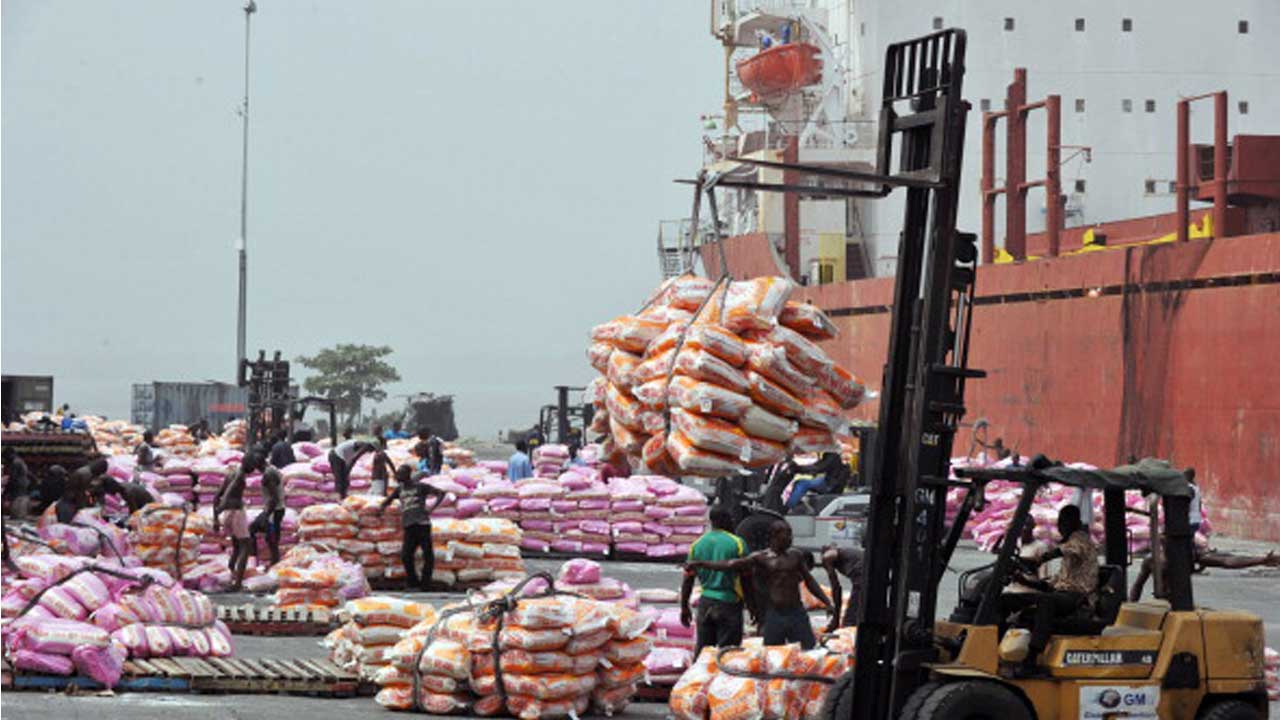
Nigeria spent a whopping N7.65 trillion on the importation of food and beverage products in 2025.
This highlights the country’s growing dependence on foreign food supplies amid rising domestic demand and persistent structural challenges in the agricultural sector.
The figures are contained in the latest Foreign Trade Statistics report released by the National Bureau of Statistics (NBS).
According to the report, the imports comprise both primary food products and processed food items used for industrial production as well as household consumption across the country.
A breakdown of the data shows that primary food and beverage imports accounted for N3.49 trillion of the total import value.
Out of this amount, N2.09 trillion was imported mainly for industrial use, while N1.40 trillion was largely meant for household consumption.
Processed food and beverage imports, however, represented the biggest share of Nigeria’s food import bill, reaching N4.17 trillion during the year.
Of this figure, N2.60 trillion was utilised mainly for industrial purposes such as food processing and manufacturing, while N1.57 trillion went toward household consumption.
The data suggest that a significant portion of Nigeria’s food imports is used as raw materials for domestic food manufacturing, highlighting the extent to which the country’s food processing sector depends on imported inputs to sustain production.
Other News
Nigeria’s food import expenditure has risen steadily over the past four years, reflecting widening gaps between local food production and national consumption requirements.
In 2024, the country spent N6.58 trillion on food and beverage imports. The figure was N3.83 trillion in 2023 and N2.86 trillion in 2022.
The latest data therefore indicate that Nigeria’s food import bill has more than doubled within four years, raising fresh concerns among stakeholders about long-term food security and the country’s vulnerability to external supply shocks.
Agriculture experts and farmers attribute the rising import dependence to several structural challenges confronting local producers, including soaring production costs, insecurity in farming communities, and heavy post-harvest losses.
These challenges have forced many farmers, particularly in the North-Central and North-West regions, to scale down operations or abandon farming entirely.
Many of the farmers have urged the Federal Ministry of Agriculture and Food Security, as well as state governments, to prioritise smallholder farmers in their 2026 budget plans to boost domestic food production.
Meanwhile, the United Nations Food and Agriculture Organization (FAO) has warned that about 34.7 million Nigerians could face severe food insecurity during the next lean season.
Earlier reports had indicated that Nigeria’s food and beverage import bill already reached N5.27 trillion in the first nine months of 2025, highlighting the pace at which the country’s food import dependence has grown.
Despite the surge in imports, Nigeria still recorded a trade surplus of N1.71 trillion in the fourth quarter of 2025, according to earlier data released by the NBS, even as exports declined during the period.