Follow Us on Google
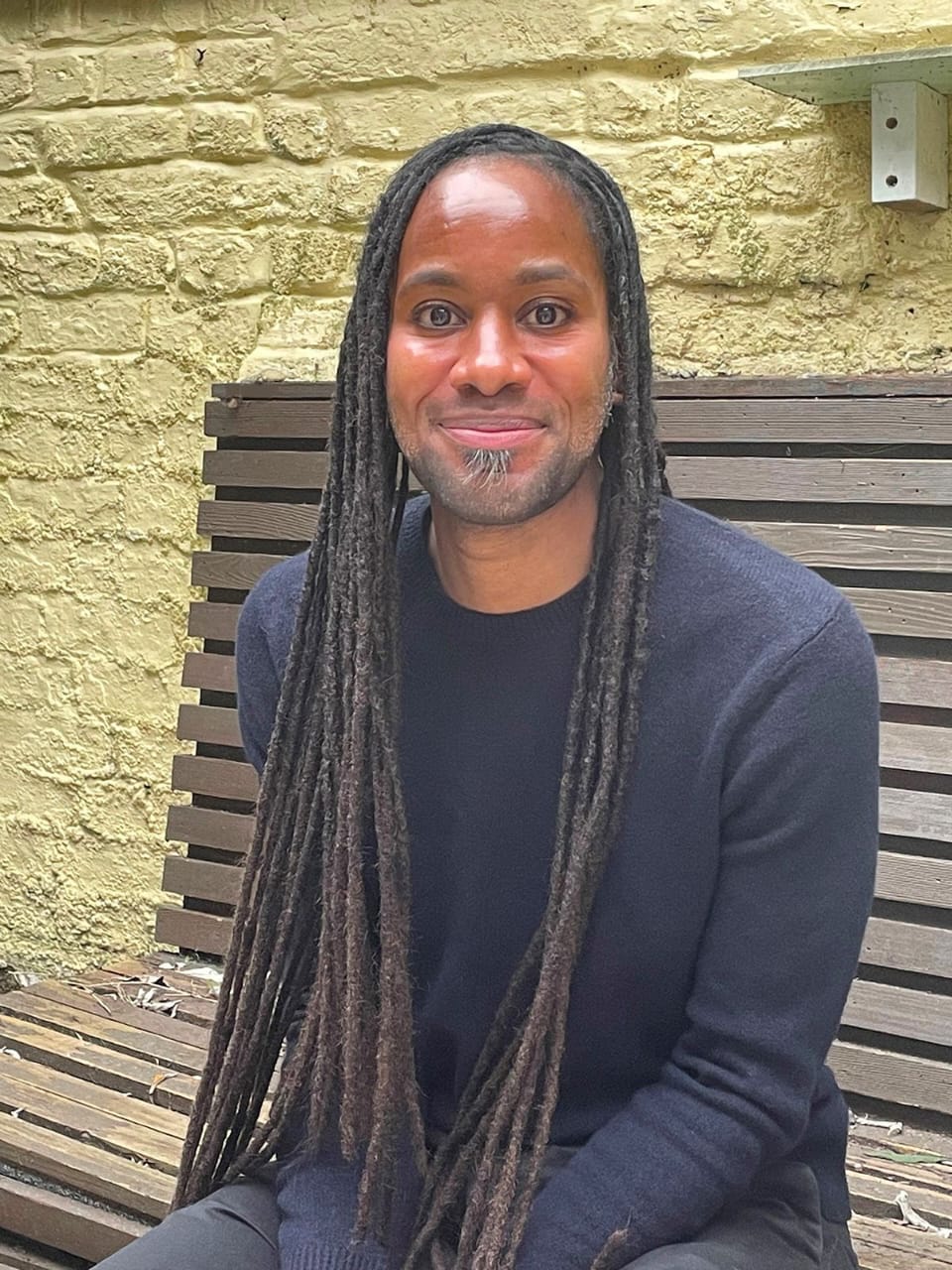
Eminent historian, Professor Toyin Falola, and other scholars have warned that celebrating exceptional Black achievement without confronting institutional structures that reproduce racial inequality risks turning “Black excellence” into a substitute for meaningful transformation.
They made the argument during the latest Toyin Falola Interview on Sunday, themed “Jason Arday and Race in the Academy,” where participants examined the controversy surrounding Professor Jason Arday’s academic career and used it to interrogate broader questions about race, representation, institutional responsibility and the pressures placed on Black scholars in predominantly white academic environments.
The interaction, chaired by Falola, featured Professor Alan Lester, a historical geographer at the University of Sussex; Professor Christine Vogt-William, a scholar of gender, postcolonial and decolonial studies; Professor Vivek Bahl, a US-based scholar and co-founder of several diversity initiatives in higher education; Professor Shose Kessi, Dean of the Faculty of Humanities and Professor of Psychology at the University of Cape Town; and Dr Sabelo Mcinziba, an interdisciplinary researcher whose work examines power, knowledge, violence, identity and the question of the human.
The programme attracted more than 20 million participants from 37 countries.
Falola, in his opening remarks, situated the Arday controversy within a much wider debate about race and the academy, stressing that the significance of Arday’s experience extends beyond his individual career.
He recalled that Arday attracted international attention after the University of Cambridge appointed him Professor of Sociology in 2023, making him, as widely reported at the time, the university’s youngest Black professor. His scholarship spans race, inequality, higher education, neurodiversity and mental health.
But, according to Falola, the issues raised by the controversy had expanded into questions about how institutions treat highly visible Black academics.
“The issues that surrounded Jason Arday have become larger than the career of one person,” Falola said, arguing that the case had opened a wider conversation about “academic integrity, race, visibility, media ethics, institutional responsibility, elite university recruitment and consequences of public scrutiny.”
He also drew attention to what he described as the representational burden imposed on prominent Black scholars, questioning whether institutions sometimes celebrate their success as evidence of diversity while simultaneously exposing them to disproportionate scrutiny.
“There is representational burden,” Falola observed, asking whether institutions were “celebrating your success as a scholar or are you giving them dividends of diversity” and whether critics were judging scholars as individuals or treating them as representatives of an entire racial group.
The discussion took a sharper structural turn when Mcinziba argued that Black academics were frequently expected to demonstrate extraordinary achievement merely to establish legitimacy within predominantly white institutions.
“One of the greatest victories of white supremacy is to deny black mediocrity as the standard, but rather demand black excellence only to subject it to white mediocrity,” he said.
Other News
For Mcinziba, the celebration of exceptional Black scholars could become politically convenient for institutions because it allowed them to showcase diversity without interrogating the structures that continue to disadvantage Black people.
He argued that the liberal academy could celebrate Arday’s exceptionalism “without needing to do deep structural reflection on the impediments it puts in the way of the very people that Arday is a representational symbol of.”
Rather than making exceptional achievement the measure of Black worth, Mcinziba urged a rethinking of the concept itself.
He called on Black people to “reject the trope of black excellence and aim for the beauty of ordinariness,” arguing that the pursuit of exceptionalism could obscure the need to create institutions in which ordinary Black achievement and participation were equally valued.
“Black excellence does not force deep structural change,” he added, warning that exceptional Black scholars could become isolated from the broader communities they were expected to represent.
Vogt-William reinforced the argument by examining the limits of institutional diversity policies. She cautioned that elite universities could increase the visibility of Black academics while leaving the distribution of institutional power largely untouched.
Her intervention shifted attention from representation alone to the question of whether increased numbers of Black scholars necessarily translated into changes in the cultures, practices and hierarchies of academic institutions.
Kessi similarly challenged approaches to affirmative action and diversity, equity and inclusion that place too much emphasis on individual advancement without addressing institutional responsibility.
Such approaches, she argued, could “blame the individual and absolve institutions from structural change,” thereby making individual Black scholars responsible for navigating barriers that were produced and sustained by the institutions themselves.
Bahl, meanwhile, emphasised the importance of collective action in advancing meaningful diversity. He noted that many successful diversity initiatives originated in grassroots organising rather than emerging spontaneously from institutional leadership.
His intervention underscored the importance of collective mobilisation in challenging entrenched structures, rather than relying exclusively on institutions to reform themselves.
Lester brought a historical perspective to the debate, pointing to the long history of attempts to measure intellectual ability and human worth through racial categories.
He connected contemporary assumptions about intellectual hierarchy to the history of racial science and eugenics, suggesting that present-day debates about who is regarded as intellectually exceptional cannot be completely separated from older systems of racial classification.