Follow Us on Google
•Massive fear as bleach in fufu, dye in palm oil, fake drugs, adulterated drinks, other counterfeit products take over Nigerian markets, homes
By Juliana Taiwo-Obalonye, Fred Ezeh, Merit Ibe, Steve Agbota and Ngozi Nwoke
A family sits down to dinner and worries about the fufu on the table. A mother buying palm oil wonders whether its rich red colour is natural or the result of added dye.
A customer paying a premium price for an expensive alcoholic or non-alcoholic drink wonders whether the bottle contains the genuine product.
A woman buys a loaf of bread, forgets about it for four days and returns expecting to find mould or a stale, discoloured loaf — only to discover that it still looks remarkably fresh.
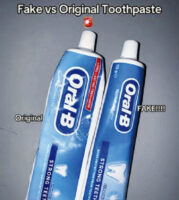
And a consumer who buys toothpaste from a supermarket regarded as reputable develops persistent bad breath, gum irritation and injuries around the gums — then begins to question what was actually inside the tube.
For millions of Nigerians, the fear is no longer simply about counterfeit drugs; it is about food, drinks, water, cosmetics and everyday products that are supposed to be safe.
The growing anxiety has produced a haunting question: “What is safe anymore?”
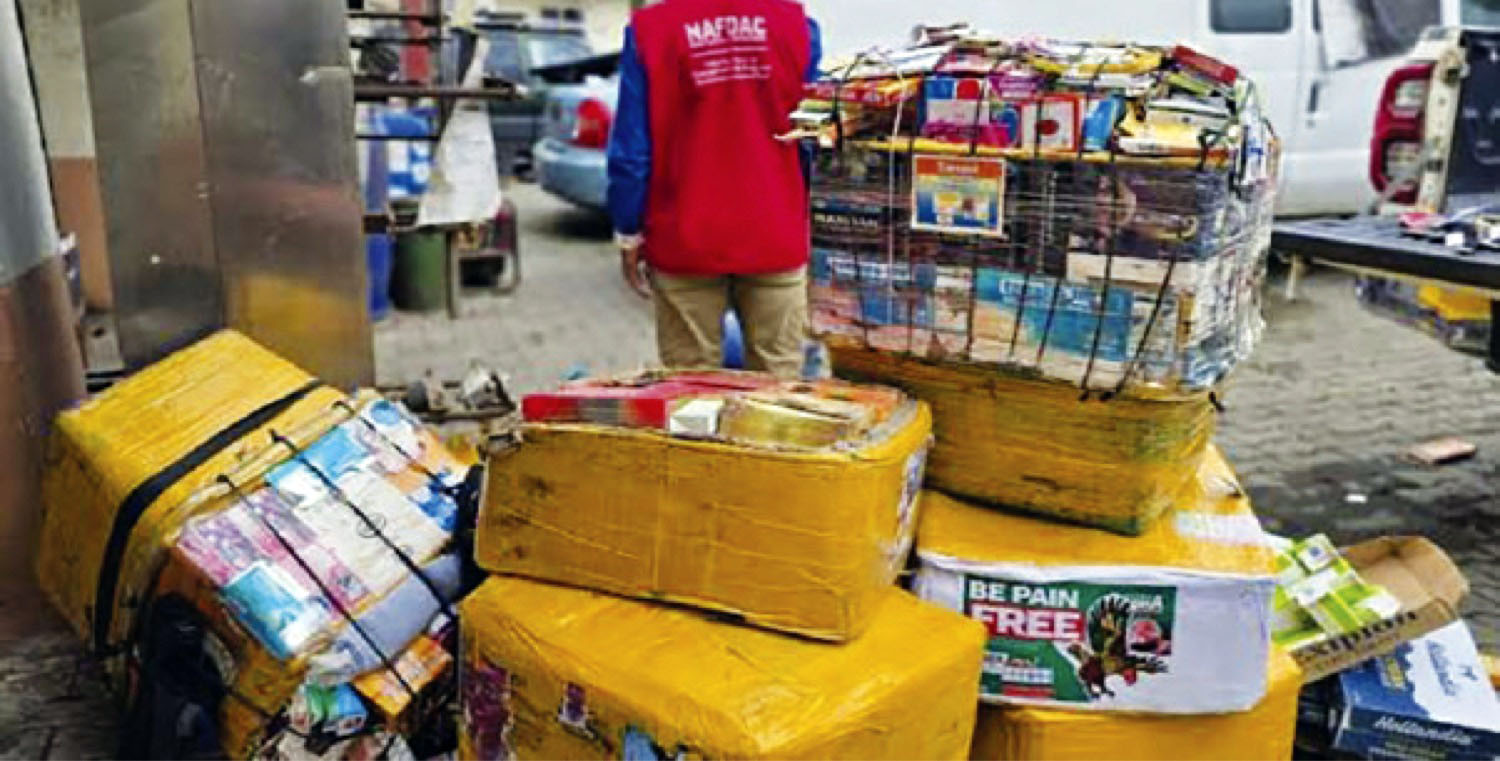
Across social media, markets and homes, Nigerians are recounting disturbing experiences and raising allegations of adulterated food and counterfeit products, while the National Agency for Food and Drug Administration and Control (NAFDAC) intensifies its enforcement campaign against products it says are fake, substandard, adulterated or otherwise non-compliant.
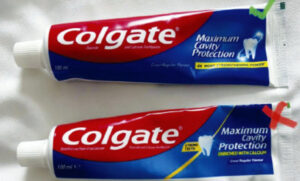
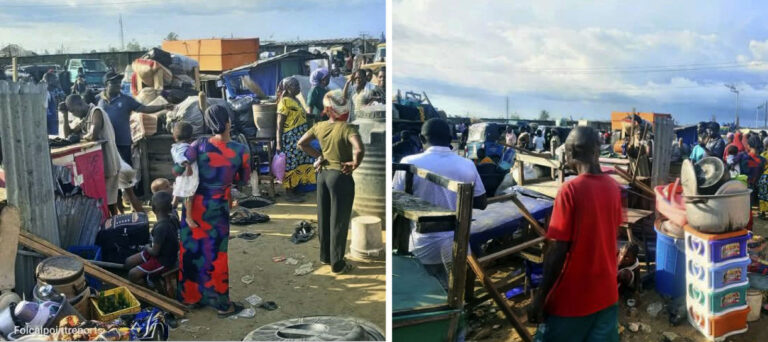
Among the most disturbing claims are allegations of chemicals, including bleach, being used in the processing of fufu, a common food across the country; dyes or other colouring substances allegedly added to palm oil to make it appear richer; and counterfeit alcoholic and non-alcoholic beverages being packaged to resemble genuine brands.
The allegations vary in nature and require scientific verification before they can be treated as established facts.
But the fear they have generated is real.
And increasingly, Nigerians are connecting the dots between what they consume and illnesses they are experiencing — particularly kidney, liver and cancer-related conditions.
Medical experts, however, caution that such diseases have multiple causes and cannot automatically be attributed to fake drugs or adulterated food without proper medical and scientific evidence.
‘I had to stop using it’
For one Abuja consumer, the counterfeit-product debate became painfully personal after she bought a popular toothpaste brand from a supermarket she considered reputable.
She bought the toothpaste in large quantities because she believed she was purchasing a genuine product. But after using it, she said she developed persistent bad breath, irritation and injuries around her gums and noticed a general deterioration in her oral health.
The discomfort eventually forced her to stop using the toothpaste.
She later became suspicious that the product could have contributed to the problem after noticing changes when she discontinued its use.
The experience also cost her additional money as she sought ways to deal with the oral-health problems.
“I recently had a terrible experience with a product I bought from a reputable supermarket in the Galadimawa area of Abuja. It was a toothpaste, which I purchased in large quantities because I believed it was genuine,” she said.
“What shocked me most was where I bought it. It was not from a roadside vendor or an unknown shop. It was from a supermarket in Abuja that I considered reputable and trusted.”
There is, however, no laboratory or regulatory confirmation that the toothpaste was counterfeit or that it caused her symptoms.
But for her, the experience has changed the way she looks at consumer products.
“A tube of toothpaste may look harmless, but when its contents are questionable, the consequences can go far beyond the money spent on it,” she said.
Gloria’s experience with a loaf of bread has added another dimension to the growing unease over everyday food.
She bought a loaf of bread and, in the rush of daily life, simply forgot about it. Four days later, she remembered the bread.
Her first thought was that she had wasted her money.
She expected to find the familiar signs of deterioration — mould, a change in colour or at least a stale appearance.
Instead, what she found shocked her. The bread was still looking remarkably fresh. There was no visible mould. There was no noticeable change in its colour.
It looked almost as though it had only recently been purchased.
Gloria said she became uncomfortable with the appearance and concluded that she could not eat it. Rather than risk consuming it, she discarded it. What troubled her was not simply that the bread had remained fresh. It was what she did not know.
What had kept it looking that way?
Gloria’s experience does not establish that the bread contained preservatives above permissible limits, harmful chemicals or any unsafe substance. Bread can remain fresh for different reasons, including its formulation, packaging, preservatives permitted by regulation and storage conditions. But to a consumer already surrounded by warnings about adulterated food, an unusually long-lasting loaf can quickly become a source of suspicion.
Florence, a Lagos resident, said she had a disturbing experience after buying rice through a popular programme in the state. She said she bought two paint buckets of rice which appeared normal and dry when purchased. But after cooking it, she noticed that something was wrong.
According to her, the rice became spoiled after it cooled for about an hour, developing an offensive smell and taste.
“It smells and tastes like rice you cooked two days ago and did not warm,” she said.
Her family eventually threw the rice away.
When she returned to the market the following week to buy beans, she said she complained about the rice and discovered that other people had experienced similar problems.
“This is very risky. The organisers did not even apologise. It was not a good experience at all,” she said. Her account has not been independently established as evidence of adulteration or contamination of the rice. But it is another example of the growing difficulty consumers face when they encounter products they believe may be unsafe.
A woman’s experience with fake products
A Nigerian woman recently went viral on TikTok after describing step-by-step methods to identify fake sachet milk, fake toothpaste, and fake cough syrup, as concerns grow over counterfeit products in circulation across the country.
In the video, the woman opened with the caption: “Nigeria is suffering from a fake product epidemic. Why do the toothpaste, drugs, and food on Nigerian shelves no longer be trusted and what it’s doing to our kidneys.”
To demonstrate how to spot fake milk, she held up two sachets of a popular powdered milk brand. She cut open the first sachet with scissors and poured the powder onto white paper. The result was a fine, smooth, light yellow powder that formed a neat pile. She repeated the process with a second sachet.
This time, the powder came out clumpy, coarse, and darker yellow and did not pour smoothly. A side-by-side comparison showed the clear difference, with the implication that one of the products was likely fake.
She then moved to toothpaste. Holding up a tube, she removed the cap and showed dried toothpaste and crust around the nozzle before squeezing out the content. She noted that the sign of a tube being opened and resealed is a key red flag for counterfeit products.
For cough syrup, she displayed a brown bottle of a cough syrup. She pointed out a broken and cheap-looking seal on the cap, unscrewed it easily to reveal that there was no inner seal, and turned the bottle to show that the liquid inside looked watery. She concluded that the product appeared fake or tampered with.
Bleach in Fufu, dye in palm oil, fake drinks
The concerns become even more disturbing when they involve staple foods. NAFDAC Director-General, Prof. Mojisola Adeyeye, recently disclosed that the agency had received reports of chemicals being used in the production of fufu.
“Fufu and other staple foods are also reported to be produced by adding bleach and other chemicals injurious to human health,” Adeyeye said. The allegation immediately triggered concern because fufu is a common staple consumed across several parts of the country.
The agency has also drawn attention to concerns surrounding palm oil, including alleged adulteration with dyes and other substances.
The sight of unusually bright-red palm oil has become a source of suspicion among some consumers, although colour alone cannot establish adulteration. The concern, however, goes beyond aesthetics. If substances not approved for food use are introduced into food, consumers may have no way of knowing what they have ingested.
And unlike medicines, which are usually packaged with labels and batch information, many traditionally produced foods sold in open markets have limited traceability.
NAFDAC has clarified that unbranded palm oil, fufu and other traditionally packaged staple foods sold in open markets are outside its direct regulatory oversight, highlighting the need for coordination among federal, state and local authorities. That raises a fundamental question: who is responsible for protecting consumers when potentially unsafe food is sold outside formal manufacturing and distribution channels?
The fear is also spreading through Nigeria’s beverage market. Counterfeiters have targeted alcoholic beverages, with fake products sometimes packaged to resemble recognised brands.
The problem is not restricted to cheap drinks. The presence of counterfeit products bearing the appearance of expensive and premium brands means that paying more does not necessarily eliminate the risk if the supply chain itself has been compromised.
Non-alcoholic beverages and bottled water have also featured in NAFDAC’s enforcement operations. NAFDAC’s Director of Investigation and Enforcement, Martins Iluyomade, warned that counterfeiters are increasingly operating within Nigeria.
“Before, to fake a product, you needed to go to China to bring it. Now, you don’t need to go. They are here with us,” he said.
That warning has profound implications.
The counterfeit challenge is no longer simply a border-control problem. It is also a domestic production, packaging, distribution and retail problem. The question was central to an open letter written to Adeyeye by Dr. Zainab Suleiman-Okino, who said Nigerians were becoming frightened about the safety of products they consume.
Writing from Abuja on September 10, Suleiman-Okino said Nigerians were not approaching NAFDAC as enemies but as citizens who still believed in the agency.
“People are afraid, and they need reassurance,” she wrote. She recalled the public concern generated by reports of fake yoghurt, adulterated palm oil, counterfeit beverages and other questionable products.
“Mothers were throwing away food. Fathers were asking: ‘What is safe anymore?’” she wrote. Suleiman-Okino acknowledged NAFDAC’s enforcement achievements, including its nationwide surveillance exercise.
“That is real work. That is sacrifice. We see it,” she wrote. “But that is exactly why communication matters. Because the work is too important to be misunderstood.”
Her criticism came amid public reaction to Adeyeye’s response when a journalist raised reports of calls for her resignation over the fake-products crisis. The NAFDAC boss laughed before defending her record and the agency’s work. The incident generated criticism from Nigerians who felt the question of counterfeit products was too serious for levity.
One Facebook user wrote that the reaction was troubling because “this is not a funny subject.”
“We are talking about medicines and other products that can directly affect people’s health and lives,” the user wrote. The user nevertheless acknowledged NAFDAC’s enforcement record, noting that the agency had seized or destroyed more than ₦1.5 trillion worth of fake and substandard products since 2023 and secured 64 convictions in the past year. The criticism, therefore, was not simply that NAFDAC was doing nothing. It was about whether Nigerians felt sufficiently protected despite the enforcement.
7,210 products removed — but can consumers trust what reaches them?
NAFDAC’s figures demonstrate the magnitude of the regulatory challenge.
Between May and July 2026, the agency said its post-market surveillance covered all 36 states and the Federal Capital Territory.
It visited 6,233 facilities and removed 7,210 products from circulation.
Food and water products accounted for 3,633 of the products removed, followed by drugs and herbals with 2,459 and cosmetics with 911.
NAFDAC also disclosed that it had secured 64 convictions for counterfeiting, with sentences ranging from one to seven years without the option of a fine. The agency said it had also destroyed or seized counterfeit and substandard products worth more than ₦1.5 trillion since 2023.
These figures show that enforcement is taking place. But they also underline the size of the problem. If thousands of facilities have to be inspected and thousands of products removed, the question naturally becomes whether the products already reaching consumers represent only the visible part of a much larger problem.
Perhaps nowhere is the fear more intense than in the pharmaceutical sector.
Nigerians have increasingly attributed kidney problems, liver disease and cancer to fake medicines and adulterated foods.
But doctors and public-health experts caution against drawing a direct causal link without proper diagnosis and investigation.
Kidney disease, liver disease and cancer can arise from numerous causes, including genetics, infections, lifestyle factors, environmental exposures and certain medicines or toxins.
Nevertheless, the possibility that counterfeit medicines or toxic substances could contribute to illness is precisely why regulatory controls are necessary.
A falsified medicine may contain the wrong active ingredient, an incorrect dosage, contaminants or no effective therapeutic substance. An adulterated food may expose consumers to substances never intended for consumption.
The danger is therefore not that every illness is caused by counterfeit products. It is that some unsafe products may be consumed before anyone knows they are unsafe. The public conversation has inevitably revived memories of late NAFDAC Director-General, Prof. Dora Akunyili, whose tenure became closely associated with the fight against counterfeit drugs.
Actress Jemima Osunde recently invoked Akunyili while reacting to the renewed controversy over fake products.
Another actress, Yewande Adekoya also warned about food-safety practices, saying: “We are killing ourselves.”
Another social media user, Devaan Hanmation Mom, listed alleged practices involving chemicals in cassava processing, substances applied to smoked fish, colouring of palm oil and artificial ripening of fruit.
“All because a certain Prof. Dora Akunyili dared to die,” she wrote.
The nostalgia for Akunyili reflects the extent to which Nigerians want a regulator they can trust. But today’s challenge requires more than nostalgia. It requires effective surveillance, laboratory capacity, enforcement, transparent communication and cooperation between regulators and consumers. The danger is that vigilance, while necessary, is increasingly becoming another burden for Nigerians. The ordinary consumer is now expected to inspect labels, check registration numbers, examine seals, question unusual colours, scrutinise prices, verify suppliers and report suspicious products.
But consumers are not laboratories.
A mother cannot chemically analyse the yoghurt before giving it to her child. A family cannot test the palm oil before preparing dinner.
A customer cannot open a sealed bottle of expensive whisky to determine whether it contains the genuine product. And someone buying toothpaste cannot know its chemical composition merely by looking at the tube.
That is why the responsibility for product safety cannot rest on consumers alone. At the centre of the controversy is a simple but profound problem: trust. The Abuja consumer trusted a supermarket. Gloria trusted the bread she bought. Florence trusted the rice she purchased. Consumers trust the labels on bottles. Patients trust the medicines prescribed to them. Parents trust the food they buy for their children.
And Nigerians trust regulators to ensure that products reaching the market are safe.
When that trust breaks down, the consequences go beyond money. It produces fear at the dinner table. It makes parents suspicious of food. It makes consumers examine bottles and packets repeatedly. It makes a person who has just bought toothpaste wonder whether the familiar brand inside the tube is actually what it claims to be.
For Suleiman-Okino, the solution is not perfection but presence, transparency and empathy.
“We do not need perfection from NAFDAC. We need presence. We need partnership,” she wrote. The message from consumers is equally straightforward: they want to know what is safe, what has been tested, what has been withdrawn, where dangerous products have been found and what they should do when they encounter something suspicious.
Because the most frightening part of Nigeria’s counterfeit-products crisis may not be the fake product itself. It is the moment a consumer stands in a shop, looks at a familiar brand and asks: “Can I trust this?”
And MAN speaks
The proliferation of fake, adulterated and substandard products in the Nigerian market has continued to raise concerns among consumers and legitimate manufacturers, with stakeholders warning that the development poses risks to public health, undermines businesses and weakens confidence in locally manufactured goods.
For manufacturers, the challenge goes beyond the immediate health implications for consumers. The presence of substandard products also creates an uneven playing field for businesses that invest in quality control, regulatory compliance, appropriate production processes and internationally accepted standards.
The situation has therefore renewed calls for stronger regulatory surveillance, more frequent market inspections and tougher sanctions against manufacturers and distributors who deliberately place fake or adulterated products in the market.
Commenting, Director General of the Manufacturers Association of Nigeria(MAN), Segun Ajayi-Kadir lamented that the problem of fake and counterfeit products in the manufacturing sector is enormous, noting that these fakes were demarketing legitimate products that are made in Nigeria.
“It is enormous because you cannot compete against fakes. “First, they operate in the fringe. They are not registered, they do not pay taxes, and most of them do not employ people at scale.”
The MAN DG noted that some of the fake products were imported from outside the country.
“Certainly, they would not pass through legitimate borders, whether by land or sea, and they evade their financial obligations to the government. So, there is a double loss here: loss of government revenue and the demarketing of legitimate products that are made in Nigeria.
“The impact is enormous and disruptive. The scale of the problem, from what we are hearing now, is alarming. It is actually threatening quite a number of brands, particularly those produced by small and medium-scale enterprises.”
He pointed that there is also the issue of consumers who may not even be aware that what they are buying is fake.
“No brand would deliberately demarket itself. So, without mentioning names, it is manifestly an issue of those who operate in the fringe and try to take advantage of the market reach and reputation of established brands.”
Ajayi-Kadir urged regulatory agencies of government that have been established to curb this kind of menace to do their jobs, saying the situation amounts to economic sabotage.
“The solution is that there are regulatory agencies of government that have been established to curb this kind of menace because it amounts to economic sabotage. It is threatening jobs, government revenue, the profitability of businesses and even the very existence of legitimate, law-abiding and fully operational industries in Nigeria.
“We have regulatory agencies such as NAFDAC and SON that should be activated to address this issue.” He said MAN is in close collaboration with these agencies, “and we provide them with information. In some cases, we have signed memoranda of understanding with them on how to abate this menace.
“But it is evident that the problem is still prevalent. This means that these agencies have to do more to resolve the crisis because it has actually reached a crisis dimension.”
Weak licensing for foreigners’ port access causing fake goods’ surge – Customs brokers
The growing presence of foreign operators in Nigeria’s importation and clearing business has sparked a fresh controversy over the country’s licensing regime, port security and the persistent challenge of fake and substandard products entering the Nigerian market.
Speaking with Saturday Sun, a foremost Customs broker and Managing Director of Mikky Excellency Nigeria Limited, Alhaji Abdulazeez Babatunde Mukaila, blamed the situation largely on what he described as loopholes in the licensing of Customs clearing agents.
Mukaila argued that allowing foreigners with interests in manufacturing and exporting goods to also operate as importers and clearing agents in Nigeria creates a system that could be exploited to circumvent regulatory controls.
“When you license a foreigner who has an interest in Nigeria to import and to be the shipper and the importer, the exporter and the importer, what else do you expect?” he asked.
He alleged that some foreign manufacturers, including Indians whom he accused of producing counterfeit medicines, were being licensed to operate as importers in Nigeria, creating an avenue through which fake products could be shipped into the country and subsequently cleared.
“It is a misplaced priority to think a Nigerian citizen who wants to willingly, wilfully bring fake products, especially those that are medicaments, to kill fellow Nigerians. I don’t think that is possible,” he said.
According to him, the government must strengthen due diligence in determining who qualifies to obtain licences to participate in importation and international trade.
“It boils down to the fact that the government is not doing enough by way of doing due diligence to know who should be licensed, who shouldn’t be. So our border is open,” he added.
Mukaila also raised concerns over the growing involvement of Chinese nationals in Nigeria’s ports and wider trading environment, alleging that some have moved beyond contracting and manufacturing into freight forwarding, clearing and retail activities.
“The Chinese are now not only contractors in Nigeria. They are clearing agents, and they can ship anything and clear it by themselves and find a way in the port by way of corrupting all the operators that are willing to play games with them,” he alleged.
He called for a review of the licensing system and the introduction of stronger integrity checks for businesses and individuals seeking to participate in Nigeria’s import and international trade sector.
According to him, the consequences of weak controls could extend beyond counterfeit consumer goods to other prohibited items.
“Foreigners are taking over everywhere, and definitely there’s going to be importation of some substandard goods, even ammunition; that is where the rain started hitting Nigerians,” he said.
Mukaila, however, acknowledged the efforts of regulatory agencies operating at the ports, particularly the National Agency for Food and Drug Administration and Control (NAFDAC), in preventing fake products from reaching the Nigerian market.
He said the agencies had become stricter but argued that enforcement alone would not solve the problem unless the government also addressed the licensing and permitting process.
“When I started this trade as a profession, there is an existing law that states that both the seller in China and the buyer in Nigeria shall not, and the emphasis is shall, shall not be a business partner. But that has been thrown overboard,” he said.
Mukaila alleged that some foreign companies now establish Nigerian entities bearing similar names to their overseas businesses, enabling them to maintain closer control over the supply chain.
“The same company that ships in China registered a similar name in Nigeria,” he said.
He further alleged that Chinese nationals were establishing warehouses and retail shops in Nigeria through which goods manufactured in China are sold directly to Nigerian consumers.
“That is the same thing as bringing the fake products to our market,” he said, while calling on regulatory agencies to pay greater attention to licensing and permits. Because when you license a manufacturer in China to be the clearing agent in Nigeria, of course they will do whatever they can to circumvent the system,” he added.
But the National President of the Association of Nigerian Licensed Customs Agents (ANLCA), Mr. Emenike Nwokeoji, rejected attempts to place responsibility for the importation of fake and substandard goods on clearing agents.
Nwokeoji explained that Customs agents operate as representatives of importers and are only contracted to process and clear consignments after the goods have already been shipped.
“Do you know what you call us, clearing agents? And you know what an agent represents?An importer initiates a shipment and subsequently engages a clearing agent to process the release of the consignment from the port for a professional fee. You render your professional service. Several government agencies have specific mandates covering quality control, standards and other aspects of imported goods,” he said.
Nwokeoji questioned why clearing agents should be blamed for determining whether goods meet the required standards when specialised government agencies have trained personnel and established procedures for that purpose.
“I doubt if an agent is going to do that. So blaming an agent, I don’t know where that one comes from. Agents only clear consignments for the importers,” he said.
On the growing participation of foreigners in freight forwarding and clearing, however, he described the licensing of foreigners to perform clearing agents’ functions in Nigeria as unacceptable, arguing that similar opportunities are restricted in some neighbouring countries.
He maintained that the agencies responsible for issuing licences must carefully establish who they are licensing, what businesses they operate and how those licences are being used.
“They need to know who they are giving licences to and also know what they do with the licence, not to the detriment of the economy and the lives of the people,” he said.
Nwokeoji stressed that clearing agents themselves have no authority to issue licences and operate only within the framework established by law.
“Clearing agents are not present when containers are packed and loaded at the point of origin. An importer imports goods and hands over documents to the agents for clearing,” he said.
He argued that it was therefore necessary to distinguish between the responsibilities of importers, exporters, clearing agents and regulatory authorities when determining how fake or substandard products enter the country.
Nwokeoji further questioned the extent to which foreign businesses are permitted to operate in areas that he believes should provide greater opportunities for Nigerian entrepreneurs.
He said foreigners could manufacture, package, sell and deliver goods to Nigeria, but once the government permits them to operate within sensitive areas of the local trading and port ecosystem, and clearing agents have little power to stop them.
“These people are renting houses. They are building and renting out. So where do the indigenous or the Nigerians participate and say, yes, this is my core area that is a reserve for nationals of this country?” he asked.
He nevertheless maintained that clearing agents should not be held responsible for the importation of fake or substandard products.
Regulatory agencies must do their work – Customs
The Nigeria Customs Service, for its part, sought to clarify its role in the standards and quality-control chain. The National Public Relations Officer of the Nigeria Customs Service, DC Abdullahi Aliyu Maiwada, said standards enforcement was not primarily the responsibility of Customs, but that of relevant regulatory agencies.
He explained that the Standard Organisation of Nigeria (SON) is responsible for standards, while products such as medicines and other regulated consumables fall under the jurisdiction of agencies such as NAFDAC.
“When you say fake and substandard, it may be drugs, which have to do with NAFDAC, and all items that are supposed to be consumable, while other items that are not consumable are for SON,” Maiwada explained.
He said Customs was nevertheless supporting other government agencies in tackling counterfeit products, particularly in matters relating to intellectual property rights.
“Customs is making concerted efforts to assist agencies with matters related to intellectual copyright,” he said.
According to him, the service is also working in line with World Customs Organisation standards by training its officers to identify products protected by intellectual property rights and assist in safeguarding the rights of legitimate producers.
But he maintained that product standards remain outside the core responsibility of Customs, adding that for standard, it is not the responsibility of Customs.
For Customs, however, the responsibility for determining whether products meet required standards rests principally with specialised regulatory agencies.