Follow Us on Google
By Adesuwa Tsan, Abuja
The controversy over the alleged allocation of about N1.3 billion to a fake federal agency, according to the presidency, has evolved into one of the most embarrassing governance controversies confronting the administration of President Bola Tinubu. What initially appeared to be another allegation of forgery and the sale of government appointments has since exposed deeper questions about the integrity of Nigeria’s budget process and the effectiveness of the National Assembly’s constitutional oversight responsibilities.
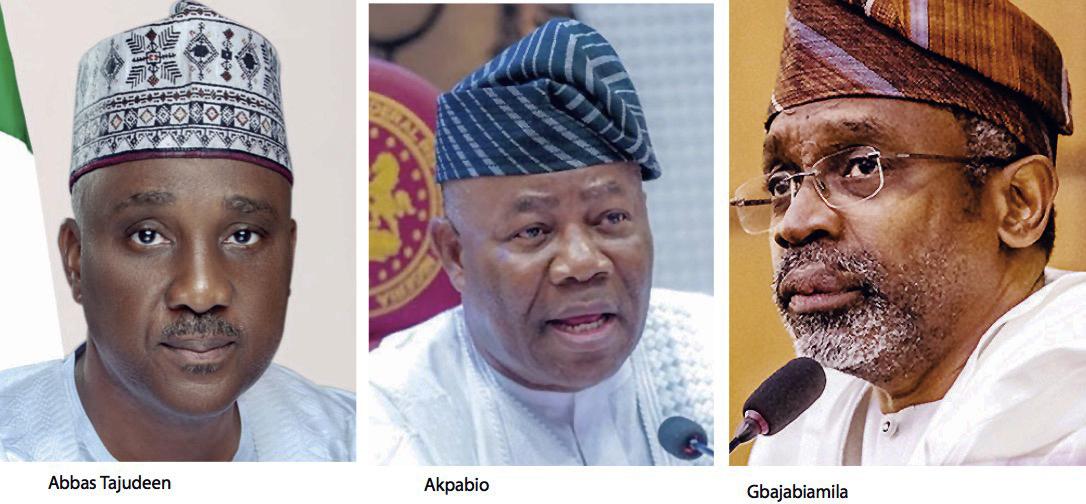
The scandal came into public focus following allegations by one Mathew Adeyemi against the Chief of Staff to the President, Hon. Femi Gbajabiamila, claiming, among other things, to have paid for a top position in an agency reportedly named the Presidential Foreign Intervention Promotion Council.
What started as a back and forth between the two principal actors snowballed into a revelation of a budgetary allocation for the agency running into approximately N1.3 billion in the 2026 Appropriation Act. The controversy became even more politically explosive because it was linked, through allegations that have since been denied, to the office of one of the most influential officials in the current administration.
The presidency has firmly rejected the allegations, describing the purported agency as non existent and distancing both President Tinubu and the Chief of Staff from the alleged appointment letters in circulation. It has maintained that the documents were forged and that the government neither established such an agency nor approved appointments into it.
Law enforcement agencies have since commenced investigations into those alleged to have orchestrated the scheme. The contradiction lies in the fact that the presidency says the agency does not exist, yet the same entity appears in the Appropriation Act.
In any democracy governed by the rule of law, allegations remain allegations until proven otherwise. The guilt or innocence of individuals named in the controversy is a matter for investigators and, where necessary, the courts. Yet even if every criminal allegation eventually collapses, one institution cannot so easily escape public scrutiny, and that is the National Assembly. For many observers, the larger issue is no longer whether forged appointment letters existed.
It is how an agency that the presidency itself says has no legal existence could allegedly receive a budgetary allocation in an Appropriation Act that passed through every stage of legislative scrutiny before being signed into law by the President, raising serious questions about Nigeria’s public finance system.
Under Section 80(2) of the 1999 Constitution, as amended, no moneys shall be withdrawn from the Consolidated Revenue Fund of the Federation except in the manner prescribed by the National Assembly. In effect, every naira appropriated from the Federation’s treasury derives its legal authority from Parliament.
Section 81 further requires the President to prepare and lay estimates of the Federation’s revenues and expenditures before both chambers of the National Assembly. However, the Constitution does not envisage lawmakers merely rubber stamping those proposals. Instead, it gives them the responsibility of examining, amending where necessary, and approving only those expenditures considered lawful and justified.
The legislature therefore occupies a unique constitutional position as the gatekeeper of public expenditure. The framers of the Constitution deliberately vested the power of appropriation in Parliament to ensure that no government spends public funds without independent scrutiny. The annual budget is not simply an accounting document.
It is the principal instrument through which government priorities are translated into public policy. It determines which roads are constructed, which hospitals receive funding, which schools are rehabilitated and which social programmes are implemented.
That constitutional responsibility is reinforced by Sections 88 and 89 of the Constitution, which empower the National Assembly to conduct investigations into the administration of laws and the disbursement of funds appropriated by it. Section 88 specifically authorises the Senate and the House of Representatives to investigate the conduct of any person, authority, ministry or government department charged with executing laws enacted by Parliament or administering money appropriated by it.
The objective, according to the Constitution, is to expose corruption, inefficiency and waste in the execution of laws and in the administration of public funds. These provisions make legislative oversight not merely a political obligation but a constitutional duty.
For that reason, the current controversy inevitably raises difficult questions for both chambers of the National Assembly. If the executive included the controversial allocation in the budget proposal presented to lawmakers, why did no committee question it during budget defence? Was the legal status of the agency verified? Did lawmakers request the enabling law establishing the agency, as they routinely do when examining proposals from ministries, departments and agencies?
If, on the other hand, the allocation emerged during legislative consideration through amendments or insertions, then an even more troubling set of questions arises. Who introduced the allocation? Which committee approved it? Was there documentary evidence showing that the agency had been legally established? At what stage of the appropriation process did the allocation appear?
Those questions remain unanswered, and their importance cannot be overstated, because appropriation is the most important law passed by the National Assembly each year. That is why the controversy surrounding the alleged fake agency extends far beyond the presidency and has become a test of the credibility of the National Assembly itself.
The Constitution contemplates an active legislature, not a passive one, and the annual budget process is intended to reflect that philosophy. After the President presents the Appropriation Bill, it passes through second reading in both chambers before being referred to relevant committees. Every ministry, department and agency is then expected to appear before lawmakers to defend its proposals.
Committee members are expected to ask probing questions, examine expenditure trends, verify ongoing projects, challenge suspicious requests and ensure that every allocation has legal backing. The committee stage is where legislative oversight should be at its strongest. By the time committee reports return to the floor of the Senate and House of Representatives, lawmakers should already have satisfied themselves that proposed expenditures are lawful, necessary and in the public interest. That is the theory. Whether that ideal is consistently achieved has become a subject of growing public debate.
In recent years, budget scrutiny has increasingly appeared compressed by the determination of the National Assembly to sustain the January to December budget cycle, and diluted further by the desire to align with the executive’s agenda. Civil society organisations and other stakeholders have repeatedly raised concerns about opaque budget practices and weak legislative oversight, with documented instances where projects appeared in final appropriation documents without clear justification, or where similar projects were duplicated across agencies.
Other News
Although lawmakers have consistently defended their actions, arguing that legislative amendments are part of their constitutional powers, the persistence of such concerns suggests that the appropriation process still suffers from significant transparency deficits. The alleged allocation to a non existent agency has now amplified those concerns. If confirmed, it would represent not merely an administrative oversight but a fundamental breakdown in the safeguards designed to prevent public funds from being appropriated without proper verification.
The Fiscal Responsibility Act 2007 was enacted to promote prudent management of the nation’s resources, ensure long term macroeconomic stability and establish greater accountability in public finance.
Section 48 of the Act emphasises transparency and accountability in fiscal operations, while the legislation generally requires that public financial management be conducted in a manner that promotes openness, efficiency and value for money.
Although the Act primarily regulates fiscal planning and debt management, its broader objective is to ensure that public resources are allocated through a credible and transparent process, an objective that becomes difficult to achieve when the public is unable to follow how budget decisions are made.
Perhaps one of the most troubling developments in recent years has been the gradual disappearance of public scrutiny from budget defence sessions. There was a time when budget hearings were among the most closely covered activities of the National Assembly, with journalists moving freely from one committee room to another, documenting exchanges between lawmakers and government officials, while civil society organisations attended hearings and highlighted questionable expenditures before committee reports were finalised.
Those proceedings were far from perfect, but they provided an important layer of public accountability. Today, the situation is markedly different. Open hearings are not completely off the table, but many committee hearings are either partially or completely closed to journalists.
Reporters are often allowed to cover the opening ceremony before being asked to leave, and in several cases, even accredited National Assembly correspondents are excluded from the substantive discussions where billions of naira in public expenditure are examined. As a consequence, Nigerians now know far less about how committee decisions are reached than they did a decade ago.
Instead, attention shifts almost entirely to the final figures after the Appropriation Bill has been passed, which undermines one of the fundamental principles of democratic governance. Transparency is not simply about publishing the final budget; it is about allowing citizens to observe the decision making process that produces it.
Since June 2023, lawmakers have processed increasingly larger budgets within remarkably short periods. The 2024 Appropriation Bill, presented in November 2023, was passed before the end of December, while subsequent supplementary appropriation requests also received speedy legislative approval.
The 2025 and 2026 budgets followed a similar pattern, with committees working under tight deadlines to conclude hearings and submit reports before Christmas. The current controversy also revives a debate that has accompanied Nigeria’s appropriation process for years, namely the issue of budget insertions.
Successive National Assemblies have consistently rejected suggestions that legitimate legislative amendments amount to budget padding, insisting that lawmakers merely exercise powers expressly granted by the Constitution, but constitutional authority must always be accompanied by transparency. The alleged allocation to a non existent agency illustrates why that distinction matters. If the allocation was part of the executive’s original submission, or introduced during committee consideration, the public deserves to know who proposed it and on what legal basis.
Budget controversies are often discussed in abstract figures, making it easy to lose sight of what public money actually represents. The reported N1.3 billion allegedly appropriated for a non existent agency is not merely an accounting entry. It represents opportunities that could have transformed lives. Across Nigeria, thousands of pupils still receive lessons under leaking roofs or in classrooms without desks. Many public primary healthcare centres lack essential medicines, maternity equipment and reliable electricity.
Rural communities continue to struggle with access to clean drinking water, while millions of young Nigerians remain unemployed despite repeated government promises of economic inclusion. Such an amount could finance the rehabilitation of numerous dilapidated public schools, equip dozens of primary healthcare centres with delivery beds, cold chain equipment and essential medicines, support conditional cash transfers for vulnerable households affected by inflation, or improve access to clean water through rural borehole projects.
It would be easy to reduce the current controversy to another political confrontation between the government and the opposition. That would be a mistake. The issues raised by the alleged fake agency extend beyond partisan politics; they strike at the credibility of Nigeria’s public finance architecture. If Parliament expects Nigerians to trust its appropriation decisions, it must demonstrate that every line in the national budget has been subjected to rigorous, transparent and independent scrutiny.
The controversy therefore presents lawmakers with an opportunity not merely to defend their reputation but to strengthen the institution they lead. Public confidence, once lost, is difficult to regain, and the surest path to rebuilding it is openness, accountability and a willingness to subject even the legislature’s own processes to public examination.
For the Tinubu administration, the controversy is particularly damaging because it comes at a time when the government continues to ask Nigerians to endure painful economic reforms in the interest of long term national recovery. Since assuming office in May 2023, the administration has defended difficult policy decisions, including the removal of fuel subsidy, exchange rate reforms and tax measures, on the grounds that scarce public resources must be managed more prudently.
Those reforms have imposed significant economic hardship on many Nigerians. Inflation has remained stubbornly high, food prices have risen sharply, and millions of households continue to struggle with declining purchasing power. Against that backdrop, any allegation suggesting that public funds may have been appropriated for a non existent agency inevitably fuels public anger and weakens confidence in government assurances that every naira is being carefully managed.
Although the presidency has categorically denied any wrongdoing and insists that the agency in question does not exist, perception often shapes public confidence as much as legal outcomes do.
As the National Assembly prepares to resume from its recess, this issue will almost certainly confront lawmakers once again. Nigerians will expect to know how the alleged allocation found its way into the budget, whether established procedures were followed and what measures will be introduced to prevent a recurrence.
It can choose to treat the matter as another political controversy that will eventually fade from the headlines, or it can embrace the constitutional responsibilities imposed by Sections 88 and 89 by conducting a transparent inquiry into how the allocation found its way into the Appropriation Act.