Follow Us on Google
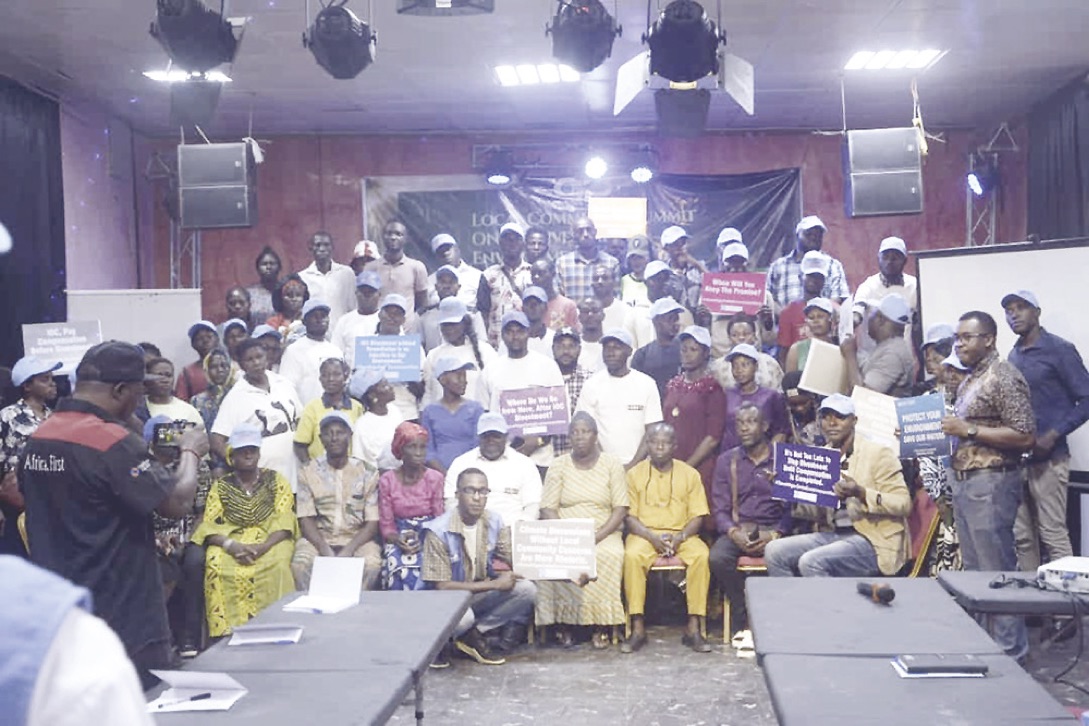
•Delta community laments impact of oil companies’ activities on livelihood, seeks justice
By Henry Uche

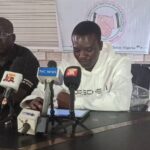
•Indigenes of Agbarho community at a sensitisation programme
The plight of the people of Agbarho, a community in Delta State, has been brought to the fore as environmental degradation caused by the activities of international oil companies (IOCs) threaten their sources of living.
At a one-day local community summit on oil divestment and environmental justice organised by a civil society organisation, Connected Advocacy, the people expressed grief over what they tagged “exploitation with impunity” perpetrated by foreign oil companies, which have destroyed their natural habitat and livelihood.
With the theme “Strengthening indigenous knowledge to bridge climate action gaps in transitioning from fossil fuel,” the group stated that there was need for the people to be fully informed and empowered to know the right thing to do at any time to ameliorate their plight, since people perish for dearth of knowledge.
Addressing stakeholders from Niger Delta oil-polluted communities, the convener-cum-executive director of Connected Advocacy, Prince Israel Orekha, emphasised why the issue of local community oil divestment and environmental justice must take the centre stage at all discourse.
He stated that, after the recent COP28 conference, the need for the government and IOCs to listen to the lamentations of local community on oil divestment and environmental justice was heralded.
According to him, owing to constant neglect of local community which was a top agenda at COP28, the devastating condition of the environment underscores the urgent need for action, particularly in regions like the Niger Delta, where communities bear the disproportionate burden of climate change impacts.
According to the Environmental Protection Agency, the current change in weather/atmosphere across the country is not harmful but rather an extreme form of air pollution with dire consequences on public health has aggravated the woes of the people.
He said: “We, the people bear the brunt of the impact on environmental degradation and climate crisis. Transitioning from fossil fuels and strengthening indigenous knowledge to bridge climate action gaps is urgently needed.
“Looking at the IOCs divestment without visible decommissioning plans in place, to pay compensations, our community will be left with stranded assets, stranded personnel and a stranded community hence the need for environmental accountability and transparency. We hope to find ways to work together to create a more sustainable future for our planet.”
Other stakeholders, who spoke, including Babawale Obayanju, admonished the people to establish ground for environmental justice, while Umfon Gabriel, another concerned citizen, shed light on IOCs divestment saga going on in Nigeria, and why it’s unethical and how community can hold the polluters accountable. One of his overarching solutions was – beneficial ownership disclosure.
High point of the event was when the women poured their deepest grief of pollution which has caused scarcity of mature fish and other agricultural assets. They were worried about the future of their children and poor agricultural yield.
A resident, Mr. Babatunde, pointed towards actionable steps to stem this menace. Gabriel, who empowered the people with requisite knowledge again charged the people to hold IOCs accountable, saying: “We must understand the legal framework underlying the whole process.
“You have the right to demand for documentations and profiles of IOCs deals and their major stakeholders and beneficiaries. Knowing the beneficiaries, understanding the terms and conditions of the contracts etc would give you an edge in demanding justice.”
He also emphasized youth empowerment and policy advocacy, noting that the destiny of the people lies in their ability to act.