Follow Us on Google

By Doris Obinna
A documentary film, premiered May 7, while x-raying the COVID-19 pandemic in Nigeria, and the role of leadership in handling the outbreak, exposed some challenges in the health sector in Nigeria.
The film, “UNMASKED: Leadership, Trust and COVID-19 in Nigeria,” shot during the lockdown and released in March, was officially launched on Friday, May 7, at the Civic Centre, Ozumba Mbadiwe Street, Victoria Island, Lagos.
The 95-minute documentary, which exposed the loopholes in the health system, offered solutions in addressing the challenges. The movie, produced/directed by Femi Odugbemi and co-produced/presented by Kadaria Ahmed, was a collaborative work by Daria Media and Zuri24 Media.
Highpoints included the presence of resource persons, including Speaker of the House of Representatives, Hon. Femi Gbajabiamila. He said: “The pandemic was a mixed feeling, knowing that, as it was wavering around the world, it was surely coming to Nigeria, so it was more of, if it happens, how ready were we and how would we contain it? Health is the most important sector of the economy.”
“One of the good things about COVID-19 is that the elite are trapped,” said Governor of Kaduna State, Mallam Nasir El-Rufai.
“There is a need to change the structure of governance to ensure development in Nigeria. The lessons are certainly not lost on me personally and my government. I know that indeed what COVID brought forward to us, these are things that, if indeed we take the positive side of it, we can use to galvanise and create tomorrow,” said Lagos State Governor, Babajide Sanwo-Olu.
On his part, governor of the Central Bank of Nigeria, Godwin Emefiele, said a study by the World Health Organisation (WHO) revealed that only 4 per cent of Nigerians had access to healthcare insurance.
He said: “Efforts by the private sector-led Coalition Against COVID-19 (CACOVID) led to the provision of N25 billion relief materials to affected households. We disbursed over N83.9 billion in loans to pharmaceutical companies and healthcare practitioners, which is supporting 26 pharmaceutical and 56 medical projects across the country.
“We were also able to mobilise key stakeholders in the Nigerian economy through the CACOVID alliance, which led to the provision of over N25 billion in relief materials to affected households, and the set-up of 39 isolation centres across the country.”
Other resources persons were Lagos State Commissioner for Health, Prof. Akin Abayomi; Kaduna State Commissioner for Health, Dr. Amina Mohammed-Baloni; national coordinator of the Presidential Task Force on COVID-19, Dr. Sani Aliyu; director-general, Nigeria Centre for Disease Control (NCDC), Dr. Chikwe Ihekweazu; WHO consultant virologist, Prof. Oyewale Tomori; medical director, Mainland Hospital, Yaba, Lagos, Dr. Abimbola Bowale; founder, editor-in-chief of Foundation for Investigative Journalism, Fisayo Soyombo; founder The Chair Centre Group, Mrs. Ibukun Awosika; and chairman/non-executive director of Evercare Hospital, Lekki, Lagos, Mr. Tosin Runsewe.
At the end of the documentary, stakeholders and resource persons unmasked the poor leadership system, lack of trust within the sector, non-functional health insurance scheme, weak infrastructure or equipment and corruption, among others.
One, point they all recommended and agreed upon was making the National Health Insurance Scheme (NHIS) mandatory. They also advocated increase in budget allocation to health, collaboration of the public and private sectors, local production of medical tools/protective personal equipment (PPE), overhauling of the healthcare among others.
Other News
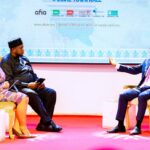
As part of the event, a panel of discussants was moderated by Kadaria Ahmed.
The panelists: Prof. Abayomi, Dr. Ihekweazu, Runsewe and a consultant, former commissioner for health, Ogun State, Dr. Olaokun Soyinka, applauded the extensive research of the documentary and began conversations around issues of public-private sector collaboration for the development of a robust and effective public health care system.
Taking his turn, Abayomi said for now there is a decrease in the number of patients requiring oxygen therapy: “This is a result of a decrease in positive cases and decreases in bed occupancy rate in both public and private COVID-19 care centres. Bed occupancy rate has reduced drastically to about 1 per cent.
“Lagos ResponseTeam has, in spite of the decrease in positive cases, put stringent measures in place to track passengers of interest (POIs) following recent surge in COVID-19 cases in India and some countries.”
On his part, Ihekweazu, said the centre was now better prepared for future epidemics and pandemics.
“Documentaries like this one by Femi Odugbemi and Kadaria Ahmed help us reflect, learn and push harder to prevent future outbreaks,” he said.
Also, Runsewe noted that making NHIS mandatory would help to properly address the myriads of challenges in the health sector and ensure universal health coverage,
He said: “If the health insurance were made mandatory, it would take care of 50 per cent of the 200 million population in Nigeria. Social health insurance programme that will take care of indigent people and those in informal employment will now take care of the remaining 50 per cent of Nigerians.”
He identified shortage of medical personnel as one of the major challenges of the health sector: “We don’t have enough medical personnel. We graduate about 3,000 doctors yearly in Nigeria but we probably need 10,000 people.”
Soyinka identified primary health care as one of the greatest challenges in the country. He reiterated that government must reboot primary health care because, “It is the crux of healthcare delivery. It is the orphan child as it is not owned by anybody. There are three tiers of government contributing to it, the federal, state and local government.”
Last word from Ahmed: “I hope the documentary helps us reflect, learn and push harder to prevent future outbreaks. It is the hope of the producers of the documentary that, beyond documenting the Nigerian story of COVID-19, Unmasked acts as a catalyst for a conversation on shortcomings in our public health sector that were unmasked by COVID-19.”
Odugbemi said, “The COVID-19 pandemic has turned the world on its head and hit the world’s most populous black nation, Nigeria, with predictable ferocity.
“And with its soft underbelly of corruption, poor healthcare infrastructure, weak systems, and an ever-increasing number of its population below the poverty line, the portent is dire. Could this also be an opportunity for reset?”