Follow Us on Google
• Stakeholders discuss challenges, way forward of creative economy
By Vivian Onyebukwa
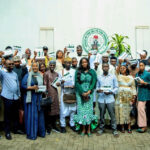
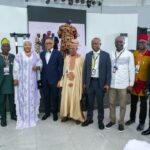
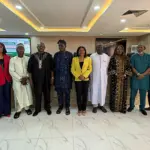
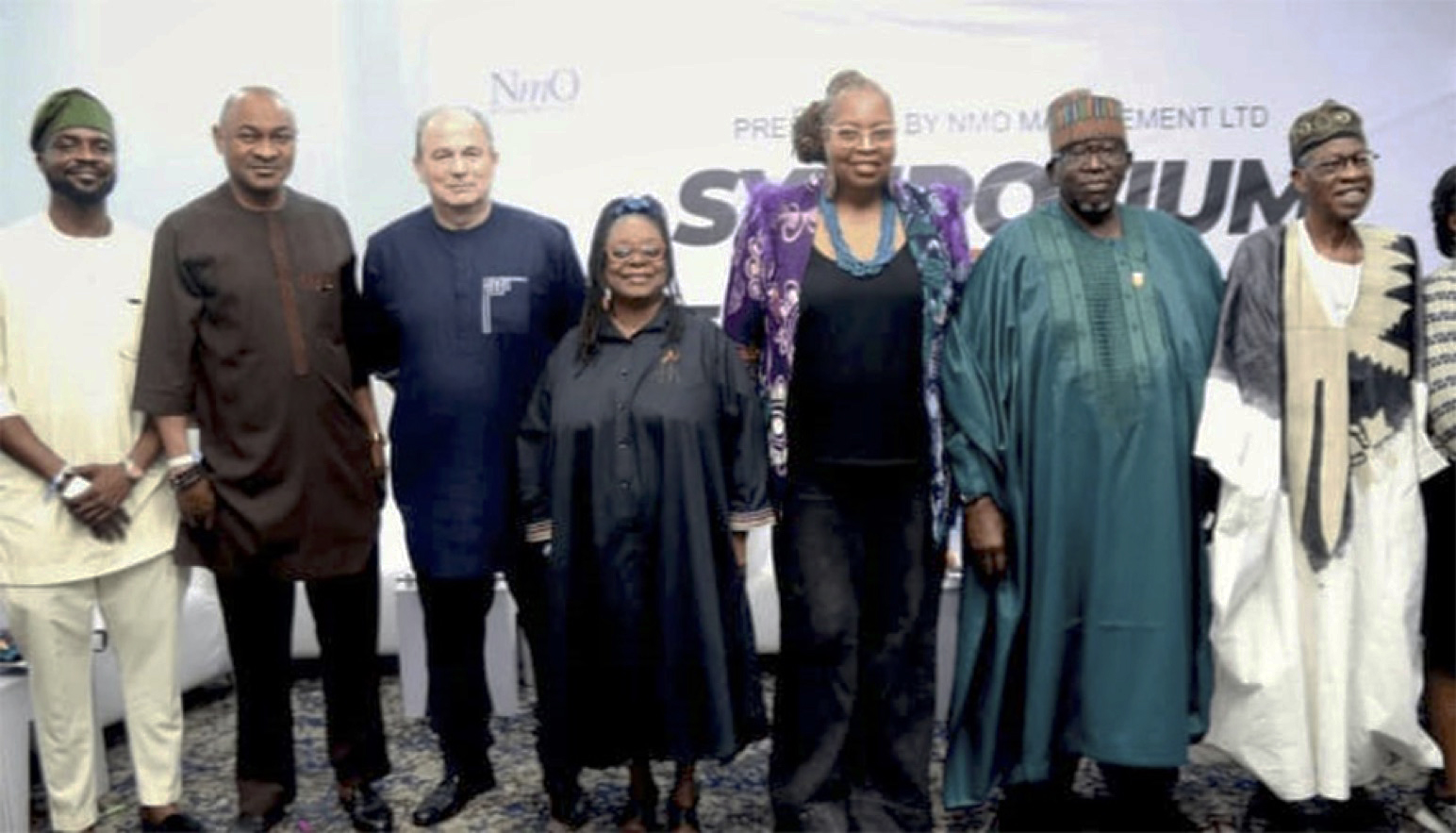
The 3rd Annual Symposium & Easter Festival Parade titled: “Unlocking Finance As A Critical Pillar For Scaling The Creative Economy, Building Infrastructure, And Enabling Long-Term Sustainable Wealth Creation” has ended in Lagos but the experiences and shared moments still leave a lasting imprint in the hearts of many who attended. Many agreed that it was a great conversation that remains a treasure.
The symposium convened by NMO Management brought together leaders of industry, policymakers, innovators and members of the creative community, among others. The convener of the programme, Dr Ngozi Omambala, Managing Director and CEO of NMO Management, while speaking at the event described it as a strategic platform to explore both the opportunities and challenges within Nigeria’s creative economy.
Omambala, who is also the Vice Chairman of the Nigerian Association of Chamber of Commerce, Mines And Agriculture (NACCIMA) Creative Economy, highlighted the sector’s vast talent pool while identifying the lack of structured capital alignment as a major constraint to unlocking its full potential.
Giving an overview of Nigeria’s Creative Economy, Omambala noted that despite limited access to structured financing, Nigeria’s creative sector has continued to grow, driven by resilience, innovation, and strong market demand.
She emphasised that the sector contributes significantly to the national GDP estimated at between N7.5-N9.6 trillion annually and supports over four million jobs across diverse creative fields.
Considering the challenges and opportunities in the creative economy, she stressed the need for access to formal finance, saying it remains structurally limited despite the sector’s evident viability and growth trajectory.
“The industry is at a critical inflection point, where expansion without adequate structure could threaten long-term sustainability”, Omambala stated.
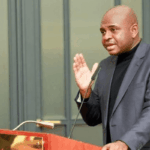
In his keynote address, Dr Jani Ibrahim, National President of the Nigerian Association of Chamber of Commerce, Industry, Mines and Agriculture (NACCIMA), described the meeting as both thoughtful and timely, which reflects a growing national recognition that the creative economy is no longer peripheral, but central to Nigeria’s economic diversification agenda.
He commended the organisers for creating what he referred to as a vital platform for dialogue, partnership, and action, one that effectively bridges the gap between creative expression and enterprise development while fostering meaningful engagement across sectors.
Ibrahim said: “In a time when economies across the globe are being reshaped by innovation, culture, and digital transformation, meetings like this is not just relevant, they are necessary.”
Ibrahim further stated that Nigeria’s creative economy, spanning film, music, fashion, art, publishing, gaming, and digital content, is no longer an emerging sector, but a defining force, increasingly positioning Nigeria as a cultural and creative hub on the global stage.
Making reference to the Africa Entertainment and Media Outlook 2025–2029 released by PwC, he said Nigeria’s entertainment and media industry continues to experience strong growth, driven by digital consumption and a youthful population. He stated that platforms such as Netflix and Spotify have amplified Nigerian content to global audiences while Nollywood remains one of the largest film industries in the world by volume, demonstrating the country’s capacity to compete and lead within the global creative value chain.
Yet, despite this momentum, he said, the sector contributes only a modest share to GDP relative to its true potential, largely due to structural gaps that continue to limit scale, formalisation, and investment readiness.
“The reality is clear: although we have creativity in abundance, structured financing, infrastructure, and scalability remain constrained. One truth we must establish is that ideas do not scale without capital, and talent does not thrive without structure, therefore requiring deliberate institutional support and strategic investment frameworks.”
He highlighted some of these challenges facing the creative, which include finance.
“Across Nigeria, thousands of creative entrepreneurs, many of them young people and women, operate in an ecosystem where access to finance is limited, fragmented, or poorly aligned with the realities of creative work, thereby constraining innovation, limiting growth, and reinforcing informality within the sector. Traditional financial institutions often struggle to underwrite intangible assets such as intellectual property, and as a result, creative enterprises remain largely informal, growth capital is scarce, and value chains are underdeveloped, which collectively weakens the sector’s ability to contribute optimally to national output and employment generation.”
According to him, “the World Bank has consistently identified access to finance as a major constraint to SME growth across Africa, and Nigeria is no exception, making it imperative for stakeholders to rethink financing models in a way that reflects the unique dynamics of the creative economy.”
He advised that to unlock the full potential of this sector, financing must evolve into a layered and inclusive ecosystem.
“We must deepen financial innovation by promoting blended finance, venture capital, and intellectual property-backed lending models that recognise royalties, licensing, and digital revenues as viable assets, while also encouraging financial institutions to develop sector-specific products tailored to creative enterprises.
“At the same time, we must strengthen institutional collaboration, ensuring that platforms such as NACCIMA serve as effective bridges between policy formulation, private capital mobilisation, and enterprise development. We must also invest in infrastructure, recognising that studios, production hubs, digital distribution networks, and creative clusters are not luxuries but essential economic assets, capable of unlocking productivity, enhancing quality, and enabling global competitiveness. Nigeria’s youthful population represents not just a demographic reality but a strategic economic advantage, as it provides a dynamic talent pool capable of driving innovation , entrepreneurship, and global cultural influence.”
In his remarks, former Minister of Information, National Orientation, Culture and Tourism, Alhj Lai Mohammed, lauded the creative sector, for offering a unique opportunity to showcase Nigeria’s brand globally.
He said: “Nigeria’s creative & culture industry has been larger than life, vibrant and has employed millions of people, created wealth and brought immense fame and popularity at home and most especially abroad. Nigerian literature, film and more recently music, Nigeria’s multi-cultural history has played a major role in being the link to the Nigerians and by extension Africans in the diaspora and massively creating employment, innovation and a decent contribution to the nation’s GDP.”
He noted that Nigeria’s multi-cultural history has played a major role in being the link to the Nigerians and, by extension, Africans in the diaspora and massively creating employment, innovation and a decent contribution to the nation’s GDP.
He described Intellectual Property (IP), as an intangible asset class that has the greatest potential to contribute much needed EFX earning, and reduction of Nigeria’s gaping trade deficit, and stressed the need for government to protect the industry by enforcing strict implementation of copyright laws.
“Government should crackdown heavily on offenders, support education and training across board, significantly increase funding and relax stringent requirements therein, increase grants and endowment funds, support the right framework and policies required for accelerated growth and possibly setup a dedicated agency for the Creative Industry.”
He stated that mapping the entire industry would give empirical analysis and give active players a stronger basis for inclusion in schemes, healthcare and economic interventions.