Follow Us on Google
By Enyeribe Ejiogu
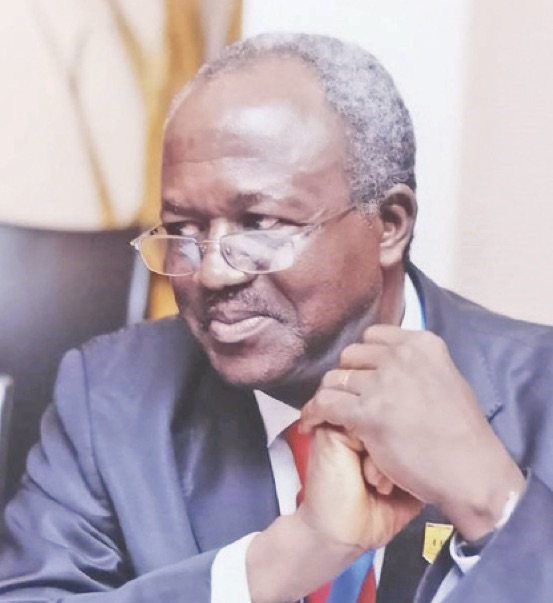
Pharma (Sir) Anthony Akhimien is one of the only three Nigerians to have been conferred with the prestigious Fellowship of the International Pharmaceutical Federation (FIP) in the history of the 110 years old, distinguished global body of pharmacists.
An alumnus of the National Institute of Policy and Strategic Studies, who was the rapporteur of the NIPSS SEC 38, 2016, and former President of the Pharmaceutical Society of Nigeria (PSN), former President, African Pharmaceutical Federation (FAP) and Examiner at the West African Postgraduate College of Pharmacy, Akhimien has played fundamental roles in formulating health policies in Nigeria and particularly as they relate to the profession and practice of Pharmacy in Nigeria. Significantly he led the advocacy for Nigeria to adopt the Doctor of Pharmacy (PharmD) degree and curriculum in place of the former Bachelor of Pharmacy (B.Pharm) degree. In this interview he looks back, after attaining the milestone age of 70 years, and urges the President Bola Tinubu administration to accord local drug production the status of a strategic national economic security industry.
Now that you are 70, what thoughts come to you as you look back?
Well, as the Bible says the lifespan of a man is 70 years, but you can reach 80 and even older. For me, I feel fulfilled that I have been able to clock 70 years as prescribed by our Maker. I am strong and in good health. I am hoping that by God’s special grace, I will see beyond the 70 years, or even beyond 80. That’s my desire. But it gives me great joy that on such a beautiful day I turned 70 all my friends rallied around me, and it made a big difference in my life. It was quite historic. It’s a milestone and I cherish it so much that God gave me that opportunity to be able to see 70 years on earth.
Looking at Nigeria, what are you most happy about the nation?
Nigeria is a country with diverse people, diverse opinions and people that are very intelligent. Really, Nigerians are people who succeed anywhere they go in the world. But sadly we are not able to harness the gifts that God put in this part of Africa. There is nothing you don’t find in Nigeria. The weather is favourable. The people are lovely and intelligent. Mineral resources are all over the land, embedded, and given to us by God. But we are unable to have somebody who can gather the people in a manner that everybody will have a fair share. Look at the national anthem which we have adopted. We say “Nigeria is our own dear country and a place where no man is oppressed.” If you look at it that’s not what is happening today. I believe there are people today who cannot even live in their ancestral communities. They have become refugees, living in IDP (internally displaced people) camps. There are people today who can’t even visit their homes because of certain factors in our country. So, it is not the country some of us dreamt about, but it’s a country that is going through a lot of trial. A country that is so rich in everything. My prayer is that we should be able to get somebody who can galvanise all of us and give a level playing ground for everybody to exhibit what they have. That’s my prayer. For now, we are not there yet.
When you compare Nigeria with other countries that gained independence around 1960, what would you say is the greatest drawback to the economic development of the country?
Those who gave us independence showcased the willingness for the country to grow. The people in the country were in four regions. Some deliberately put education on the front burner, and that let the people be educated. Some had to industrialize in the East to find, as it were, the coal industry and all of it. Some had to have the groundnut pyramid in the North. These were things that our forefathers dreamt of. But when the oil came, everybody abandoned the natural resources God gave to us, and so we lost out from there. And then the intervention by the military was also a drawback in the sense that the military had a way of doing things. Yeah, they brought some level of development, I must say, but that was not the level that could allow us to grow in a manner comparable to other countries. They imposed a constitution on us that cannot really be the opinion that we all express. I think that’s a major drawback.
We were supposed to be far ahead of every other African country, but today we are not there. And I think corruption is a major issue which has now bedeviled us in a manner that every facet of this country, everything people do is level of corruption. And if we do not remove this from the system, and the level of insecurity, I’m afraid no development can happen. No investor will want to come into this country to invest.
You were the rapporteur of your set, NIPPS SEC 38 2016, at the National Institute for Policy and Strategic Studies. You are a highly respected pharmacist and an advocate for appropriate pharmaceutical policies. If you were invited to address the Federal Executive Council, what would you tell President Bola Tinubu and the FEC members regarding the Nigeria Pharmaceutical industry?
Straight and forward, I will tell President Tinubu and Federal Executive Council that local drug manufacturing should be designated by an Act of the National Assembly as a strategic national economic security industry in line with what other nations like India, China, Israel, Germany, Britain, Russia, South Korea, Japan, and even Ghana (our neighbour in West Africa) have done. Based on that, we must begin to implement a focused, coordinated policy of developing and actively growing a national capacity to produce active pharmaceutical ingredients, APIs, which will enable our nation increase local drug manufacturing capacity and be able to survive in the event of another global lockdown like we witnessed during COVID-19 in 2020.
APIs are special chemical products, which nations that produce them regard as national security matter. If APIs are not well handled, any country that hates us can lace a poison into a very popular drug, ship to us and use it wipe out a large part of our population. That’s the first thing I would say.
The second thing I would say is that the Federal Government should address the issue of self-sufficiency in drug production to a certain level of what we need in Nigeria. The Pharmaceutical Industry must be encouraged. There must be incentives put on the table for those who are willing to invest in manufacturing capacity, especially focusing on Nigerians, not some “foreign investor” who is coming to sell drugs here. It should be people that will come here and establish manufacturing plants that actually produce drugs.
When you say incentives, what exactly do you mean?
Those incentives would be raw materials. There should be a company to produce raw materials in Nigeria. Not bringing it from outside the country, because it happened during COVID-19. We had no API to produce paracetamol because the people shut their doors on us. So that tallies with the security matters I was talking about – drugs are a security matter. So we need incentives. Customs tariffs have to be removed, if possible. Taxes should be reduced for pharmaceutical manufacturers. And then they should be given funds to expand. The government should have a special package of incentives for the manufacturing industry. In this regard, a number of carefully chosen companies in the designated pharmaceutical manufacturing zones will be given incentives, which include tax waivers or significantly reduced taxes, and then contracted to produce basic drugs needed in the country. Alongside this, the government must also prescribe a fiscal policy to ban people from importing those products that local companies are being encouraged to produce.
Finally, I would say that the capacity utilization of the local industry must be raised through deliberate government patronage and stoppage of importation of drugs that can be produced here.
In India, there is a place called Hyderabad. It is a research and development zone. Most companies have facilities there. We can replicate that in Nigeria, in such a manner that the area would be demarcated just for industry. Government will put in place everything that they need. These in include stable, affordable electricity, treated water and well-tarred and maintained roads within the pharmaceutical manufacturing zone.
Is that the kind of thing that NAIP (National Association of Industrial Pharmacists) is trying to do in Ebonyi State?
Yes, even in Anambra State, they are trying to do the same thing. However, we need the cooperation of government. The industry alone cannot do it because how do you tell a man who wants to invest to construct roads, build a huge electric power plant, build a residential estate for the staff that have to work eight-hour shifts round the clock? So, these are things which I think government can provide as incentives to investors in local drug production.
In the industrial city proposed, there will be adequate security, offices for National Agency for Drug and Control (NAFDAC), Pharmacy Council of Nigeria (PCN) Customs, Immigration and other agencies relevant to the operation of the zone.
In a nutshell, I will tell the Federal Executive Council and NASS that local drug manufacturing industry needs to be designated as a strategic national economic security activity, which needs a legislated, deliberate package of incentives designed to facilitate the growth of the industry.
Now, let’s look at the polity. What would you say accounts for the sustained clamour for restructuring?
The constitution which the military gave to us was not debated upon by the people. It didn’t go through the National Assembly. Democracy should be about the people coming to express themselves, and say what they want. What transpired under the military was a strange manner of evolving a constitution and imposing it on the people. And I thought when the military left, the politicians were supposed to take this document as a draft document to guide our people. Time is overdue for us to overhaul the constitution that the military handed over to us. It is no fair to all of us. It’s lopsided. Many of the issues that people are agitating about should be addressed with that constitution. But this has not happened. So the constitution must be amended. We could have a special session in the National Assembly for every facet, every region to have a say. And I think that is the only way we can move forward
Generally, what are your regrets about the country?
My regret is that insecurity has bedeviled us. And that I can’t move freely to visit and greet my friend in the village. I can’t invite my friend overseas, to come and I will take him to my village. I can’t boldly do that without looking for a number of armed escorts. This is not our way of living. I also think that we are supposed to have grown the manufacturing industry. The industry is staggering. We are still an import-dependent nation, which I believe is a big minus for our country. Our country is supposed to be great. As I said, we have very intelligent people. There’s no person in Nigeria that goes out and doesn’t excel in any field of endeavour. The country will need a leader that can harness all of these potentials that God has given to us, to grow our country and low our children to stay. Today, our children are not in this country. My children challenge me, asking why I do not allow them to go abroad. And I say must everybody leave. I had bursary award when I was in university for two years. These things have all evaporated. These are incentives that will make the young ones believe in the country, ready to sacrifice. I believe in Nigeria. I think we can do something to reverse some of these negative factors that have not allowed us to grow. Well, I’m lucky to have been given the mantle of leadership to lead pharmacy for three years, 2006 to 2009. And one of the greatest regrets I had is that we had thought the industry by now would be producing at a capacity not less than 60 or 70 percent. Today, we are largely import dependent by about 60-70 percent. That is not good for a country that has been politically independent for 65 years. By now should have been producing most of the basic drugs for our people – drugs that we don’t need to import from anywhere, particularly after the experience we had with COVID-19. If we had been hit the way it was predicted to affect Africa, a lot of us would have died. The truth is that the countries we depended upon had a serious drawback. They needed to take care of their people and shut their doors against us. And we had nothing we were producing. And so we were still importing even at that delicate moment. So the lesson learned is that we must grow our pharmaceutical manufacturing industry.
Certain incentives must be given to our industry to deliberately produce those drugs that we have abundant capacity to produce and which we don’t need to import. In my time as the President of the Pharmaceutical Society of Nigeria, we got government to have a fiscal policy on drug importation. And the idea was that in five years, certain basic drugs should not be imported into Nigeria. And we gave the government a list, which was adopted. The government gave appropriate directives to the Nigeria Customs Service, Nigeria Immigration Service and everybody else relevant to the implementation of the policy, stating that five years from that date nobody would be allowed to import ampicillin or certain basic drugs that could be produced in the country.
The industry rose up to the occasion and brought in raw materials, invested in new production facilities, acquired land in Ogun State and other places to build factories in preparation to benefit from the policy. But few years after, the policy was reversed, because some unpatriotic people believed we must import. Those who were gaining from importation fought very hard to reverse this. I think we can go back to that policy. Government must have a deliberate fiscal policy to address it, and declare that about 20 products we know people use on a daily basis must not come into Nigeria in five years’ time. It’s doable. And I can tell you, the local pharmaceutical industry is prepared and ready. The government must necessarily provide incentives such as lower taxes and removal of Customs tariffs. Make it almost zero on those people who are prepared to produce those basic drugs that our people will require. If you give those incentives, I tell you, in 10 years’ time, we’ll be clapping for ourselves.
Ghana started with 13 products. As at the last count, Ghana has up to 47 products, which you can’t bring to Ghana, which they are producing and exporting to other West African countries and even the United Kingdom. We are a big country and we can do this. Let’s remove sentiment and corruption. Moreover, the industry is large. We have a huge population to feed. Therefore, the industry can grow, if we are prepared to do so. Look back to what happened during the days of General Sani Abacha’s Petroleum Trust Fund-Special (PTF), which provided incentives to the pharmaceutical industry. The PTF gave qualified indigenous manufacturers certain products to produce and assured them of government patronage. Today, government patronage is still an issue. If our people must produce drugs, government must also have a deliberate policy to patronize them, through award of purchase contracts by teaching hospitals and other public health facilities. Most times, what you find is that when there is tender, they bring people from abroad to put in tenders. There is absolutely no genuine, patriotic reason for that, except corruption and opportunity to export foreign exchange through the contract award.
One sure way to allow the local manufacturers to grow is for federal, state and local governments to give them deliberate patronage. Once this is done, the companies will grow. And in five or 10 years, we will be comparing ourselves to India. It is doable. This is what India and China have done, and which they are sustaining. Today, most drugs come from India.
Which of the achievements you recorded as President of the Pharmaceutical Society of Nigeria, PSN, have become legacies that can transcend generations?
Well, as PSN president, I had tenure of three years. In life, you leverage on what others have done. When I came on board, two things were very critical: the issue of the Doctor of Pharmacy (PharmD) degree in Nigeria, and the National Health Insurance Scheme. They were very critical on my table when I took over. My predecessor had done some work on them. With the support of my EXCO, I put them on the front-burner. I took the bull by the horn. And within one year of my ascending to the position, we got the Doctor of Pharmacy degree approved by the National Universities Commission. Yeah, this gave some debate and aroused what I would call unnecessary protest from the medical doctors who said that we just wanted to put the title ‘doctor’ before our names. But they forgot that the global trend is that pharmacists have grown beyond just producing drugs. Now, they study the outcomes of the therapy, to know how drugs affect the human being. For them to do this, then you need to include a rich clinical knowledge into the syllabus of pharmacy. And that was exactly what we did, to get the approval of the government. I’m the happiest person today, knowing that the minimum requirement to qualify as a pharmacist in Nigeria is the Doctor of Pharmacy (PharmD). I feel fulfilled that that was an area we tackled and we succeeded.
The other thing I would like to talk about is the issue of discipline. During my tenure, I had a disciplinary committee, which was different from the Pharmacy Council of Nigeria (PCN) Disciplinary Committee. So, we partnered with the PCN and brought sanity. We called some people to face the disciplinary committee, including some manufacturers that were misbehaving. We called them to order through those mechanisms. And I think it’s an area I want to recommend for subsequent leadership of our society, we cannot leave this. We, PSN, must have a self-regulatory mechanism. We have to buttress what the Pharmacy Council is doing, because the PCN alone cannot do all of it. I do not know how many staff they have to be able to go around the whole Nigeria, to ensure that pharmacies are doing the right thing. But we must have that level of self-regulation that can buttress what PCN is doing.
Again, I’m happy to say that hospital pharmacy was an area that we targeted. I traveled with my team and visited almost all the hospital pharmacies in the country, to see what my colleagues were doing. I must give kudos to some of the Chief Medical Directors, who responded positively to some of the inadequacies we observed, regarding the offices pharmacists need to occupy and the job content. We sought to know if the pharmacists were adding value to patient care. I commend some of the CMDs who responded to some of the gaps that we saw. And today I’m happy to say most of my colleagues in hospital pharmacies are doing very well. The consultant status has been approved for qualified pharmacists. So, I say to them, it is time for them to live up to the expectation. As it is said, to whom much is given, much is expected. Therefore, they need to work with the doctors in ensuring that patient care is at the topmost in what they do in the hospital.
In what other ways have you impacted pharmacy profession and practice in Nigeria and beyond?
Significantly, when I was on the Governing Board of the University College Hospital, Ibadan, which is a teaching hospital, I introduced a drug dispensing practice which some other tertiary hospitals have adopted. What I met there in the Pharmacy Department was nothing to write home about. With support and cooperation of the Board, we were able to introduce the unit dose dispensing, which is a focused attention on the patient in ensuring that a particular drug is given in a day. If the drug was not needed the following day, it was withdrawn without any financial loss to the patient or the hospital. During my time on the board, I proposed that and fought hard for it, and the board approved it. We also tried, again to compartmentalize: clinical pharmacy department, administration department, and special project. For example, administration focused on administrative purposes of all the pharmacies, including what the hospital was doing; the clinical pharmacy looked at what was going on in the new project of unit-dose dispensing – in essence, it was meant to monitor what the pharmacists were doing in the wards, to ensure that what was given to the patient was actually delivered. And if there were hiccups or interaction or drug reaction, the drug was withdrawn and reported back to the prescriber? And then we had special project. Under Special project, we had donor-funded initiatives like UNIICEF project, HIV/AIDS project, where we had special pharmacists who were talented, trained, and funded by donor agency in ensuring focused treatment of tuberculosis, HIV/AIDS. They cannot be with the general one.
I am happy that the unit-dose initiative was replicated by some other tertiary hospitals. For it to work, it needed the cooperation of doctors, laboratory scientists and everybody else.
When I left UCH, I was very satisfied that we were able to overhaul the system I met there through the cooperation of the board, and that pharmacists were doing what they were supposed to do in terms of patient care, bringing drugs to the hospitals that had gone through a process involving accredited agents. I have been told that those things are still being done in UCH. Some teaching hospitals have adopted the UCH model. Several others are in the process of adopting the UCH model.