Follow Us on Google

From Juliana Taiwo-Obalonye, Abuja
A new European Union-backed initiative, the ‘Strengthening Childcare and Protection Systems’ project, has been launched in Nigeria, targeting over 13,500 vulnerable children and their families across Edo, Borno, and Plateau states.
The project, spearheaded by SOS Children’s Villages in partnership with the Civil Society Legislative Advocacy Centre (CISLAC) and the Jireh Doo Foundation, aims to address deep-rooted challenges in child protection over the next 36 months.
The project aims to directly assist over 13,500 vulnerable children and support around 900 caregivers. It will also focus on building the capacity of approximately 240 childcare professionals and 72 government agencies. Beyond these direct beneficiaries, the initiative is expected to positively impact more than one million children and their families across the targeted states.
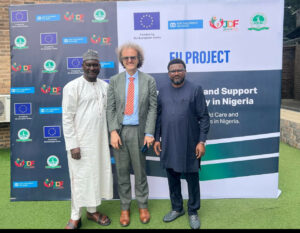
Speaking at the launch in Abuja, Country Director of SOS Children’s Villages Nigeria, Eghosa Erhumwunse, stressed the urgent need for robust systems to protect children from daily threats such as abuse, neglect, exploitation, child marriage, and trafficking.
“Many children face daily threats of abuse, neglect, exploitation, child marriage, trafficking, and unsafe care arrangements. This project directly responds to that gap, with intention, innovation, and collaboration across all tiers of government and key stakeholders involved in the care and protection of children,” Erhumwunse stated.
He further highlighted the project’s commitment to strengthening legal and policy frameworks, particularly the Child Rights Law and alternative care guidelines, and stressed the importance of collective responsibility: “The protection of children is not the sole responsibility of one institution or actor; it is a collective moral imperative.”
Executive Director of Civil Society Legislative Advocacy Centre (CISLAC), Auwal Ibrahim Musa Rafsanjani, delivered a goodwill message underscoring the dire state of child protection in Nigeria:
“We cannot overstate the deplorable state of child protection in Nigeria as children continue to be exposed to different forms of abuses and violation of their rights. In most cases, these abuses and exploitation come mostly from people trusted either by the child or parents or guardians. Sadly, even governments at the federal and state level have been culprits of child rights violation in recent times.”
Rafsanjani called attention to the gap between policy and implementation: “While it is critically important to ensure the existence of legal and policy measures for the protection of children, the implementation of those provisions is much more important. This has been a missing link with child protection in the country.”
Other News
He also raised concerns about issues such as uncontrolled childbearing, the plight of out-of-school children, and malnutrition, particularly in northern Nigeria: “The growing population of children whose parents do not feel the sense of care is the major reason for the growing rate of crime, thuggery and terrorism in Nigeria today. Measures must be taken to ensure the country’s population is a productive population, rather than a wasted population.”
Both SOS Children’s Villages and CISLAC expressed deep appreciation for the EU’s ongoing partnership and the involvement of government ministries and agencies. The project is positioned as a model of collaborative action, aiming to entrench sustainable systems that will protect and empower Nigeria’s most vulnerable children. “We are appreciative of the partnership with SOS and are confident that, like before, we will implement an even more successful project,” Rafsanjani concluded.